

The Cleveland Orchestra Delivers Verdi's Requiem
Welser-Most Conducts at Carnegie Hall
By: Susan Hall - Jan 21, 2026
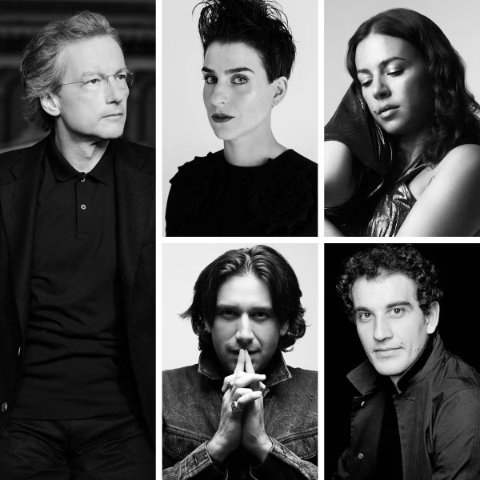
Franz Welser-Möst arrived at Carnegie Hall on January 20 with the Cleveland Orchestra and Verdi’s Requiem. Asmik Grigorian, well known for her dramatic operatic singing, took the soprano solo role. She was joined by Deniz Uzun (mezzo-soprano), Joshua Guerrero (tenor), and Tareq Nazmi (bass), all of whom added vocal pleasures. Lisa Wong directed the chorus.
Welser-Möst is touring with the Requiem and has written about his personal feelings for the work. Too often, he suggests, Verdi’s identity as an opera composer drives the interpretation. But the tenor, after all, is not Alfredo in La Traviata. Instead, Welser-Möst wanted to focus on Verdi’s distinctive sensitivity to the religious text—often solemn, often sweet.
In the United States, Welser-Möst is known primarily as an orchestral conductor, but he began his career in Vienna, famously stepping in for Claudio Abbado in a Rossini opera. Verdi, too, had Rossini on his mind: he once joined a group of composers committed to writing a collaborative requiem in Rossini’s honor. The project never came to fruition, but Verdi’s Libera me—later incorporated into the Requiem—was originally written for that unrealized tribute.
The work opened in whispers: muted strings and quiet choral singing created a deeply reverential, somber mood. The opening lines, almost chant-like and restrained, offered a fragile calm—an uneasy stillness that would soon be shattered.
When the orchestra launched into the “Dies irae,” the movement had the inimitable brisk clarity we associate with the Cleveland Orchestra. Yet the section as a whole felt unusually extended, because the quieter passages were taken at a notably slow pace. Rather than rushing through the contrast, Welser-Möst used that spaciousness to lead the listener into reverence.
The “Dies irae” itself—where the chorus and orchestra evoke the day of wrath—had hellish fervor and pummeling intensity, delivered with precision. Yet the tempo remained controlled, emphasizing exact articulation: slashing brass, choral singing with depth and bite, and thrilling force without harshness.
Grigorian and Uzun offered a tender, intimate duet, lyrical and human in its warmth. In the “Hostias” of the Offertorio, the soloists sang with gentle beauty over delicate, shimmering strings.
“Agnus Dei” became a particularly serene moment in an already often-serene evening. The two female soloists sang a simple, unadorned melody in octaves, later joined by the chorus with only light orchestration. In “Lux aeterna,” the orchestra’s shimmering strings delivered luminous tones, quietly radiant.
Then the terrifying “Dies irae” returned. But the ending did not remain in terror. In the final “Libera me,” after that last eruption, the music fell back into the hushed, questioning stillness with which it began, closing with a whispered—almost inaudible—plea for mercy. These moments of tenderness are placed with care, highlighting the vulnerability of the human soul amid the fear of judgment.
Electrifying music-making does not come simply from more sound, more speed, or more fervor. It comes from telling details, precise execution, and expressive freedom—and those qualities, so characteristic of the Cleveland Orchestra, brought a deeper musical joy to Verdi’s masterwork.
Debate will no doubt continue over whether the Requiem is opera or sacred work. But perhaps Verdi’s wife said it best: it is Verdi. It is his music, his voice, his way of composing. A special evening at Carnegie Hall.