

Thomas Messer and the Early Years of the ICA
Aborted Plan to Merge with the MFA
By: Charles Giuliano - Jan 21, 2026

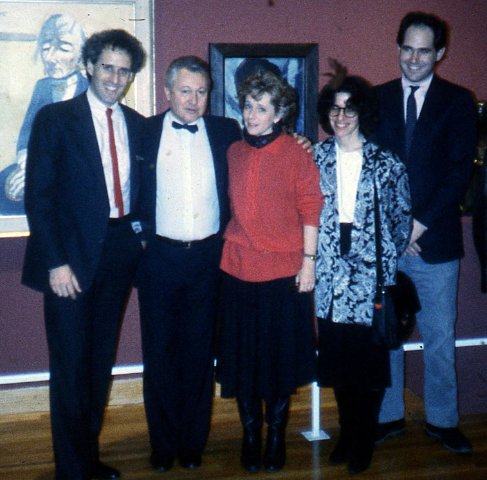

Thomas Messer and the ICA Early Years
As a teenager in Boston during the 1950s exposure to contemporary art was limited. An exception was the annual Boston Arts Festival (1952-1964) which installed an exhibition in tents on the Boston Public Gardens. There was a stage erected facing Boylston Street for performances. All of this was free until the ambitious venture ran out of money. Attempts to revise it in 2003 and 2015 were not sustainable.
It was well attended with lively debates regarding traditional and more progressive artists. Even the most advanced work, however, was conservative by comparison to the New York School and radical Post War developments. In that regard the dissent for BAF was a tempest in a tea pot.
The BAF was located at the end of Newbury Street, Boston’s gallery row. There were venerable traditional galleries like Vose, Doll & Richards, and Childs. Also traditional member galleries The Copley Society and Guild of Boston Artists. A reduced version of the Armory Show was seen at The Copley Society with little significant impact.
Boris Mirski ran the leading contemporary gallery. He showed the Boston Expressionists and artists in the figurative tradition. His former assistants, Hyman Swetsoff and Alan Fink (Alpha Gallery), were progressive gallerists. For a time Arnie Glimcher had a space on Newbury Street before moving to New York to found Pace Gallery.
In the 1940s there were meetings of artists protesting the conservative approach of the Institute of Contemporary Art which was then conceived as a satellite of the Museum of Modern Art. They formed the New England Chapter of Artists’ Equity. During the arts festival they had a presence and handed out leaflets.
The Boston Arts Festival energized the community. I attended a solo performance by the ballerina Maria Tallchief. There was a concert by Boston’s most renowned jazz artist, baritone sax player Serge Chaloff. His mother headed a respected music school. I recall attending a play by William Saroyan and an opera.
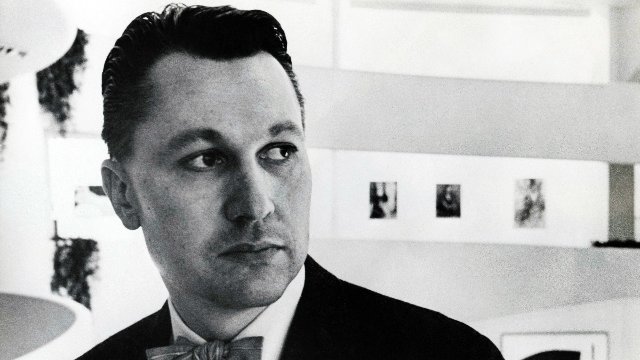
My first visit to the Institute of Contemporary Art occurred in 1958 to see an exhibition of the Austrian Expressionist, Egon Schiele (1890-1918). It was his first American museum exhibition organized by the Czech born, ICA director, Thomas Messer (1920-2013).
By public transportation it was a challenging commitment to visit the Institute next to the Charles River in Brighton. The structure was a basic, rickety box designed by Nathaniel Saltonstall. The ICA was founded on a shoe string in 1936 and run by James Plout (except for military service) until Messer arrived in 1957.
From 1949 to 1952, Messer served as the director of the Roswell Museum and Art Center in New Mexico. Except for a year's leave of absence, when he studied for a master's degree in art history and museology, at Harvard University. He then was assistant director and later director at the American Federation of Arts until 1956. From 1957 to 1961, he was director of the Institute of Contemporary Art, Boston and, for part of that time, taught modern art at Harvard. From 1961 to 1988 he was director of the Solomon R. Guggenheim Foundation.
The impact of the Schiele exhibition was profound. The work is deeply etched in my DNA and was my first true exposure to modern art.
What he told Andrew Decker of the Archives of American Art is surprisingly conservative. (Oral history interview with Thomas M. Messer, 1994 Oct.-1995 Jan, Archives of American Art, Smithsonian Institution.)
“It was sort of a success de scandal. We did have problems with that show, actually, even though I was cautious in my selections because I did not want to introduce Schiele in the same scandalous terms in which he introduced himself in Vienna many decades ago. It did not seem particularly interesting to me to scandalize Boston with erotic images. I wanted to show that he was a great artist. And so my selection was somewhat cautious. But it was still more than Boston could bear at the time, and we did have visits by the police or whatnot, whom I did not receive. Instead I let my staff fence with them, and by the time they got through, the exhibition was over. But they were pressures, no doubt.
Andrew Decker: And was your Board of Trustees comfortable with all the attention?
Thomas Messer: No, they were uncomfortable, but they behaved themselves. They really were never comfortable with this modern art, and extremely sensitive about criticism. They so much wanted to be liked by everybody else. They had in me a conservative director as I have been all my life to the chagrin of some of my fans. I have always been on the cautious side, and never rushed into the avant-garde; partly because I never wanted to do things that I had not myself fully absorbed. And so I was, I think, a rather logical director for apprehensive boards. But I was still ahead of them and thereby caused a certain amount of chagrin.”
Today, thanks to Jill Medvedow, the ICA has a permanent home on the Boston Harbor with an annex a ferry boat commute to East Boston. For decades it has been touch-and-go as Messer recalled.
“Well, the Institute of Contemporary Art in Boston has its own somewhat curious history. A history that began in the same year as the Guggenheim's, in 1937. It had by that time, exhausted its first Director, Jim Plaut…He certainly was the first staff head of the Institute. There were other people behind him --for instance, Nat Saltonstall -- who was a Boston architect and an esteemed and marvelous friend. Or Nelson Aldrich, a cousin of the Rockefellers. These were the people who were on the board in Boston. And when Plaut -- as I say -- exhausted himself after many years of directing the Institute under trying and difficult circumstances, they started to look for somebody to take this on. And they found me. So I spent many years there…
“I liked Boston. As I told you before, my godfather, who was a viola player in the Boston Symphony, was a very strong magnet in that respect…I went back to direct a public oriented institution, one that greatly appealed to me. The ICA is a Kunsthalle, let us say, because they didn't have a permanent collection. So I was eager, by that time, to function not as I did at the AFA, as a sort of super administrator of a large program in which I could only seldom enter into the creative aspect of exhibition making, but rather to concentrate on a program within a community and doing exhibitions of my choice and work with the public.
AD: How large a public was there in Boston for contemporary art?
TM: Small. Small, and I would say rather tortured because …Boston has a strange mentality in this respect. Of course, these are hair-raising generalities that I am saying to you. But I think that Boston --at least, you know, that element of Boston that was representative of what the city connotes -- had the feeling that art is a duty, particularly modern art. That was something that had to be done no matter how much they disliked it. So you were continuously caught between people who seemed to be telling themselves on every step that this is something that has got to be done and so they did it, even though with a clear distaste...I had quite some problems with modern art in Boston.
AD: What did they find relatively palatable, if anything?
TM: Well, mostly the things that were outside of the reach of the Institute of Contemporary Art. In other words, they found the Museum of Fine Arts relatively palatable, or the Gardner even more, and the Fogg, so all that was all fine. But even so, they felt that there's got to be something in Boston like the Museum of Modern Art in New York. And, if not that much, then at least the Institute, which, incidentally, started as a chapter of the MOMA. The Museum of Modern Art originally meant to be part of the great American dream, and meant to place itself in various communities to split the finances in some ways. But I remember how this didn't work… I can't tell you what the Bostonians really wanted, but they did come to the museum and the programs that we did at the ICA, or that I had an occasion to do over a period of a few years were not without meaning, I hope…
Jim Plaut did some of these things at a time at which it was still possible to organize a Matisse or a Picasso show. In fact, the first shows of classical Modernism that Boston saw was through the Institute, because I think the program of the Museum of Fine Arts ended more or less with Millet and was very cautious about trespassing into the 20th century at all. So the Institute did well, already before my time, in its function of introducing modernism to Boston. And then, of course, each generation takes it a step further. The Institute continues to do such things today.
AD: Did you organize most of the exhibitions at the ICA, or did you also take on loan shows put together elsewhere?
TM: I mostly organized the shows myself. There were exceptions to that. But the idea was to look around and to develop a program which was about modern art and artists… I brought in some of the great modern collections from Europe. For instance, a selection from the Musée d'Art Moderne--by that time I had my contacts in Paris--a very respectable selection from their permanent collection which was actually very successful in Boston. And that was the sort of a show that attracted people. I did the same with the Stedelijk in Amsterdam with the help of Willem Sandberg, who was a great director at that time in Amsterdam.
I would visit him and he was very open, and lent me some van Goghs and German Expressionists, all very well received, of course. Obviously, we could not do this all the time. Then I also did Americans. Not really those that have become very famous afterwards, but I very much liked the sculptor Saul Baizerman, who hammered copper and in the process created beautiful works of art. Another one was Atilio Salemme. These were artists who at that time had larger names than they presently do, I think. But their inclusion in the ICA program serves as an indication that American as well as European art was being presented. One of the last exhibitions that I did was a didactic show entitled 'The Image Lost and Found,' which traced the effort toward abstraction and then postulated a certain return of the figurative elements in the work of such artists as Nicholas de Stael and even the late Jackson Pollock and others, to indicate that this absolute division that existed at the time between the abstract and the figurative should not be exaggerated. I did not make myself many friends in New York with this show at that time and was accused of furthering retrograde movement.
AD: Was there pressure on you to bring in work from Europe, or were you pretty much on your own to do whatever seemed appropriate?
TM: Well, the pressures were related to feasibility and finances. There were no other pressures. No. The people in Boston, unlike the AFA board which had strong notions of what we should be doing, let me do what I wanted to do. They were not always happy, but they did not engage in as active a role.
AD: You continued at the ICA until 1961.
TM: That's right. From late '56 to early '61.
AD: Did you maintain relationships with any of the board members at the ICA?
TM: I was on friendly terms with them. Most of them have, alas, died in the meantime. We were close to Nat Saltonstall, a marvelous person. And Nelson Aldrich, also, used to contact us from time to time. Both of them have since died. And there were some other collectors with whom I stayed in touch for a little while. Beyond this, no as I then got too busy to maintain such contact.
AD: Did the collectors in Boston regret not having a contemporary or modern institution to which they could give their works?
TM: I'm sure they did. Yes. And the idea of the non-collecting institute has always been contested. There always were people who regretted that there was not a modern museum. But there were ideological counter-arguments similar to those that existed at the Museum of Modern Art in its inception. The Museum of Modern Art intended originally not to have a permanent collection. You'll find in the charter, I think, that the idea was that when these things became better known, famous and expensive, they would place them in historic museums, like the Metropolitan.
AD: So it's like the New Museum today.
TM: Yes.
AD: Where they can keep things only for twenty-five years.
TM: Yes. Well, I doubt that they abide by this rule, but as far as I know, the Museum of Modern Art has given a Picasso to the Metropolitan. There is a record of such an intention at any rate. But when, through the passage of time, things become really beautiful and expensive -- treasures -- it's very difficult to make gifts of them. The mistake was, I think, to assume that New York would do what Paris has done. Paris, of course, can do it because there is only one proprietor -- the State. So essentially, the Parisian pattern was the Louvre -- well, the old pattern of the Louvre/Luxembourg, and now Louvre/Jeu de Paume. The pattern is very simple: The State possesses it and puts it either here or there. They do not lose possession. But with separate corporate entities and separate boards, you do lose possession. And you are beginning to make gifts for no material reason that you can justify. So that probably is why it didn't work in Boston. The other even more potent cause is that the Museum of Fine Arts would never allow a collecting competition to be created in Boston. And the people who are sitting on their museum boards are the same people or their sons and daughters sitting on other boards because the texture of Boston culture is very narrow, and it's usually the same do-gooding families whose younger members are in the more modern area, and whose older, respected family members maintain the seats of power.
Boston, was interesting culturally, partly because of my proximity to my godfather and to the music of the Boston Symphony in which he participated... Harvard, of course, was my one concentrated contact with art history, and I remain very grateful to my teachers. To Jacob Rosenberg, to Charles Kuhn, to Frederick Deknatel, to John Coolidge, to Agnes Mongan, all teachers I held in very high esteem... The ICA in Boston was the first real museum experience, the first time that I could create sensible programs, the first time that I dealt with a community, and with a particular constituency. It led directly to the following experience at the Guggenheim, which was central to my life. Everything up to that moment was prelude. Everything afterwards is postlude.
AD: Before we really get into the Guggenheim, I'm wondering about your time at the AFA and the ICA in terms of how important was contemporary American post-war art to your work at those institutions? Were you trying to put together exhibitions of Jackson Pollock and Willem DeKooning, or were they considered too current really for the institutions that would receive exhibitions from the AFA, or for the ICA itself?
TM: Well, they were at the time, certainly too current for the ICA. The ICA did have a curiously conservative attitude toward modern art, and in fact, maintained under my predecessor rather steadfastly, a programmatic adhesion to figurative and semi-figurative art. The notion of total abstraction was not easily acceptable, and in fact, there were polemics between the ICA and the Museum of Modern Art. Jim Plaut was considered by the increasingly -- how should I say? -- by dogmatic standards that began already in the late fifties and became even more evident in the sixties-- something of a traitor to the cause. There were very bitter arguments between MOMA and ICA. Between ICA and the dogmatically modern scene. I did not participate in these arguments, and was certainly entirely open to non-objective abstraction. But there were two things: First of all, organization of contemporary shows were already then a rather ambitious undertakings, and it was not all that easy to do so; and secondly, it was really not what to me, personally, at that time, was all that close. I was very much attached to the European schools and to European aesthetics, to what is now classical modernism, i.e. to the generations of the Cubists and the Expressionists. And so I also did not rush into what then was the avant-garde. But I was aware of it, and became increasingly so.
AD: So museums who were subscribers to the AFA were not clamoring for that kind of exhibition.
TM: No. It is not my recollection that they did. I did bring some AFA catalogs, and we can check whether there's anything in it. I have the recollection of a contemporary show of American work on paper, which followed a similar contemporary show on French art, also, of watercolors and drawings. These two were following each other, and many of the names including, I think, Jackson Pollock, and De Kooning were listed. But the scale was modest, as indeed all AFA shows had to be. I also remember having sent an exhibition to India, under the auspices of the AFA at that time, and it included Arshile Gorky and geometric abstraction, but I cannot now remember the details...
AD: When you talk about the split between the ICA and the Museum of Modern Art, and other proponents of modernism, you mentioned that the ICA started as a -- more or less -- a satellite of the Modern.
TM: Right.
AD: Was that split part of the reason that it was clear to the Modern that such an arrangement would not work?
TM: I think it had more complicated causes. The split was in part, at least, due to an inability to find a financial formula that would satisfy both. I think MOMA -- and I really don't have proof for this -- but I think that MOMA looked upon such extensions as something that at least would not add to their financial problems. And ICA probably felt that they could do better alone, rather than paying tribute to MOMA. There were differences in scale and in attitude. There was certain jealousy on Boston’s part of New York, in general. There were probably many aspects of this -- psychological, financial, and so on. But the split came about and remained in permanence. What I should also say is that the Institute had increasing financial problems, and to solve some of these it turned increasingly to design. Design was, for a while, a rather lucrative way for them to meet their budgetary requirements. This was all before my time. And eventually it ran into trouble because the commercial design companies felt that the Institute was unfairly competing under the shelter of tax exemption. And eventually they prevented the Institute from continuing that way.
AD: Now, when you say design, you mean people in-house would create desks?
TM: No, not create, but I think there was advice and I think the Institute staff was involved in advisory capacities -- I don't know really to whom anymore -- and received fees for it. There were also contracts with foreign countries. There were design instructions, I think, in Tunisia, and things of that kind. All of which, I think, was certainly legitimate. But it did run into difficulty. And it also removed the Institute at that time more and more from the artistic scene. My appointment changed that. I was seen as the director who brought the ICA back to art.
AD: How many really world-class collectors -- you know, very serious collectors -- were there in Boston, in the late fifties?
TM: I was aware of two or three people who did buy then-current and important art in Boston. But there certainly were few. They were all with the Institute and we cultivated them. There were, of course, many collectors in the more traditional and historic periods. But to the best of my knowledge, there was no great private collection of Cubism or Expressionism or anything like that.
Of course, there were a few who collected then contemporary art, American, as well as European. There was, as a matter of fact -- I remember now one rather important collector of American art, whom I would have to look up -- but he was very important indeed. It was Edith Halpert, who had her ways of persuading this person in particular, and over the years, he bought very important things -- both figurative, and later abstract American idioms. (Messer may be referring to William Lane who gave an important collection of modernism to the MFA).
End of interview.
On Messer’s watch the ICA abandoned its structure on Soldier’s Field Road and took over the second floor of the School of the Museum of Fine Arts. The plan was for the ICA to merge as the contemporary department with Messer as curator. That was mixed by Perry Rathbone who, ironically, appointed Kenworth Moffett as first curator of contemporary art decades later in 1971.
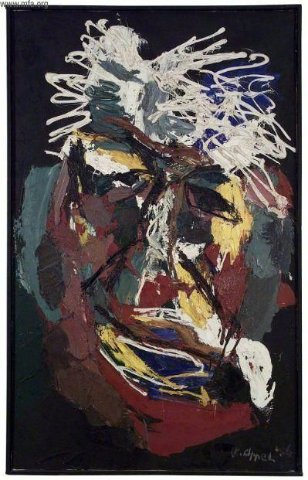
In his interim status Messer advised on a couple of acquisitions. One was a portrait of his friend Willem Sandberg, director of Stedelijk Museum in Amsterdam by COBRA artist, Karel Appel. The other was David Park’s “Rowboat,” 1958. (Provenance, 1959, sold by Stæmpfli Gallery, New York, to Mr. and Mrs. Stanley X. Housen, Boston; 1959, to the Institute of Contemporary Art, provisional collection, Boston; 1963, sold by the Institute of Contemporary Art to the MFA. Accession Date: December 11, 1963.) Park was born in Boston but was a part of the Bay Area Figure movement.
When the ICA celebrated its 50th Anniversary Messer participated. At a press conference I asked him to confirm the plan to merge the ICA as a department of the MFA. He did so but the occasion did not allow for elaboration.
Regarding the larger issues of the mostly moribund status of contemporary art in Boston there are provocative “what if” questions. Under Rathbone there never was a strong department of paintings. In matters of modern and contemporary art he and medievalist Hans Swarzenski presided over acquisitions. This resulted in the late Picasso “Rape of the Sabine Women” which they bought from his studio. A complex work in bronze was on extended loan in the one contemporary gallery near the Fenway entrance. The gallery also included works by Donald Stoltenberg, Loren Mciver, Kenzo Okada, and Fannie Hillsmith as well as a large abstract painting by Nicholas de Stael. The MFA has works by Oskar Kokoschka, Ernst Ludwig Kirchner, and Edvard Munch from the Rathbone years.
While director of the St Louis Museum of Art, Rathbone was friends with the German expressionist Max Beckmann. His portraits of Rathbone and Swarzenski were gifted to the MFA. Boston favored Northern European art and music with strength in expressionism as exemplified by Harvard’s Busch Reisinger Museum.
Clearly Messer would have brought a different, though by his own admission conservative, perspective to collecting.
It is argued that it was best that the merger did not occur. Boston has benefited by having separate institutions. That is self evident today although the ICA started to collect fairly recently. As Ted Stebbins commented at the time, “The MFA started to collect contemporary art (1971) when the century was almost over.”
In recent years there have been strides at the ICA and MFA but they came late to the table when the best work is no longer available or unaffordable. Messer might have made a significant difference.