

Marjorie Prime
New York's Helen Hayes Theatre
By: Karen Isaacs - Jan 23, 2026
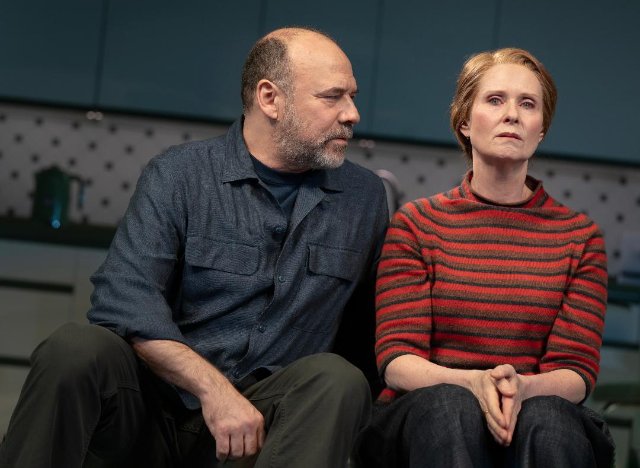
When Marjorie Prime debuted in 2014, playwright Jordan Harrison called it “science fiction.” Today, it seems less like that and more like a glimpse into a quickly arriving future. In the last year, I’ve seen three productions, two plays and one musical that explore uses of artificial intelligence in positive ways
What struck me after seeing the incredibly acted production of Marjorie Prime at the Helen Hayes Theatre in New York City was that these two plays (Your Name Means Dream was the other) use AI to provide companionship to elderly people. One could argue that the idea reflects our society’s valuation of the elderly, or, on the other hand, the importance of providing the elderly with what they most need and often have at least access to: companionship
The third is the wonderful musical, Maybe Happy Ending, which is about two retired BOTs who served as personal assistants to adults.
Marjorie Prime opens with Marjorie, an elderly woman (85), who is suffering from some memory issues, but is living independently. She has an unseen human caregiver, who does not live in. But the person she interacts with the most is Walter. Walter looks human though he is not. Through artificial intelligence, he has listened to Marjorie and gathered information and stories from her life, which he can then either repeat or ask questions about and interact with her. Walter Prime, as this caregiver is known, looks and sounds like her husband, Walter, but at the age of 30.
Marjorie is lucky in that her daughter, Tess and husband Jon are present and attentive. Tess has many more reservations about Walter Prime than her husband has. Tess would like Marjorie to live more in the present, while Jon feeds Walter information that Marjorie does not necessarily want to remember or discuss. But Marjorie seems content.
At first, I was confused by the next episode in this 75-to-85-minute play. After a blackout, we see Tess talking to what we at first think is Marjorie, but we realize through the use of past tense and other clues that Marjorie has died. This is Marjorie Prime, which allows Tess to deal with her grief.
Under the sure direction of Anne Kauffman, the four actors give carefully crafted performances that bring out all the contradictions that are inherent in the subject. Each has wonderful moments, Christopher Lowell as Walter, Cynthia Nixon as the realist Tess, June Squibb as Majorie, and Danny Burstein as Jon. Burstein ends the play with a heart-wrenching scene.
This play will leave you with much to think about. AI is here to stay, and the population is aging. Caregiving is more and more a need. Would this be a way to meet that need? Or is it simply a way for the family to avoid dealing with elderly relatives? Why Marjorie’s family is attentive, it is easy to see that others might not be.