

Love is Destiny at Frankfurt Opera
R.R.Schlater Directs Agostino Steffani
By: Susan Hall - Feb 08, 2026
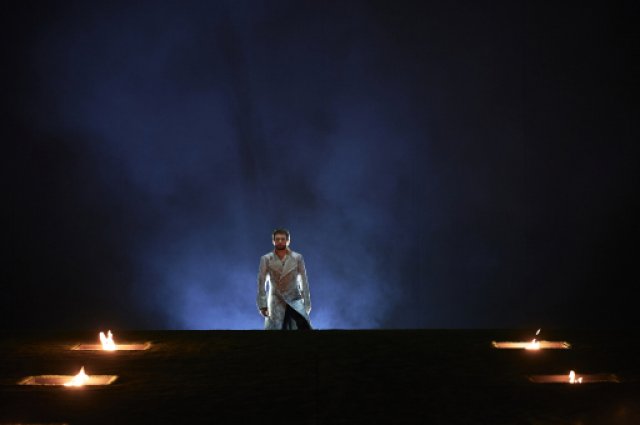
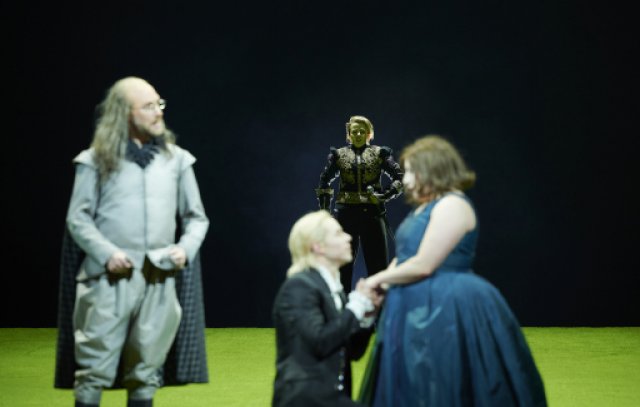
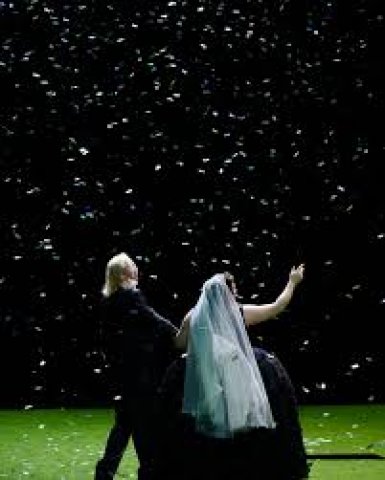
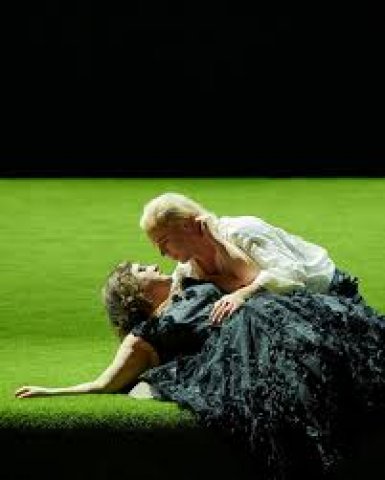
Opera Frankfurt is mounting Amor Vien dal Destino (Love Is Destiny) by the late–17th-century composer Agostino Steffani. An Italian who seamlessly blended bel canto lyricism with German contrapuntal rigor, Steffani was a major influence on Handel, who freely glommed onto his work—sometimes quoting it outright.
Steffani was not only a composer but also a Catholic bishop and diplomat, and that layered, worldly humanity permeates his music. Drawing on the Aeneid, the opera follows Aeneas’s arrival in Italy—after dumping Dido in Carthage—to fulfill his destiny. As he and Lavinia, daughter of King Latinus, cautiously orbit one another, their union is blocked by her arranged marriage to Turno.
In classic Baroque fashion, couples mix, match, and tangle. The high-stakes, potential union between Aeneas and Lavinia is mirrored and lightened by a secondary comic pair.
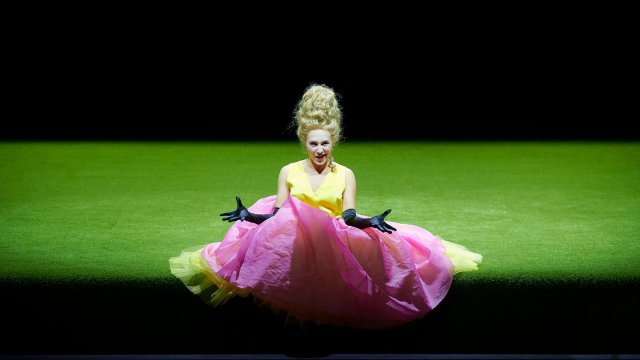
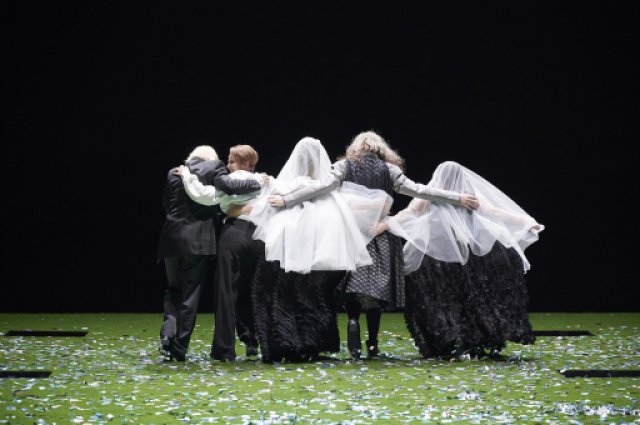
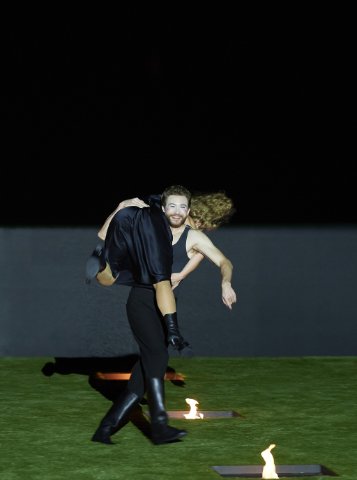
The gifted American director R.B. Schlather—who has made Handel a fixture at Hudson Hall north of New York—is an inspired choice for this Handel precursor. In the first half, the raked stage remains spare, keeping attention firmly on the singers. Schlather directs to the shape and texture of the musical line: couples often sing directly to one another, occasionally chasing each other’s phrases. Physicality is essential here—expect somersaults and even downward-dog poses alongside more conventional courtship gestures.
The central triangle is anchored by superb performances. Margherita Maria Sala (an early pick of Riccardo Muti’s) sings Lavinia with depth and a magnificent tone. Michael Porter is compelling as the hero Enea (Aeneas), while Karolina Maku?a impresses in the trouser role of Turno. Also noteworthy is the enchanting tenor Theo Lebow as a maid, sporting a hairy chest as an ersatz bosom.
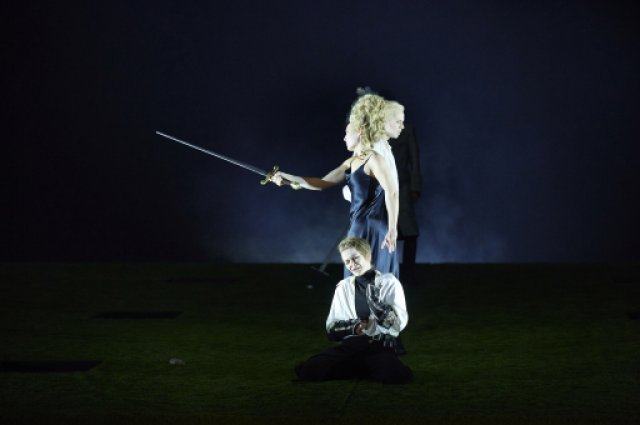
As the plot thickens, Anna-Sofia Kirsch’s set grows more elaborate. Shadows begin to double the characters, and by Part Two, mysterious clouds and steam billow as figures emerge from smoke. Katrin Lea Tag’s costumes—many perpetually in motion—are a visual delight.
Václav Luks leads an orchestra rich in period instruments, providing an intriguing and supportive backbone. While Schlather is known for cutting and reshaping works for modern audiences—and this opera might have benefited from a bit more intervention—the production ultimately feels just right.
Bishop Steffani understood the mind-boggling complexities of love, lust, and politics in ways that remain both startling and comforting. Fittingly, you can even step on the composer’s grave in Frankfurt’s St. Bartholomew’s Cathedral before heading to the show.
Musikalische Leitung: Vàclav Luks
Inszenierung: R.B. Schlather
Bühnenbild: Anna-Sofia Kirsch
Kostüme: Katrin Lea Tag
Licht: Jan Hartmann
Dramaturgie: Mareike Wink
Lavinia: Margherita Maria Sala
Enea: Michael Porter
Turno: Karolina Maku?a
Latino: Thomas Faulkner
Giuturna / Venere: Daniela Zib
Nicea: Theo Lebow
Coralto / Giove: Constantin Zimmermann
Corebo / Fauno: Pete Thanapat
szenisches Double Giuturna / Venere: Julia Alsdorf
Frankfurter Opern- und Museumsorchester