
Dishwasher Dialogues, Dracula and the Iron Curtain
Operation Jungle Book
By: Greg Light and Rafael Mahdavi - Feb 11, 2026
Dishwasher Dialogues, Dracula and the Iron Curtain
Operation Jungle Book
Greg: So, to the Hungarian caper.
Rafael: Hungarian? I thought it was the Romanian caper. I remember exactly how I forged your Canadian passport, as mentioned above. I bleached out your mug shot and replaced it with the Romanian’s.
Greg: Here’s my memory of the caper, somewhat massaged by the fog of time. But, when I went behind the Iron Curtain, I was clear about what country I was in. Hungary. But with a Romanian twist. It all started when my friend Darian, the Canadian I mentioned studying in Bordeaux, arrived in Paris. He had a Hungarian descent and had just returned from a trip to Budapest to visit cousins.
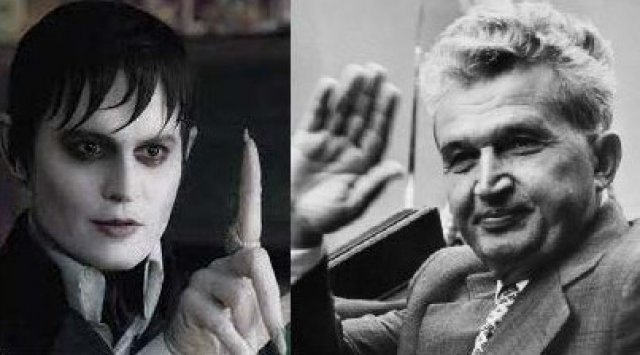
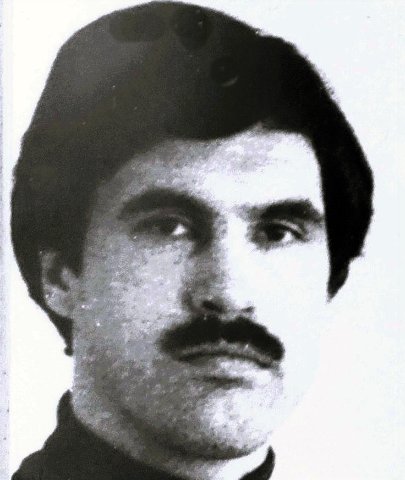
Greg: One evening we were hanging out in my rooms, and Darian was telling a bunch of us about travelling in a communist country and sharing some photos he had taken. Going through the photos, it quickly became apparent that one of his cousins (let’s call him Janos), looked a lot like me. I mean a lot like me. He was a bit fuller in the face and cut his hair differently, but the rest of his features were mine. Then Darian told us his story. Janos was a Transylvanian theological student, not exactly a modern-day Dracula, who was, nevertheless, being persecuted for his beliefs. He was rather desperate to escape Romania and the rule of Ceau?escu, ruthless even by the standards of Eastern European communist dictators of the day.
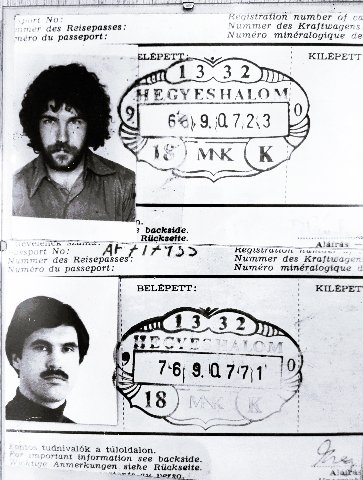
Greg: Back then it was difficult for Romanians to travel, even to neighbouring communist countries. But Janos had obtained a week-long visa to meet with family in Hungary. After some more wine and discussion, we hatched a plan to help him. It was quite simple. And this is where your photographic skills and techniques came in.
Rafael: It was pretty clever, if I do say so myself.
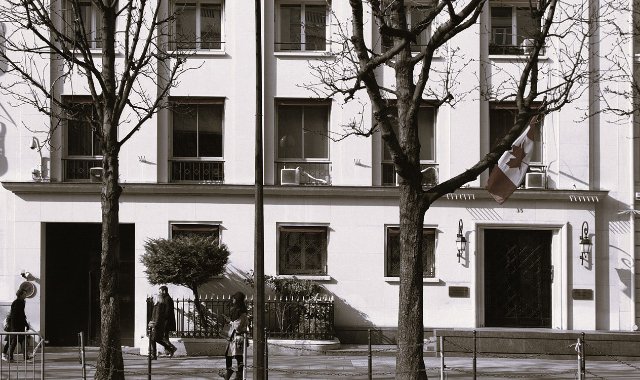
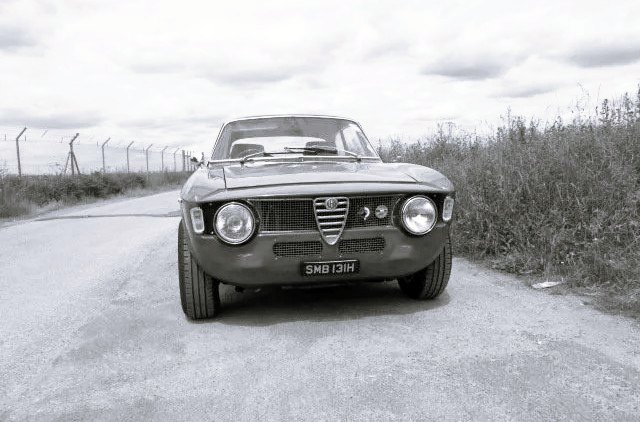
Greg: It was, and after that the rest seemed simple. Darian drives to Budapest, gives Janus my passport with his photo and drives out. Unfortunately, both the plan and the photographic technique were a little trickier than we thought. For the passport to formally come out (whoever was holding it) it was going to formally have to go in. Plus, we discovered Canada was now using red and blue ink in its passport stamps. So, onto plan two. You doctored a passport photo of me to look like Janos—we put bread in my cheeks and cut my hair like his. But still me. I submitted the photo along with an application for a new passport at the Canadian Embassy in Paris. That worked like a charm. The photo looked like both of us. It would get me in and him out. But now I would also need to go and give my passport to Janos so that he could leave with Darian. I would give them three hours to drive to the border and exit, then I would go to the Canadian embassy in Budapest, tell them my passport was lost or stolen, be directed to the police and after some administrative questioning would (miraculously) be given travel documents to leave. Even the best plans need a miracle. Darian got the okay for the plan from his cousins, so we were on. Like you, Darian had a car, an old Alpha Romeo which he called Giulia.
Rafael: Yeah, Giulia, after the Alfa Romeo model called Giulietta. I found it odd that he could afford such a snazzy car.
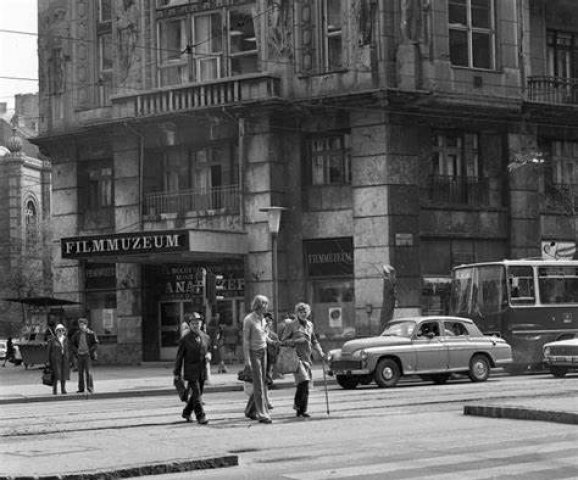
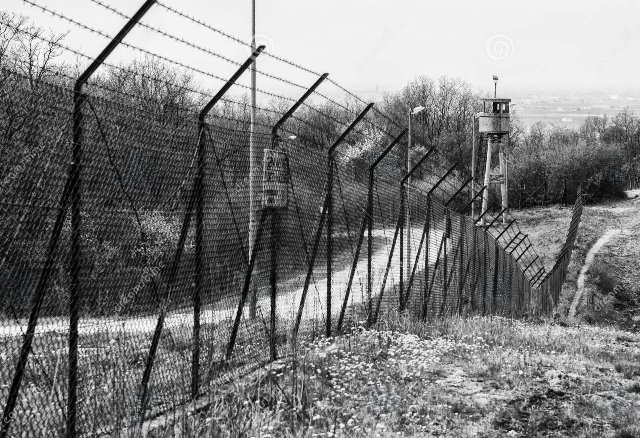
Greg: It was an old, second-hand version. Not as bad as Leroy’s Jesus, but hopefully just as blessed. We only had enough Western currency to buy gas to get there and back. But we had lots of Hungarian Forints in our shoes which Darian’s father had given him. So, off we set, driving through France, Germany, and Austria to the Hungarian border on what Darian had come to label ‘Operation Jungle Book’ after the famous book/film of the same name about a black panther and a sloth bear rescuing a boy-child raised in the jungle. I can’t say our rescue operation made a lot more sense. Anyway, about a kilometer from the Austrian/Hungarian border, we thought it might be a good idea if I did not go through the control point with him. Not if I was to claim my passport was stolen; and not if Darian and Janos were stopped on the way out and it turns out the man who drove me in is also driving out the man who stole my passport. (Maybe a coincidence too far?) So, I got out of Giulia and walked to the border. Five-meter-high barbed wire fences stretched out from the control point as far as I could see. I presented myself as a hitchhiker. The border guards, all carrying heavy-duty rifles and automatic machine guns, were not impressed. A western hitchhiker simply walking into their domain presented them with a dilemma. Eventually they allowed me to pass if I accepted a ride in a passing car. I resisted the car they suggested because the driver who offered to give me a lift—another Hungarian Canadian it turned out—was not going directly to Budapest.
Rafael: I don’t remember this at all.
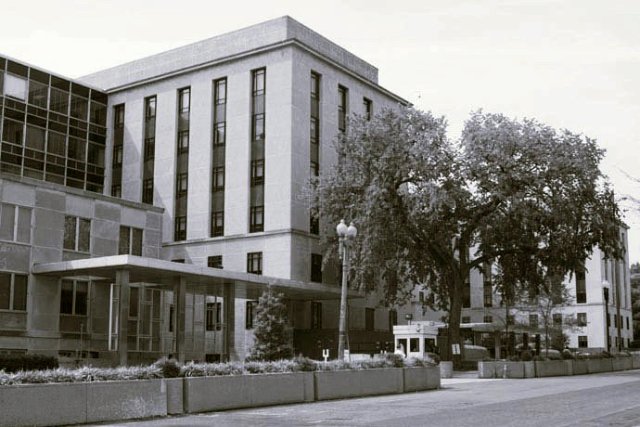
Greg: You did not come. But you must remember. Your girlfriend and future wife knew someone in the U.S. State Department, and she telephoned her friend to get some advice. After a few words, her friend said ‘stop, don’t tell me any more about it.’ So, she didn’t.
Rafael: This was a little live ammo training. The U.S State Department security could be listening to the call, even the Russians might be listening in, as I suspect State also listens to Russian embassy calls in and out. After all, paranoia is a euphemism for reality. They were all spying on each other, that was the norm.
Greg: In hindsight, it feels less daring than foolish. But when did that stop us? It was just another production, albeit with a socio-political-ethical twist. And some risk. This time the communists were not inviting us in.
Rafael: The gift of the gab with the border patrol. Impressive. Nowadays they’d give you a cavity search with chain-link gloves. Just for looking suspicious.
Greg: And that’s getting back into your own country. Anyway, I accepted the ride and the guards let me through, sans the cavity probe. After oddly resisting his offer of a lift, however, I think my fellow countryman was regretting his offer. He stopped at the border bar and bought us both a strong Hungarian brandy. More for him than me. Eventually, we started out down the highway, largely in silence, submerged in the lovely countryside of Marxist-Leninism. Sure enough, about halfway to Budapest the driver turned to Lake Balaton, which I learned was a popular tourist destination for Hungarians. He happily left me on the side of the road. I stuck out my thumb and waited. No luck. Finally, a long time later, Giulia appeared over the horizon.
Greg: Darian had been delayed with a car search. But we were back on track. When I finally met Janos, we both immediately saw there was a problem. This was not my twin I was looking at. The differences between us were more substantial than his photograph had suggested. He might get out if they didn’t check the passport photo too closely. More importantly, during the intervening weeks, Janos got cold feet. Understandably so. When he ran the plan past some trusted elders in his Transylvanian town, he was told Ceau?escu would persecute his parents if he escaped. And there was also a little thing about a new girlfriend to contend with. Operation Jungle Book was terminated. My being became lighter and more bearable. I still think using our creative ideas and techniques to address the broader political issues of the day was worthy, if a little naïve. Or stupid. Maybe blind luck was watching over us.
Rafael: Absolutely.
Greg: You know, of course, if I had been arrested, I would have given up your name in a heartbeat. Even if they didn’t ask me.
Rafael: Well, gosh Greg, that’s generous. We wouldn’t want your heart missing a beat, would we now?
Greg: Art deserves to be credited.
Rafael: Having the Romanian or Hungarian police tie juiced electrodes to my balls would have been indeed memorable. Performance art they’d call it today.
Greg: The week in Budapest with Darian’s cousins was eye-opening and fun. So, it was not a lost cause. (A quick footnote: Janus did eventually leave, after the Iron Curtain opened in 1989.)
\