

The Dishwasher Dialogues, Death and Taxes
Art and Immortality at the Customs Depot
By: Greg Ligbht and Rafael Mahdavi - Mar 05, 2026
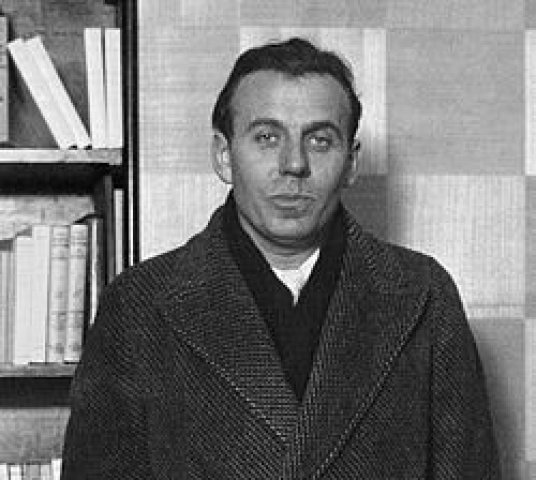
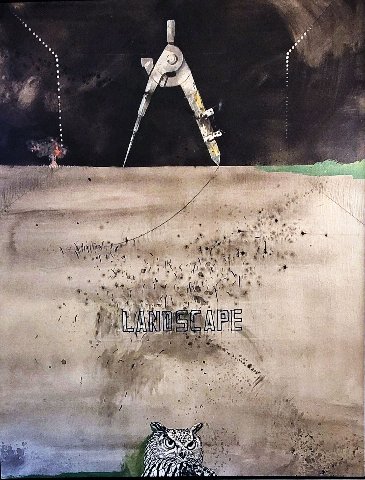
Rafael: I took you to art galleries some Saturday afternoons, before heading for Chez Haynes, and you, Greg, were clear-eyed and honest enough to look at contemporary art and make up your own mind. Something that I had forgotten to do. I was so involved in the contemporary art world racket and the latest trends that I had forgotten the bigger concerns about art, such as––did this or that work on the gallery wall enrich my life, or make me ask unanswerable questions, did it make me think and make me proud to belong to humanity?
Greg: I will always be thankful to you for these excursions. You certainly knew your stuff and were willing to share. I considered our many, many visits to art galleries, art fairs, vernissages as the equivalent of an advanced degree in art history and contemporary art. You must understand (as I know you do) before I came to Paris, I was a visual idiot. I had never engaged with any kind of meaningful art world. Indeed, I shunned it. Very early on, my schooling in art left me with the formidable idea that artistic talent lay entirely in how well one could reproduce the likeness of an object, a person, or a scene. Try as I may, I never got past drawing stick figures, differentiated in gender by a triangle at the waist and longer hair lines coming out of a roundish head with various circles and dots for eyes, nose and mouth. (Never any ears.) The utter failure of my eye-hand coordination, in contrast to my younger brother’s innate painterly ease and dexterity, blocked my desire or interest in pursuing anything to do with art. The whole matter terrified and shamed me. To think I would one day have exhibitions of my work (called performance art) in Paris galleries was the height of irony and lunacy at the same time.
Rafael: I, on the other hand, was the eager beaver type. I was too often asking myself if this or that was truly cool, cutting edge. I was reading art magazines and probably not trusting my eyes the way I should have.
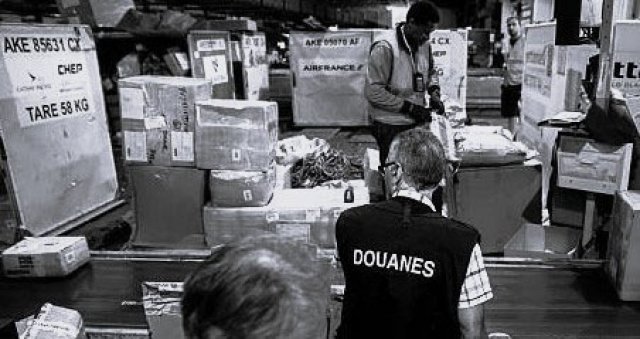
Greg: You always had a robust, critical, often cynical eye. Not only of individual works, which you could quickly and brilliantly assess and evaluate, but of the whole calling and the unpleasant business that wrapped around it. As I was busy learning about this new world, you were busy tearing it down. I couldn’t have had a better teacher. I remember early on in our friendship driving with you in your old Volkswagen beetle to a French customs depot out somewhere in the wilderness of the Parisian banlieue. L'aeroport d'orly, I think. You had just had an exhibition of your work in a gallery in Frankfurt or Hamburg, and two of your larger paintings—one and a half meters by one meter—were being returned to you still framed and still on their stretchers and in wooden crates. When you went to pick them up, the custom officer presented you with a huge bill for the import taxes. (This was long before the EU.) You were rightly outraged about paying taxes on your own work. He stood his bureaucratic ground. ‘It is art, Monsieur. And therefore, of great value.’ (We had to find the one custom officer who had visited the Louvre one too many times.) ‘And certainly, worthy of taxes.’ You recoiled. And objected.
Rafael: Thinking back to such episodes I can’t help asking myself––where did I get all that self-confidence? Illegally in Paris, one tough question from a bureaucrat, and I could get booted out of the country. You too for that matter.
Greg: The discussion escalated in volume and rhetoric with him eventually suggesting maybe you could pay half the taxes. If anything, you were more incensed. It wasn’t about the money (which neither of us had in any case), it was about the whole idea of art and the art world and value and tax and corruption. You finally shouted at him that if he was going to insist you pay anything at all, he could keep the paintings. Indeed, you would cut them up into pieces right then and there. At that point, assuming he was dealing with a crazed Van Gogh complex, he finally relented and let you have them without paying any tax. Which was just as odd. Where are these worlds— filled with clear and firm rules coupled with the discretion to fully dispense with them at will—born? We then had the problem of taking two large, carefully boxed, framed paintings back in your tiny VW beetle. We unboxed them, but still, they were not going to fit. At that point you had no patience for unframing and painstakingly pulling out all the staples attaching the canvas to the stretcher. You took out your boxcutter and immediately started slicing the canvases out of their frames. The custom officer was genuinely horrified. You tried to explain to him you were not destroying them, the art could easily afford an inch on each side of the canvas, but he was having none of it. He hurried away, muttering, and shaking his head, before the madness exploded further.
Rafael: Of course! The poor customs official. I’m sure he regaled many an audience about the crazy artists he had to deal with, and how they might have killed him.
Greg: I’ll give him his due. He believed in art, and he was not going to witness its destruction on his watch.
Rafael: Now that we’re on the subject of art, and many years have passed, and I have done some thinking about my career, I want to add a few thoughts here. I’ve had a modicum of success in the art world. Yet I often feel ashamed of being a painter these days, in the first quarter of the twenty-first century. I make paintings, I don’t make art; it doesn’t emerge from my hands the way Athena sprang, fully formed, from the head of Zeus. If I am lucky, some of my paintings may one day join the realm of art––give it a couple of hundred years or so. It’s a long shot. Always was, always will be. Probably my paintings will end up in some garage sale.
Greg: Alongside my books. I am sure some of my books are there now. Others in garbage dumps. Some feeding weeds. Many, unwritten experiments never even made it to the page. But we keep on doing it. My writing took a long detour with academic publishers and journals. But your painting continued. You’ve been at it all this time. Successfully. Something kept you going.
Rafael: Fear of total failure. What I, and not anybody else, define as failure. Doggedness, even after I realized I was too old to die young.
Greg: That, perhaps, is the ultimate achievement—being too old to die young. It’s really underrated.
Rafael: Now I tell myself I’m so fucking old, people will say, hey it’s time to buy this guy’s work, he may croak any day now. He’ll soon be on the wrong side of the grass.
Greg: On the other hand, if I may, selling after you have died? Really overrated. Especially for the dead artist.
Rafael: Painting leads to unthinking my thinking or thinking my unthinking. But often, I have a brain in my gut and a gut in my brain. When little makes sense anymore, that’s when I feel best about my work. But being senseless on purpose is being sensible, isn’t it?
Greg: We did a lot of it. And it was fun. And fun is sensible, so, yes, I agree.
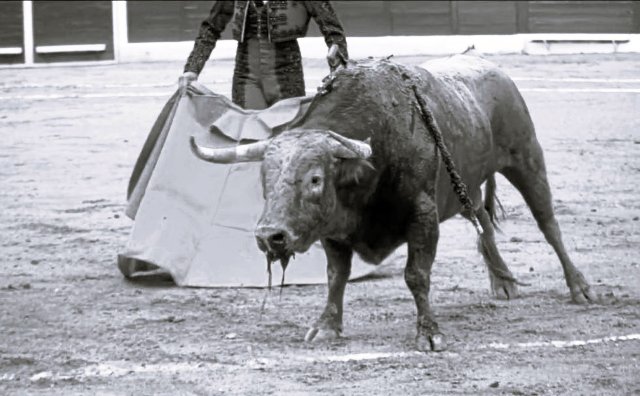
Rafael: Nowadays, if you say you’re an artist, chances are people will say, oh no, not another charlatan parading as an artiste—French pronunciation is a must here, please. Artists, I have found after fifty years of observation, are the most conformists of our cultural fauna. Gallery openings were usually extremely boring. As art world denizens know, only the losers looked at the works, while the others––sadly, often including myself––spent their time catering to the rich and mighty. Trapped in such situations, I sometimes did become aware of what I was doing and what I had become. I closed my eyes briefly and asked myself why on earth had I chosen to be a painter? When I was a boy, I wanted to become a bullfighter, as banal, and of course, politically incorrect, as that may sound. I played at bullfighting with the village boys, and later in my early twenties, perhaps in a last-ditch gesture to my childhood dreams, as mentioned above, I ran with the bulls in Pamplona every day during the week of the Feria of San Fermín. I still remember the ground trembling as the bulls thundered toward me, and I smelled the animals shitting themselves in fear. If you’re a phony in the bullring, you die in under five minutes. In the modern art world, the phonies have taken over.
Greg: Art by its very nature is vulnerable. As are artists and writers and dancers and musicians of all stripes and colors. At least until it and they have ‘made it’—whatever that means—and it and they can dictate their terms. Or ‘pretend’ to dictate their terms. They can speak for themselves on that issue. But all too much of it is abusive, parasitic, and exploitative.
Rafael: From the very beginning, I wanted to leave my stamp on the cultural matrix of my time. A word to the wise guy: if, as a painter, immortality isn’t high on your list, then you should do something else.
Greg: And that is the rub, so to speak. That ‘stamp’ and that ‘immortality’ is precisely what makes it so damn vulnerable. It’s a wonderful high. But like those other ‘highs’, also false and dangerous. Whichever way you get your dose of immortality, it eventually comes to an end. It’s hidden in the name, for God’s sake: ‘I’m-mortal’!!
Rafael: Luckily, I had the stamina and perseverance necessary for the years of hard work required to learn the craft of painting. I was less prepared, however, to master the equally crucial craft of thinking for myself about art and unthinking and debunking most of the fashion-driven, historical, and theoretical claptrap I was taught in art school. I have become convinced through observation, reading, experience, and thinking that success in the art world today is based on luck. And you have to have the genes that make you a driven, self-disciplined, persevering, and thick-skinned person. Forget the talent; that’s largely a romantic illusion. There is no cheap art, just cheap paintings. In art history books and university survey courses, students only see very expensive things. As for me, I am not looking for a style in my painting. Once I am dead, the art historians will find a style for me. Having a style is like wearing tinted glasses. Style is one more compromise. And fashion is a poor substitute for beauty. University art survey courses don’t cover real history.
Greg: It’s the grand collusion which somehow seems to work for the students, the teachers, the universities, and the public. But not always for the artist. I think I would say rarely for the artist.
Rafael: Then there’s the stuff no art history books discuss, the little nightmares outside the survey courses, but palpably present sometimes in the painter’s life. Such as the cold. In my own existence after art school, the cold was poverty’s twin those first winters without heating in Paris. I hated counting my pennies in the stores. Should I buy the warm shoes for the winter months ahead? How about a new pair of jeans?
Greg: For me, poverty was an only child. And the cold was a seasonal inconvenience. Of course, I was born north of North Dakota, and you south of New Mexico. The cold was frustrating, uncomfortable, but tolerable. Or I would not have stayed. It’s not like I didn’t have a choice. Gluing the sole back on my shoe to get another six months wear and pay the rent at the same time was just a problem-solving exercise in pursuing an ambition. Not real want or destitution. I do not remember gaining weight during that time, but I do not remember losing weight either.
Rafael: Could I afford the large tube of titanium white or an extra meter of canvas? I peeled back the expenses in my life to a minimum. I discarded the canvas stretchers too and painted on canvas stapled to the wall or the floor. I rolled up my finished paintings and stored them in the corner of my studio, thus using less space and paying less rent. Only for exhibitions did I stretch my paintings. To this day, my relationship to my canvas remains intimate, like my relationship with my clothes and my skin. When I look at photographs of poor artists in the Paris of the early 20th century, I can’t help asking myself who was paying for the smart suits and starched collars? There is no dignity in poverty, not even for painters.
Greg: But sacrifice sells. Like blood in a bullfight.
Rafael: I know money is important. I have felt the sharp claw of its absence. Money provides me with time, light, space, heating, proper tools, and good materials.
Greg: What is it we used to say? Money isn’t everything. But it buys better painkillers.
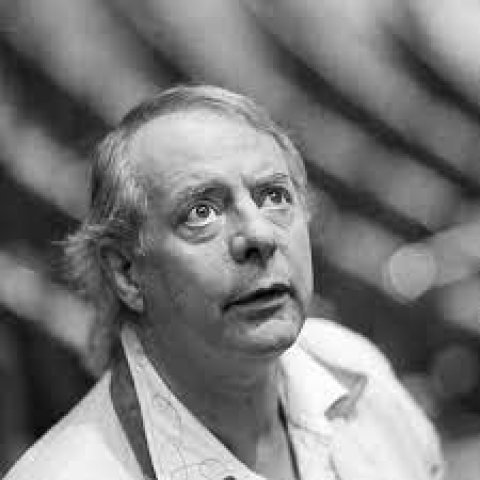
Rafael: That wonderful phrase you coined. I have used it in many a discussion. That should be the motto over every art school. Money buys the best pain killers. Bar none. I have had to listen to aesthetes tell me that poverty is good for creativity. I have sat at dinner tables in posh restaurants and in designer-grubby lofts in New York and heard highly paid museum curators tell me that there is also something aesthetic to be found in Auschwitzian architecture. Other similar statements, such as Karl Heinz Stockhausen’s quip that 9/11 was “the greatest work of art ever” or John Cage’s glib remark that “there is just the right amount of suffering in the world”, exemplify the despicable sanctification of aesthetics. Modern art has always suffered from a pedantic streak. The art world can be like sects riddled with culture apparatchiks. This mindset also favored the Romantic escapist ethics of accepting that the artist could be a child rapist by night and a sublime artist by day. I reject such ideas. Nobody should die for a comma or a color. The body is indivisible, and its movements and gestures, as a whole, make the work of art, from the synapses firing in the brain all the way to the hand holding the brush or the pen. As Gilbert Ryle says, there is no ghost in the machine. There is no soul, and I will add that there is no artistic Doppelgänger either. Declaring painting dead also rendered it self-conscious.
Greg: Delaroche’s 1840 lament—the camera killed painting. I just looked it up. Although I am sure we talked about it around the dinner table of Chez Haynes or late at night at the bar after the restaurant had closed. I know you talked about it. Usually at some considerable length in one of your impassioned discourses that would suddenly erupt on the glaring sins of modern art.
Rafael: Much of modern art is not only self-conscious but also dull and doctrinaire in the bargain. In a similar vein, the Romantics encouraged art as self-expression, a way of getting to know and heal oneself. I am not sure I want to find myself through painting or any other way. When you find yourself, you acquire character, they say, and when you have character, you become opinionated, and that’s when you become a bore. This illusion was furthered by art for art’s sake, a French tour de passe-passe, a meaningless soundbite. That would dovetail with the Duchampian idea that art could be anything you declared to be art. I believe in art for people’s sake, which does not mean social realism or Snow White and the Seven Tractors. Art needs to generate meaning when it is shared. Every language has its own limits. That is why mementoes and monuments to tragedies and horror most often look flat, wanting, and ostentatious. People don’t like to admit the limits of art, but they should. If you aim for immortality, aesthetics might be a matter of life and death for a painter, but it has nothing to do with human suffering on a horrific scale. And it is insignificant compared to the ordeals of survivors of the nationalist slaughters, genocidal wars, and slave labor camps that have defiled––and continue to defile––the world in my lifetime.
Greg: I remember when you raised these issues—grappling with the meta meaning of what you were doing, of what we were doing—the discussion would often shrink to an impassioned exchange between you and me. I never missed an opportunity, like now, to respond to something you said. Respond is too gentle a word. We would hurl thoughts at each other, ‘full of sound and fury’, that I recall signified something at the time, but often only to us. They frequently drove others away. Not that we noticed. Eventually even Leroy would tell us to get out and go home.
Rafael: Suffering and art. My son Alex asked me: Would you eliminate suffering if the price were the elimination of art? He answers correctly, in my opinion, that there is no moral equivalence. How much suffering is a work of art worth? If the answer is not “none”, then you eventually get to a point where it is morally acceptable to kill for art, a moral dead end.
Greg: It sounds a bit like the old woodchuck query: ‘How much pain is a work of art worth if a work of art is worth pain?’ Maybe none? But I hesitate to ask if any work of art has ever not caused pain at some point. But then, perhaps, we are talking here about grand suffering and the bargain with evil? If we are, then I would fully agree.
Rafael: Much of what passes for painting today is mostly self-referential, or a mishmash of sidewalk philosophy, dime-store psychology, and barbershop agitprop. And I want to say here that I do not in any way accept the schizoid notion that artistes can be child murderers by night and sublime artists during the day. That is romantic claptrap. I draw the line at causing murder and death, à la Celine, who denounced Jews to the Nazis.
Greg: I am still saddened by how persistent the bargain with evil continues to be. Even when uncovered and brought out into the glaring light of day. Monuments, statues, artists, writers, actors, poets. It’s almost as if the mystique of genius and beauty and, dare I say it, immortality, justifies its continued display and worship well beyond its proper place as historical footnote.
Rafael: The potential, perfect communication in silence and darkness is not an option for me. In poetry, I read between the lines, and in the emptiness between the lines I find meaning beyond the words themselves. In painting, I see meaning between the layers of paint and between the brush strokes–– meaning that goes beyond paint. I try to look at paintings with no words left in my head. Communication is best in advertising. What you see is what you get, and you get it right away. In art, what you see is not what you get. If you are lucky, you’ll get some of it now and more in, say, a hundred years. Thus, it turns out the dead do the best art. Do I need the nudge of death to squish paint around on a canvas? When I am painting, I suspect I am training for dying.
Greg: And there lies the seeds of our rift. It’s still all too reverential for me. And I think the reverential is what I fear the most. If you fear the great nothingness of death, I fear the great plenitude of reverence. What if there is something eternal, immortal, and utterly sacrosanct? So, revered and venerated it can’t be jeered at or teased or scorned? It becomes a lever for human harm. For evil. Which is where we agree. Looking back, the immortality and sanctification of Art and Literature have been the subtext of most of the longer debates and discussions we had over the many years we have known each other—starting that first night at the bar in Chez Haynes. We examined and re-examined what we were doing and why, sometimes bellowing and roaring at one another in such a way that others thought it would get physical. Which it never did and never would. I think we both relished it. I know I did. And you never refrained from initiating or engaging in the fray. Beneath the clamor and ruckus, we pursued the thinking of whatever we were thinking and the making of whatever we were making. Sure, the latter was often arduous and frustrating. But in the air was the dream of what might one day be. Art? Literature? After all, we were in Paris. But no, for me there was never an absolute. Painting and writing are never Art and Literature. Not in any superlative sense. (Not that I am fully immune to its appeal and influence. Oh, how I wish I was.) Those two imposters are simply passing edifices: built through privilege, luck, the test of time, or canonical decree. The purveyors of both—academic, merchant, dealer, agent, critic, investor, or whomever—desperately need to make a living and their reputation. Along the way they sometimes crush or inadvertently help a painter or poet to do the same.
Rafael: I am always puzzled that film and stage directors, poets, dancers, singers, actors, and writers refer to themselves as just that. In contrast, painters and sculptors say they are artists, not painters or sculptors, as if they need the reassuring ‘artist’ label to be taken seriously––or perhaps take themselves seriously.
Greg: Good luck to them all—however they want to refer to themselves and their work. We usually tried not to be quite so serious. Back on the tarmac of the customs depot, you finished carving the canvasses (paintings? art?) from their frames and were about to roll them up and put them in your car. But there were a couple of lessons left to learn. Not about taxes, nor about the immortality of art. Just as we started rolling the paintings, you offered me one of the paintings for my help that day. It was a first-rate lesson on the value of friendship. You allowed me to choose. And I chose.
Greg: Then came the second lesson. You immediately regretted giving me the choice. You had taught me well. Not all art is equal. I happened to choose the one you liked best. We flipped a coin and I won.
Rafael: Painting is quite a ridiculous way to spend my life. Inspiration is like epilepsy; I fall flat on my face. My breathing is what is most articulate about me.
Greg: Or a heartbeat. Irregular and doomed.
Rafael: Good symbol. Or metaphor. Doom. Boom. The last heartbeat is eternal but silent.
Greg: Unlike Art. Which dies with a whimper.