

Flex
Girls Basketball as a Canvas for Numerous Issues
By: Victor Cordell - Apr 03, 2026
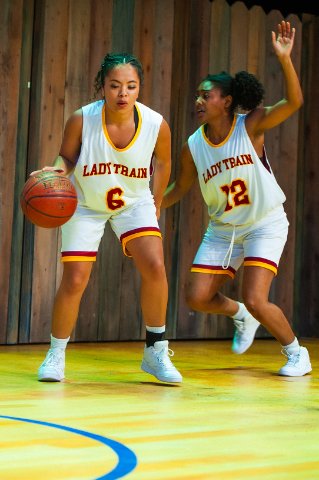
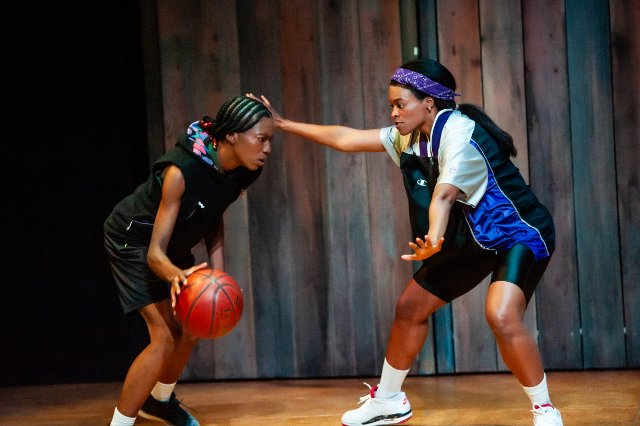
Dribble between your legs. Talk trash. Push and cheat as much as possible without getting called for a foul. Such were among the things taught to Starra by her mother, who preceded her by a generation on the Plainole (Arkansas) girls’ basketball team.
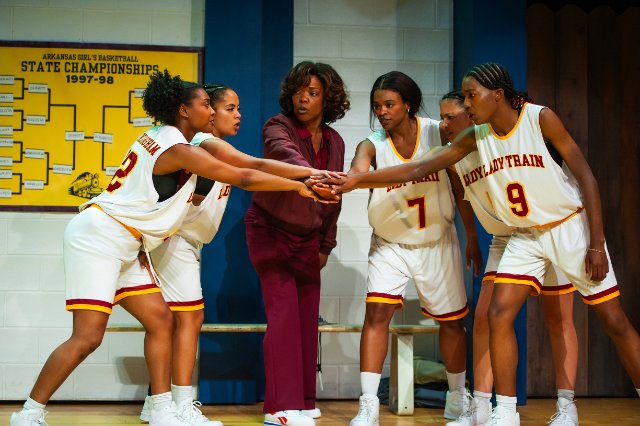
While her mother was the main attraction, intense and scrappy Starra has been reduced to second fiddle with the arrival of super-scorer Sidney. But maybe with her addition, the team can make it to the state championship rounds and catch the eyes of college recruiters. The hitch is that the other key player on the team, April, is pregnant, and Coach Francine Page has a strict rule that pregnant girls can’t play. The members of the team had made a pact that there would be no smoking, no drinking, and no sex until the season was over. April broke that vow.
The team tries all manner of trickery to get the coach to relent, even wearing pregnancy prosthetics to show that they can all perform with a belly bump. What else to do? Of course, one alternative is for April to get an abortion, and since she’s seen the future for teen mothers, she has the will but not the money.
Meanwhile, Starra’s resentment of Sidney reaches the point that she is willing to undermine her. This fixation on punishing a rival, despite the probable consequences to the team and to herself, is a sad reflection of the human condition that resonates with truth.
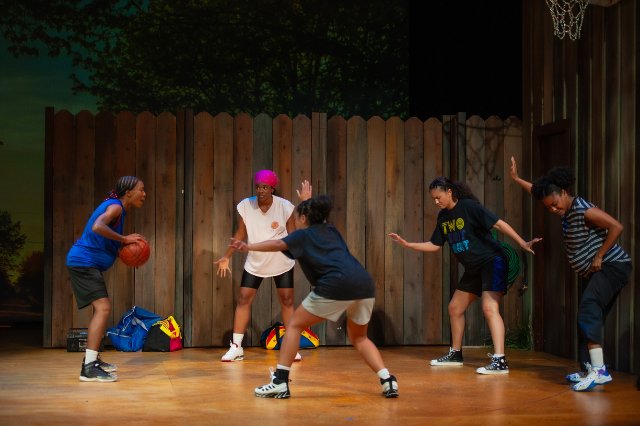
Flex is a play that centers on basketball, with plenty of one-on-ones, scrimmaging, and simulated games. Even though the ball playing is far from realistic, the opening night audience still became frenzied during a “game” as if its cheering for a real team in a real competition.
But despite the overarching focus on basketball which can seem superficial, the play can also be seen through a line in the dialog – “Basketball isn’t a game. It’s a war zone.” Indeed, thematic issues emerge with the rat-a-tat of a machine gun – competition, abortion, sacrifice, keeping secrets intending to protect others, imposition of will, commitment, friendship, coming-of-age, young love, agency, separation, trust, betrayal, redemption, faith, sexual abuse, and more. Yet, for the abundance of issues that arise, they almost all seem organic to the story line, and they are certainly all relevant to growing up hard-scrapple, female, and black in the South, or anywhere else.
Playwright Candrice Jones knows these girls. She has created an ensemble of characters with distinct personalities and traits from the religious Cherise (Emma Gardner) to the independent April (Camille Collaço) and the conciliator Donna (Courtney Gabrielle Williams). Under Margo Hall’s direction, each actor attacks her part with conviction.
Starra, performed by a form-fit Santeon Brown, is the captain of the team and the anchor of the cast. She is the only one who displays notable basketball skills, but she also has the grit and the strutting panache to talk the talk and walk the walk. But Starra also has a loving side as she often has soliloquies to share with her presumably deceased mother. Her nemesis, Sidney (Page Mayes), is also cocky, but with more convincing and less boisterous confidence.
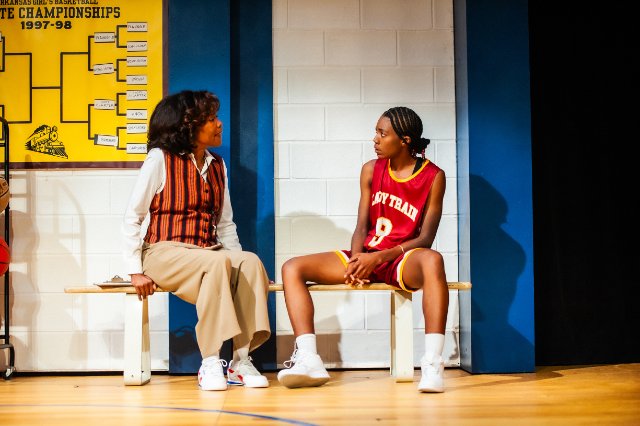
The adult in the room is the driven but empathetic Coach Francine Pace, portrayed wonderfully by Halili Knox. She disciplines as should be expected, but she cares about her charges and can also mother them and provide support when needed. She also possesses the classic former athlete’s characteristic of living in the past by repeating the same stories over and again to groans by the listeners.
The overall production is powerful, with the actors creating three-dimensional characters who often face conundrums with no simple solutions, like April’s pregnancy and Starra’s deception. But as individuals, they draw attention and sympathy.
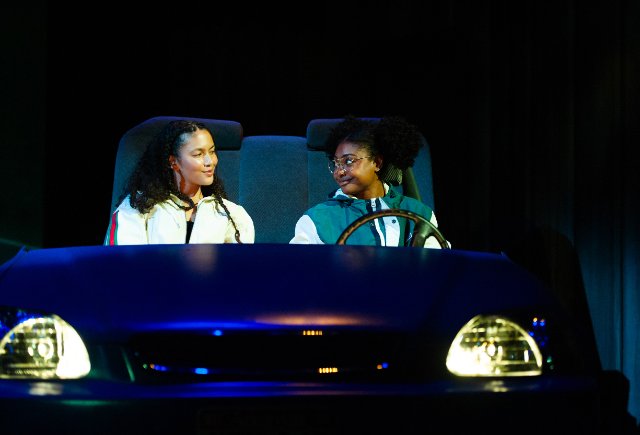
The action plays on Bill English’s well-appointed scenic design, a simple gym-like setting with baskets that sometimes seemed to have a lid on them, as many easy shots were missed. A car makes appearances more than once, and there is also a baptismal pool (I won't say why.) One weakness is sound. One weakness is sound. The performers are not amplified, and occasionally voices fade. But what is more challenging for the listener is when music is playing which competes with the dialog. Background sound early in the piece is mostly just annoying, but in a scene in Donna’s car, the music overpowers the girls’ voices.
Nonetheless, the play is very watchable and the messages very important.
Flex, written by Candrice Jones, is produced by San Francisco Playhouse and is performed on its stage at 450 Post Street, San Francisco, CA through May 2, 2026.