

Simone Levy Greenwood Retrospective
20th Century Artist Comes to Light
By: Susan Hall - May 03, 2026
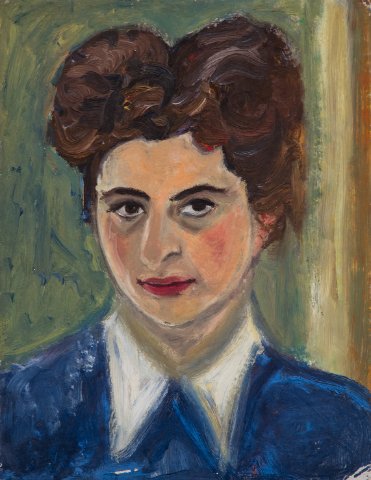
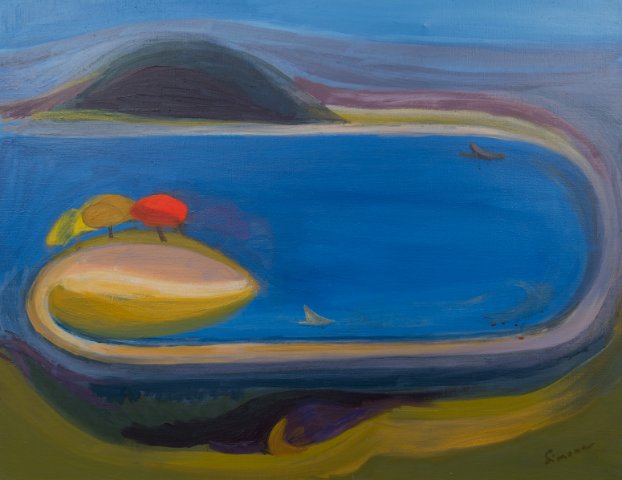
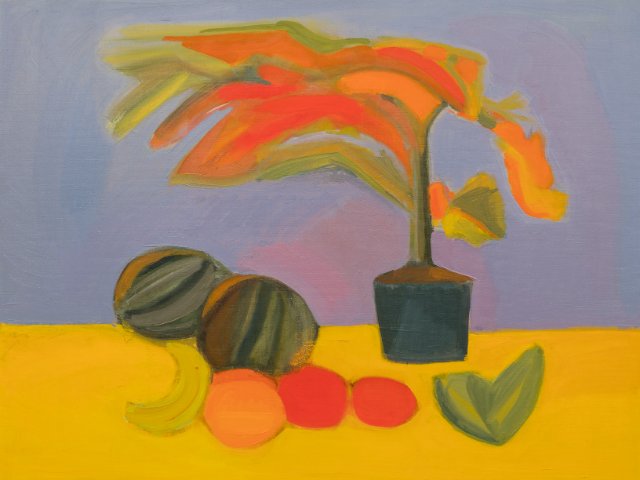
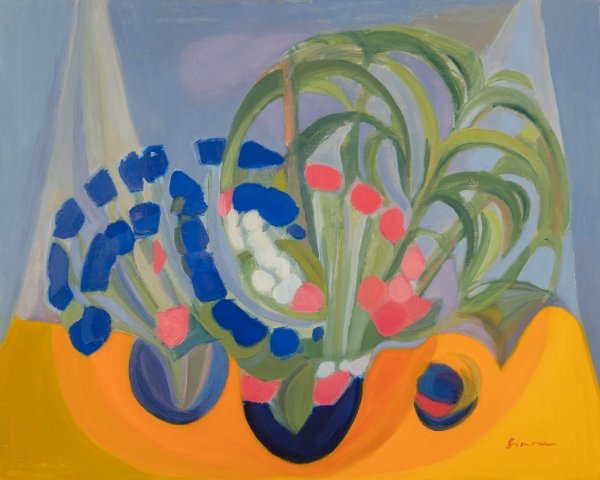
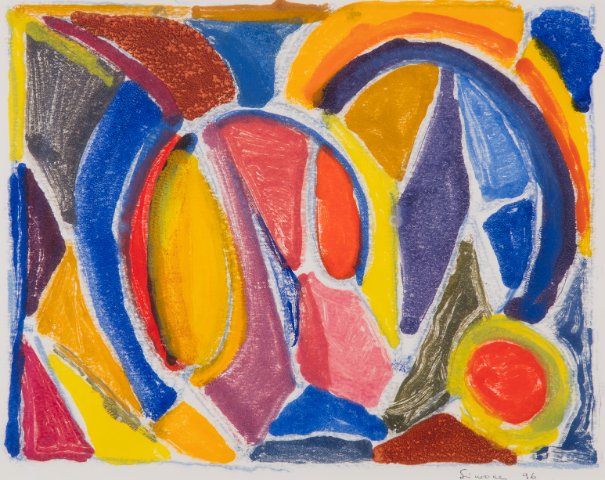
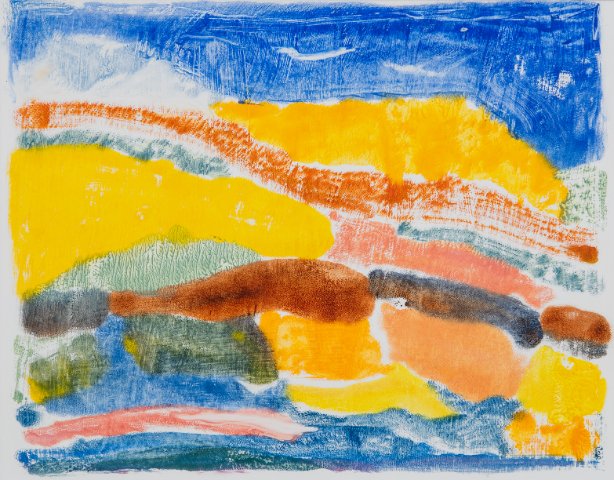
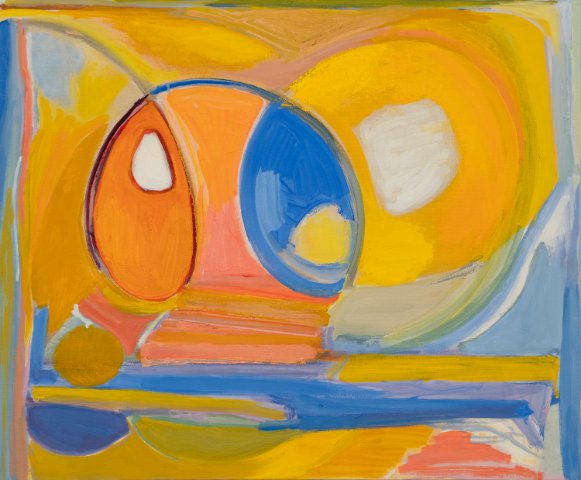
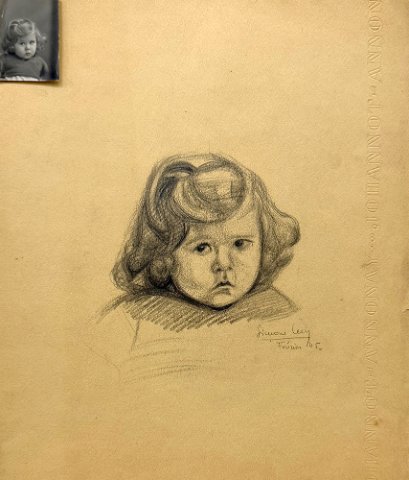
Simone Levy Greenwood was born to paint. Always an outsider, she carried a brush and palette for as long as she could remember. When she and her family were driven from their home in Alsace after the Germans invaded France, they ended up in Valence in Southern France where Simone, now in hiding, continued to paint.
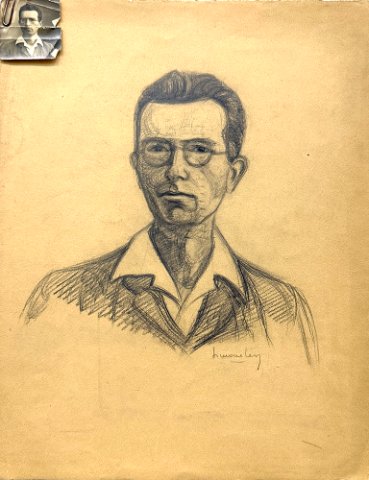
After the liberation of France, Simone began her studies at l'École d'Art de Valence with Paul Bernezat, a graphic artist and lithographer who instilled in her the rudiments of composition, form, and color. During this period, she was commissioned by many families of Holocaust victims to immortalize the expressions of their lost loved ones by converting their small ID photos into full-scale black and white drawings.
Having survived the Second World War, she felt a special exuberance. This heightened reaction to the world is palpable in her work.
Back in Strasbourg after reclaiming her former life, Simone pursued her studies at l'École Supérieure des Arts Décoratifs. Following the death of her father in 1950, she hungered to be part of the post-war art scene and moved to Paris.
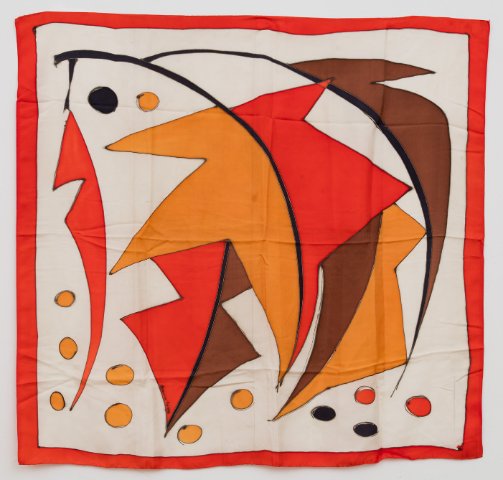
She frequented museums and developed a fine-tuned ear for music, while also studying the history of various civilizations. Her successful "foulard" (scarf) series grew out of those studies and inspired by lessons with the famous poster artist Paul Colin.
In Paris, she met and married an American medical student studying in Lausanne, Switzerland.In 1967, Simone relocated to New York City with her husband and young daughter. For a few years, she ran "L’Atelier des Jeunes," a small painting school encouraging children to express themselves through color. The Metropolitan Museum of Art quickly became her second home.
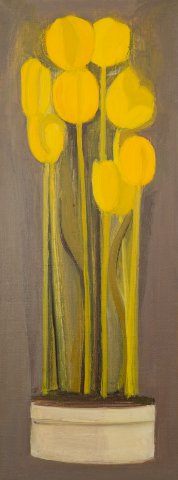
Her oil painting style evolved over time. Strongly influenced by Picasso, Braque, de Staël, and the abstract expressionists, her subdued and textured slabs of color resonate with hope, like lyrics of love for life.
Although Simone open-heartedly embraced her adoptive country, she remained deeply connected to her French roots. She regularly attended movies at the French Institute, socialized with members of the Union Alsacienne, and developed long-lasting friendships through the Lycée Français de New York, the Services Culturels de l'Ambassade de France, and the Albertine Reading Room. She often recited poems by Baudelaire, Verlaine, and Victor Hugo from memory.
Like many women balancing art, a husband, and a child, Simone had to juggle her many roles. She continued to paint almost until her death at age 92.
She did not promote her work. While a gallery in France might have discovered her through the local art community, the American system required a business-minded approach that Simone did not pursue. Her work remained private, hidden from the light of day. Now, years after her death, her daughter is bringing these pieces to the public.
The thicker stucco-like textures Simone concocted in her later works were a direct expression of her happiness. Superimposition of layers enabled her bright, unaltered colors to vibrate through. This affirmed her passion for life and her triumph over hypocrisy, ignorance, and hatred — as seen in works like "Harmonie, Joie, Espoir, Lago, and Optimisme." Simone was not a person of many words. Yet, her bold, luminous colors and strong compositions conveyed her vision of freedom, harmony, balance, equality, and love for the universe.
At last, her work will be on display at Café Coco in Queens. (21-52 44th Drive, Long Island City.) An opening on May 14 will be followed by a summer of changing works created by this very special talent. She is finally being discovered. Come and see her work any time; the cafe is charming and the art is wondrous.