

Death of Classical Previews the Met Opera
Missy Mazzoli and Gabriela Lena Frank Featured in Underworld Venues
By: Susan Hall - May 10, 2026
Death of Classical is a spunky classical music producer that takes performers and audiences into strange and wonderful spaces, where they enjoy whiskey, burgers, and music.
In the past week, the composers of two upcoming productions of the Metropolitan Opera have been previewed.
Lincoln in the Bardo and El Último Sueño de Frida y Diego are operas written by young women composers. Both take place in a world between the living and the dead — a world the Met Opera knows well these days.
Gabriela Lena Frank, who won a Pulitzer Prize for Music last week, is the composer of El Último Sueño de Frida y Diego. Missy Mazzoli, also distinguished, composed Lincoln in the Bardo.
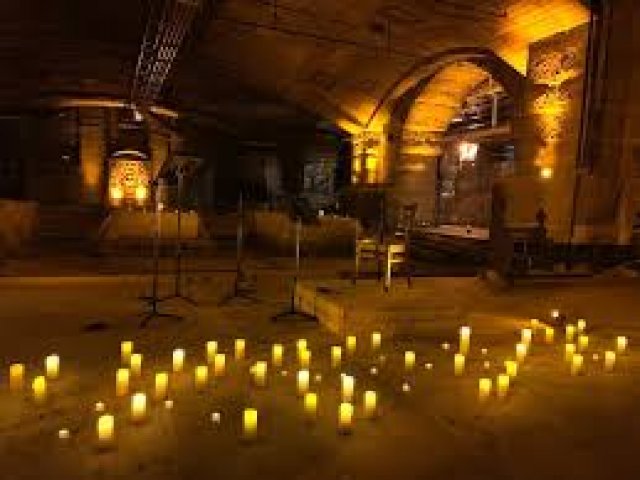
In the candlelit darkness of the unfinished crypt of the Cathedral of St. John the Divine, the music reverberates from the stone walls with special acoustic weight. Mazzoli’s chamber work Dark with Excessive Bright was performed by a string group, with the violin taking the lead in music originally written for the dark, woody tones of the contrabass. In this performance, the violin emitted high-pitched, sharp sounds. Mazzoli’s music is distinctly her own. Its lushness is created through unusual combinations of instruments, interspersed with snippets of melody that form an absolutely distinctive, haunting texture.
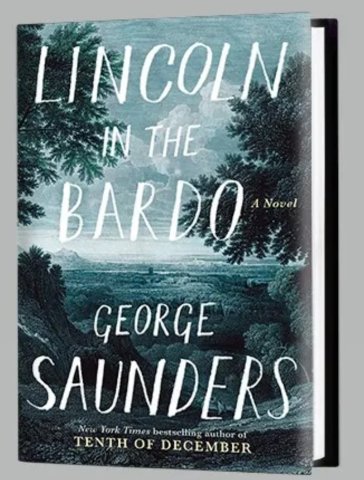
Mazzoli’s earlier opera, Breaking the Waves, based on Lars von Trier’s film, was a captivating work. George Saunders’s book, on which the new opera is based, is an imagined portrait of Abraham Lincoln grieving the death of his son over the course of a single day.
The world premiere of Lincoln in the Bardo takes place at the Met next October. It is sure to be a gripping evening of opera with beautiful music.
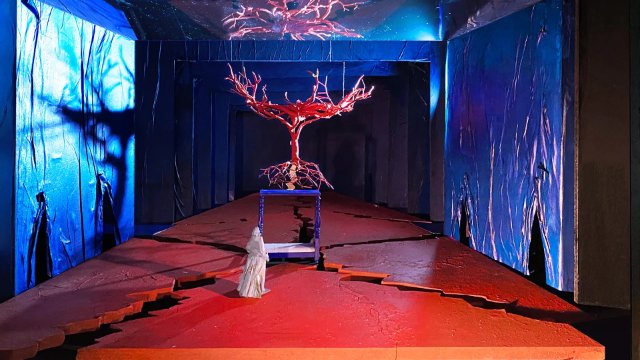
Gabriela Lena Frank’s El Último Sueño de Frida y Diego opens this week at the Met in its New York premiere, having previously been presented in San Diego, Austin, San Francisco, and Chicago. The Museum of Modern Art currently exhibits a copy of the set: a tangled red tree with a mirror over the bed, in which you can see Leon Trotsky if you look hard enough. Trotsky was one of Frida Kahlo’s lovers, though he is not featured in the opera.
At Green-Wood Cemetery, several arias and duets from the work were performed. Isabel Leonard is Frida, Carlos Alvarez is Diego, and Vanessa Becerra appears as a comic queen of the underworld.
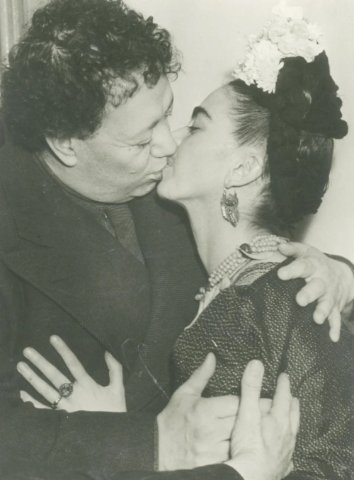
Librettist Nilo Cruz and the composer chose not to follow the biographies of this famous couple too closely, but rather to dig deeper into their relationship and characters. Frida has died. Diego’s last wish is to see her once more in the world of the living.
Negotiating the space between the two worlds is Leonardo, sung by the German countertenor Nils Wanderer. From the moment he steps onto the stage, he is electrifying — his beautiful voice stretching up and down effortlessly, his wit and intelligence on lively display. In the opera, we are promised that he will first appear as the character he has always wanted to be: Greta Garbo.
To get a feeling for Frank’s music before going to the opera, listen to Apu, her tone poem for orchestra, conducted impeccably by Marin Alsop with the National Youth Orchestra playing with joy and deep musicality. The music reminds us that apus are gregarious birds that eat, sleep, and mate while flying. Sounds like Frida and Diego.
The Met Opera, in producing these works, shows why it deserves to continue in its New York home.