

From the Novel Call It In the Air
Dan Spear
By: Gregory Light - Jun 28, 2026
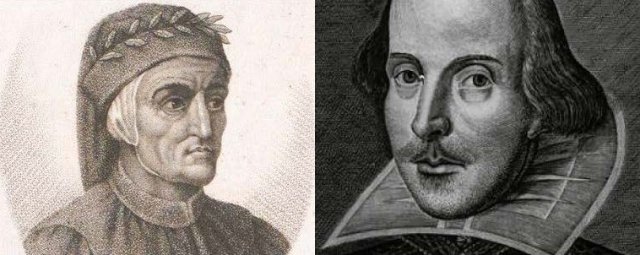
(Ottawa, Canada 1962)
'I don't want to bet.' Joey mumbled.
'Why not? You chicken?' asked Gary.
'I'm not chicken,' he said. 'It's just that my mom says I'm not supposed to bet.'
'Yeah, sure. You're just trying to get out of it.'
'No, I'm not,' Joey shouted, and cycled off.
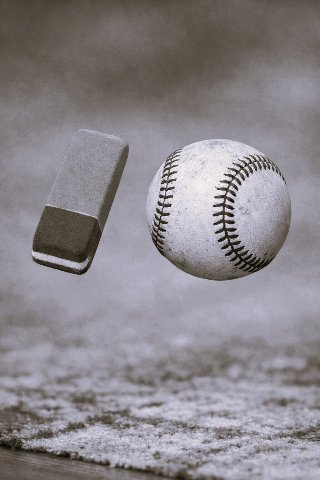
It was the truth. Well, close. His mother had said something like that after another dumb incident with his uncle. It had happened one evening when Frederick—having nothing better to do, Joey guessed—nudged his nephew with his foot while they were watching television and mused that if he dropped Joey's baseball and his rubber eraser from the same height, they would both hit the floor at the same time.
'That's dumb,' Joey replied without even looking up. He wished Frederick would "lay off" him, at least while he was watching TV. His uncle always seemed to wait until something fantastic was on before interrupting him. He wondered where adults got this right to disturb a kid's privacy whenever they wanted.
'It's scientific, Joey. I'll show you,' said Frederick standing up. 'I'll hold the baseball in one hand and the eraser in the other. To make sure they are both at the same height, I'll hold them both at nose level.'
'Can't you see I'm watching TV?' Joey interrupted.
'Show more respect for your uncle,' his mother said. 'Let him finish.'
'But Mom?'
'Listen to your mother,' his father said.
Joey looked at his father and then back to his mother. Their expressions were not particularly sympathetic. Uncle Frederick remained quiet, a Pinocchio with a baseball and an eraser at his nose, stiffly waiting to conduct his experiment. Sheesh! Joey wanted to shake his head in amazement. A few minutes ago, he was lying comfortably on the carpet, minding his own business, watching TV, and now, suddenly he was caught in some weird kind of parent-governed puzzle that said he was in the wrong. How did they manage to manipulate events so easily and calmly? He hoped it was a subject they taught in school. He had to give in.
'Okay, I bet they don't hit the floor at the same time.' It seemed a safe bet. After all, the ball was a hardball. Hardballs, he knew, could travel fast. For a science teacher, Fred wasn't too quick on the uptake.
'Make it a nickel bet,' said Frederick.
'Sure.' At least he could figure on making some money out of the situation. That was a consolation. 'Can I borrow five cents, Dad?' he asked his father.
'Neither a borrower nor a lender be,' his father replied without looking up from the newspaper.
'What's that supposed to mean?'
'Just what it says.'
Oh God, his father was in one of those moods again. What a way to get an education, Joey sighed.
'I'll lend it to you,' his uncle said. Frederick was acting amazingly confident. Joey thought it had to be a bluff.
'Don't encourage him to bet,' his father said.
'It'll be a good lesson for him,' replied Frederick as if the bet had already been won. The implication irritated Joey. As did his uncle's blatant smugness. His father didn't push it. 'Well, Joseph? Are you going to take it?'
'Yeah ... sure,' he said, hesitating slightly.
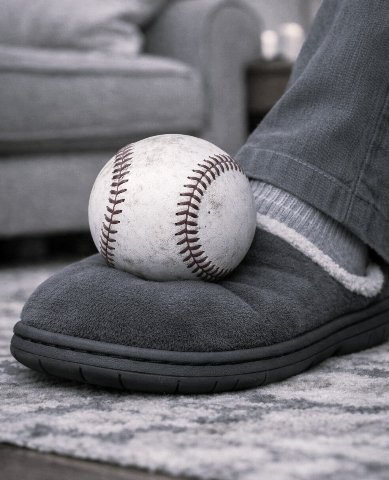
'All right, watch.' His uncle let go of the two objects he had been holding to his nose for the past few minutes. To Joey's horror, the eraser was falling as fast as the baseball. Then, suddenly, Frederick spat out a sharp, pitted gasp. The baseball had dropped onto his right foot with a painful thud. The impact reminded Joey of falling off the vault in gym class and having his wind knocked out. You don't move. The baseball didn't bounce. It stayed on his uncle's foot, embedded in a fold of his grey slipper.
'I won!!' shouted Joey. 'I won!' He sprang up from the floor and bolted over to Frederick. 'Give me the nickel. I won.'
'You didn't win,' scowled his uncle, rubbing his foot rapidly and checking for broken “metacarpals”; as he later put it. 'The eraser fell as fast as the baseball.'
'What?' Joey asked. He couldn't believe that his uncle would stoop so low as to try and worm his way out of a perfectly legal bet that he had clearly lost.
'That was the bet. That the smaller object would fall as fast as the bigger object.'
'No, I bet you that the eraser and the baseball wouldn't hit the floor at the same time. And they didn't, so I win.'
His father smiled at his brother. 'I think he's got you there, Frederick.'
His uncle, however, was not about to give up. 'The whole point of the experiment was to show that all objects fall at the same velocity,' he said rather pompously. 'Which is what the outcome demonstrated. Saying that the objects were going to hit the floor at the same time was one way of defining that result. Joseph, you assumed the eraser, being smaller and of less weight, would hit the floor after the baseball. As it turned out, quite by accident, the eraser hit the floor first so even on that basis, you are wrong. I win the bet.'
Joey was absolutely “blasted” by this speech. He didn't follow most of it. But, first, it wasn't an experiment, it was a bet; and second, even if the baseball had hit the floor at the same time as the eraser, he didn't see how that showed that all objects, everything in the world, fell at the same speed. Leaving all that aside, what truly made him mad was the fact that his uncle dared to explain what he was thinking as if he was a mind reader or God. It was the first time he could ever remember being made speechless through sheer anger. It was all he could do to turn, palely, to his father for support.
'You might have explained all this to Joey beforehand,' his father said to Frederick in a tone which, incredulously to Joey, lacked any real conviction. 'I suggest that you both simply agree that nobody won.
That was too much. Joey couldn't contain himself. 'But I won. I won fair and square,' he wailed.
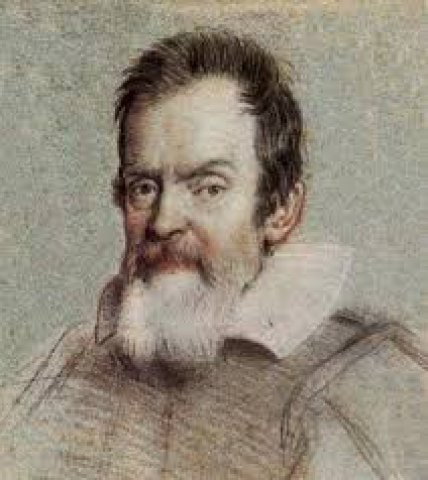
Uncle Frederick was being graceful. He smiled smugly at Joey. 'It's not the nickel that's important, Joey. It's the principles that are. Not only the principle of compromise but the scientific principles of gravitation. Today you learned a lesson in physics which Galileo discovered hundreds of years ago.'
As far as Joey was concerned, the only principle that he had learned was never to trust his uncle again. He picked up his eraser and baseball and made a bitter exit. 'You're a cheater!' he shouted as he steamed out. The last thing he heard was his father’s mumble.
'Neither a borrower nor a lender be.'
'Nor a better,' his mother added.
Joey thought his mother was making a moral remark about being better than others; he assumed she was aiming it at Uncle Frederick. Recalling it while betting with Gary, he realized she had been more literal and balked at betting money. He was wary of hidden "principles". Eventually, he agreed on a ten-cent bet because he was sure Gary wouldn't dare try using any of the devious tactics practiced by his uncle. Besides, his father wasn't there to surrender his side so easily. To cover himself, however, he argued that he should be allowed a head start, but it wasn't in the cards. Gary was not about to give odds. He said that Joey had the new three-speed which more than made up for his extra papers. Not to have accepted would have been a slur on his new bike. He nodded and they grasped their secret handshake.
After school, they cycled down to Hatchford Street where The Star distribution van dropped off the bundles of newspapers. They quickly loaded up their bikes and confirmed that the finish line would be Joey's driveway. Gary balked, but Joey was determined to get at least one concession. It was hardly major. In terms of distance covered, it would have been marginally better for him if they'd settled on Gary's driveway. As things turned out—hindsight being the perfect science that it is—it would have been a whole lot better.
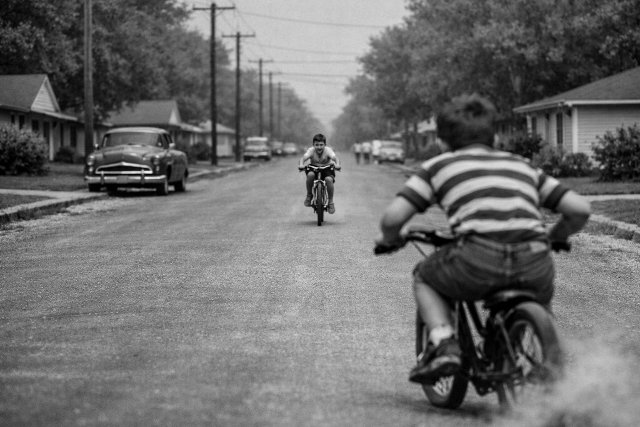
When Joey turned the corner into his street, he could see Gary about two or three hundred yards further down, near the corner of Birchmount Road, racing towards the finish line, now roughly midway between them. Joey, however, knew that Gary had finished his route whereas he still had one paper left to deliver. Mrs. Anderson. He decided that fate left him no choice. He would have to chance it and chuck Mrs. Anderson's paper at her doorstep while belting along at full speed. He folded up the newspaper tightly, shifted it to his right hand, and leaned down low over his handlebars to gain as much speed as possible. His eyes were focused on Gary who had taken up the "classic" racing position the two boys had worked out together in the parking lot of the local shopping centre. Joey was sure that he was about fifteen to twenty yards closer and was not about to give up any of that edge hand-delivering the final paper.
As the two boys neared one another, Joey's eyes flicked quickly between Gary and Mrs. Anderson's house. He saw Mrs. Anderson's door and measured it carefully, raising his arm fractionally. Just before he tossed it, with a concentrated heave, he looked back at Gary who was standing up on the pedals of his bike, pedalling with all the exhausted force he could muster. When he looked back for a last momentary second at the Anderson door, he suddenly jerked spasmodically and swerved a few inches to the right. The newspaper was already sailing through the air. Nothing was going to change its path. What he saw threw him unmercifully into a helpless wobble. At that moment, the Anderson door had opened, and Uncle Frederick had emerged onto the front steps. He was smiling and chatting comfortably with Mrs. Anderson. The newspaper continued its irregular flight and landed with a crack on a bush of budding roses growing two feet from where his uncle and Mrs. Anderson were standing. They both looked up in astonishment, catching Joey's guilty gaze as it withered under the gravitational force of his descent. His left foot slipped from its pedal, and he soared into a wild, plunging dive into the ditch. As he landed, he saw Gary's triumphant arrival at his driveway. 'That bastard!' he swore (meaning Frederick) as he slid to a stop, the gravel tearing large hunks of his skin from his knee and destroying his favourite pair of jeans.
The truth, which even Joey grudgingly had to accept, was that Uncle Frederick simply had this uncanny knack for being in the wrong place at the wrong time. It was the only logical way of explaining it. He could not have planned to step out onto Mrs. Anderson's steps at that precise moment, even if he'd wanted to. Which he didn't. His three-month-old affair with Mrs. Anderson (twenty years his senior) was strictly a private "thing" which had started spontaneously one evening after he had helped retrieve Tippy from the clutches of one of the neighbourhood tomcats. His reward had been a cup of coffee and a series of "etcetera’s" which culminated in a sexual fling with a widow who carried on as if the world was "clearly and truly doomed". Stimulating as Frederick found the encounter, it was also unnerving. Even Tippy, who had taken up a disturbing position on a chair near the bed for the duration, alternately snarling and whimpering at Frederick, had been scandalized. Fortunately, Frederick had not mentioned the evening to Joey's father. He did not want it to be blown out of proportion. This accounted for why Joey did not receive a stinging lecture after the bicycle race. Even at dinner that evening Frederick behaved as if the newspaper and the broken rose bush had not happened. Wordlessly, he signalled to Joey that he wouldn't say anything if Joey didn't. And Joey didn't, feeling somewhat weird, however, to be sharing a secret with his uncle.
In an odd footnote to the curious events of this bicycle race, years later Joey would come to associate it with the names of Shakespeare and Dante. Primarily because three weeks earlier, assailing Joey's father with his usual bugbear, "the supremacy of the scientific perspective", Uncle Frederick had been so scathingly dismissive of literature and these two literary giants. 'I don't say that it should all be burned,' he had concluded contemptuously, 'I'm not a heathen after all, but it must be accepted that most of it is mere indulgence; not worthy of scholarly attention or the funding it receives.' Joey's father had quickly changed the subject, leaving his brother's bellicose view to carry the day. Joey, on the other hand, quietly awarded victory to Shakespeare and Dante. If Frederick could be this disparaging towards them, then he figured they must have been "okay guys" when they were alive; and he imagined them as knights or barons or something like that.
Dante especially fascinated Joey. Anyone who called himself Dan instead of Daniel was all right in his books. (He referred to the Italian poet as "Dan Tee"; based on his uncle's pronunciation.) Shakespeare, on the other hand, he figured had to be a foreigner, (his mother said she found his English difficult to understand) but he figured Spear was a neat last name all the same. Shake, however, was definitely "fred". Gary and he knew a couple of older teenagers who had nicknamed one of their buddies "Shake". They called him that because he would shout "shake it baby" at every girl that walked by him. He even shouted it at Marlene, once. Joey supposed it was because she had breasts; not that they were very developed but all the other girls in his class seemed to envy them. All except Diane who said she didn't need breasts because her father was a millionaire.
Personally, Joey liked the name Dan Spear the best. It had a western ring to it, like Davy Crockett or Buffalo Bill. The day before their big race, he asked Gary to call him Dan Spear. It was also the day that he flipped his penny for the 624th time. He remembered that because the coin had turned up a head and as he tossed it his mother had called up to him to say that his uncle would be arriving so he shouldn't be late. It convinced Joey that a theory he had been toying with for a week or so was right. Whenever he heard that Fred was coming or whenever Fred's name was mentioned or whenever something "fred" happened, he would, or had, flipped a head. He started to see resemblances between Frederick and King George. "If you take away the beard," he told himself, “They are the same guy." Joey hoped he would only flip tails.
When he asked Gary to call him Dan Spear, he told him the reason was he'd flipped a tail when he thought of the name.
'What are you talking about?' Gary didn’t like the nickname.
'I'm talking about a maple leaf, that's what. Mostly I get Georges. Anyways, why do you have to know why, eh Gary? You sound like my uncle when you ask that. That's what you sound like!'
Gary was unprepared for this outburst. He sensed that something was bugging Joey and it almost certainly had to do with his uncle, or he wouldn't have mentioned him. 'Is your uncle coming to visit again?' he asked.
'He's already here,' said Joey sitting down on Gary's front steps. 'For Easter. I wish he'd start his own family. He only comes because Mom says we're all the family he's got.
'Boy, I'd sure hate to be his kid,' moaned Gary.
'I am his kid.'
'Yeah,' Gary grimaced. 'So, what are you going to do?'
'Maybe I'll run away until the holidays are over.
'Where would you go?'
'I don't know. But I'd call myself Dan Spear. That's for sure. Maybe I'd go out West. To Alberta or Texas.'
'Texas?’ Gary winced. ‘You can't go to Texas. That's a whole different country.'
'So what? Dan Spear can go wherever he wants and be whoever he wants.'
Just then Gary's mother came out onto the steps and told Joey that his mother had telephoned and wanted him home for dinner.
'He doesn't have to go now, Mom,' Gary said, 'He's running away from home.’
'You'd better go now, Joey,' Gary's mother said, smiling, 'I think your mother said your uncle would be there.'
'Yeah, I know.' Joey got up slowly from the steps and dragged his body towards his bicycle. Dan Spear wouldn't even spit on Frederick, he thought.
'See you tomorrow, Dan,' Gary said as cheerfully as he could. 'Remember the race?'
Oh yeah, the race, thought Joey, as he cycled home. And he reminded himself to flip his penny that night before he fell asleep. He didn't want to race with a "head" as his last toss. That would be bad luck. After an evening spent with Frederick, however, he was so tired and so depressed when he got into bed, that he fell asleep as soon as his head touched the pillow. In the darkness, the bright, 1936 copper smile of George V silently grinned up from the bedside table where he'd left it.