

An Exquisite Eye: Introducing the Aso O. Tavitian Collection
The Clark Art Institute Presents
By: Charles Giuliano - Jul 03, 2026
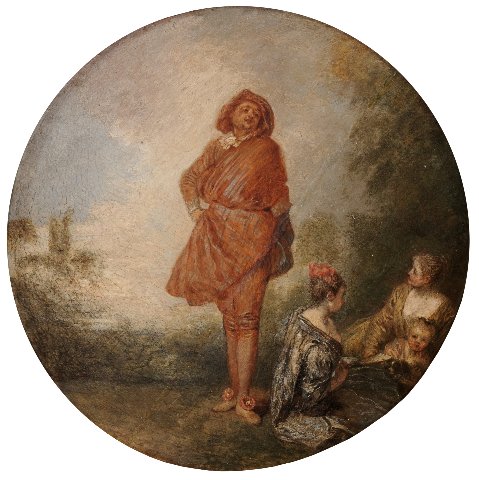
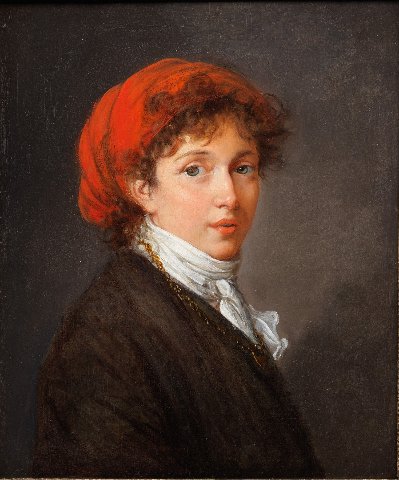
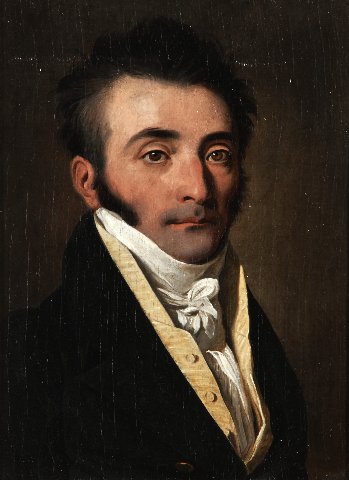
The Clark Art Institute presents An Exquisite Eye: Introducing the Aso O. Tavitian Collection, on view through February 21, 2027. The exhibition of approximately 150 works is the first public presentation of selections from the Tavitian Collection, one of the most significant private collections of European art formed in North America in the 21st century.
The current installation represents about half of the collection. The works on paper will be available for view and study as well as in displays of limited duration. A gift of this quality and depth is unprecedented. It greatly enhances the Clark as one of the foremost regional American museums.
The Collection is comprised of 331 paintings, sculpture, drawings, and decorative arts of exceptional quality and rarity. Featuring works by many of the most acclaimed artists of the early modern era—Jan van Eyck, Andrea della Robbia, Gian Lorenzo Bernini, Peter Paul Rubens, Jean-Antoine Watteau, and Jacques-Louis David, among others
The collection will go on view in 2028 when the Clark opens the new Aso O. Tavitian Wing, designed by Selldorf Architects, adjacent to the current permanent collection galleries.
“One of the most exciting aspects of the Tavitian Collection as it will be presented in An Exquisite Eye is the way in which it brings to life how deeply interconnected artists and artistic traditions were in early modern Europe,” said Lara Yeager-Crasselt, Aso O. Tavitian Curator of Early Modern European Painting & Sculpture.
“An Exquisite Eye reflects both the extraordinary discernment of Aso O. Tavitian and the Clark’s commitment to presenting exceptional works that invite deeper understanding,” said Esther Bell, Deputy Director and Robert and Martha Berman Lipp Chief Curator, and incoming Hardymon Director of the Clark Art Institute. “This presentation offers an early glimpse of the collection’s depth while building anticipation for its future home in the Clark’s new Aso O. Tavitian Wing.”
Organized by the Clark Art Institute, An Exquisite Eye is curated by Esther Bell, Deputy Director and Robert and Martha Berman Lipp Chief Curator and incoming Hardymon Director; and Lara Yeager-Crasselt, Aso O. Tavitian Curator of Early Modern European Painting and Sculpture. The presentation introduces the newly created curatorial role occupied by Yeager-Crasselt, which affirms the institution’s long-term commitment to the study and stewardship of the collection. The Tavitian gift also includes more than $45 million to support the ongoing care, study, and presentation of the collection, including the endowed curatorial position and the construction of the new wing.
The presentation brings together a vibrant range of paintings, sculpture, drawings, and decorative arts from more than four centuries of artistic production (c. 1450-1850). An Exquisite Eye includes rare early Netherlandish painting, Italian Renaissance sculpture, Baroque portraiture, and eighteenth-century French works.
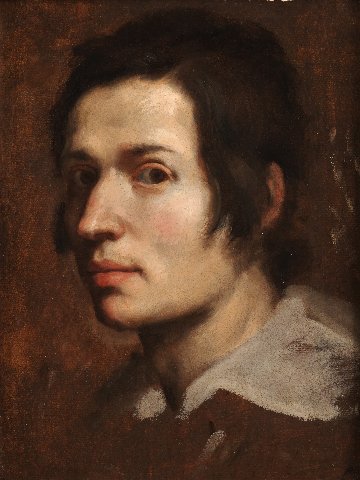
The eclectic installation combines work by canonical artists as well as that of less known individuals. There is great depth in portraiture as well as small sculptures. Landscapes and still life works are included but augment rather than dominate the collection. There is a sense of the collector’s “eye” and taste. The individual works entail narrative connections that he identified. There is an intimate relationship. The compelling portrait by Bernini, who is primarily known for sculpture, depicts the artist’s brother. He gazes at us in an arresting and insightful manner. Similarly, the small but life-sized portrait by Jacques Louis David charmingly represents his young son. That rare familial connection appears to be what attracted Tavitian with personal links to these and other acquisitions. It is evident that he truly connected with individual works
“One of the most exciting aspects of the Tavitian Collection as it will be presented in An Exquisite Eye is the way in which it brings to life how deeply interconnected artists and artistic traditions were in early modern Europe,” said Lara Yeager-Crasselt, Aso O. Tavitian Curator of Early Modern European Painting & Sculpture.
What follows are preliminary observations. Each work entails detailed scrutiny and reading of accompanying text. My intent is to return several times during the exhibition.
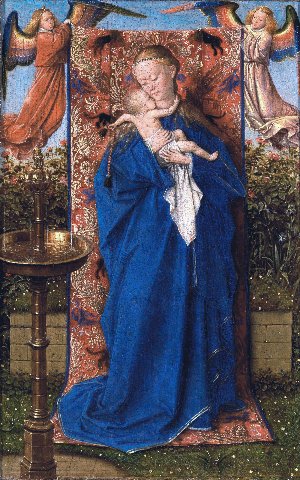
Jan van Eyck, Madonna at the Fountain, c. 1440, is a rare workshop replica that demonstrates the artist’s revolutionary approach to naturalism and the devotional function of small-scale painting, showing an astonishing range of optical effects through color, light, and detail. The artist is best known for the Arnolfini Wedding in London’s National Gallery. The small and intricate work is hung high on a freestanding panel. It is daunting to absorb all of its detail. The Madonna stands on a tapestry held up by two angels.
Ambrosius Bosschaert the Elder, Little Bouquet in a Roemer, c. 1619, is an early example of floral still life painting that merges scientific observation with artistic invention. Details of this small painting have been enlarged on a wall leading into the exhibition. The image entails a detailed rendering of a hybrid striped tulip.
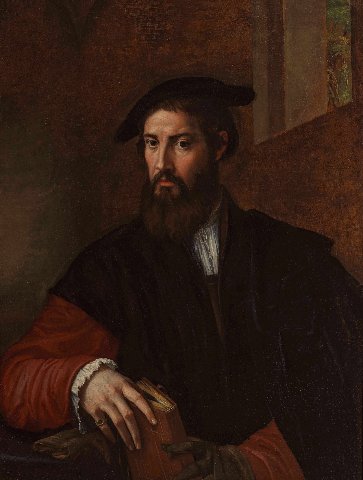
Francesco Girolamo Mazzola (Parmigianino), Portrait of a Man, c. 1530, Oil on canvas. This is a somber, dark and introspective study by the master of mannerism. The rendering of the figure is naturalistic with none of the elongations which the artist is known for.
Anthony van Dyck, Portrait of Margaret Lemon, c. 1638, is an intimate and psychologically charged portrait that offers insight into the artist’s personal and professional relationships in seventeenth-century London. The sitter was a notorious courtesan. Her audacious expression is less than demure and begs the question of her relationship with the artist. He is also represented by a bravura, sketchy portrait of a man,
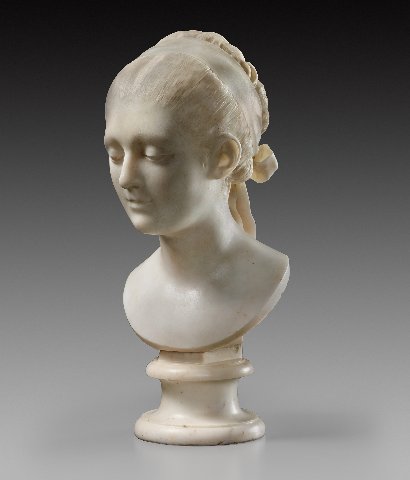
Jean-Antoine Houdon, Little Lise, 1775, is a refined marble bust that exemplifies the artist’s stature as one of the most sought-after portrait sculptors of the French Enlightenment. Best known for images of George Washington and Voltaire this is a charmingly, intimate piece.
Claude-Joseph Vernet, Rhine Falls, near Schaffhausen, Switzerland, 1779, is a dramatic landscape inspired by the artist’s travels, capturing the wonder of a natural phenomenon that was a site of international fascination.
Elizabeth Louise Vigée-Lebrun, Self Portrait in Studio Costume, c. 1800, is an arresting image painted in exile in which the artist—a favorite of Queen Marie Antoinette—presents herself both as painter and subject. The artist had a remarkable career in the courts of Europe and Moscow. There are several self portraits of which this is on a more intimate scale with a casual approach. The collection also includes a portrait of a woman by Angelica Kauffman a founder of London’s Royal Academy.
Andrea della Robbia is represented by a pair of high relief, ceramic portraits of male sitters. The works which seemingly pop off the wall are less decorative and ornamental than works from this prolific family of which Andrea was a lesser known nephew.
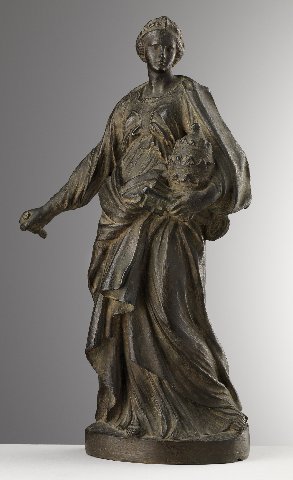
Gian Lorenzo Bernini was one of the leaders of the Italian Baroque. Regarded as the greatest sculptor of his age, he was also a prolific architect, painter and musician/ composer. He was an architect and sculptor for St. Peter’s Basilica. In a riveting portrait of his brother his fluid approach and focus on character is richly evident. It is a seminal and fascinating work from the collection. He is also represented by a small bronze sculpture which may have been a gift to the Pope.
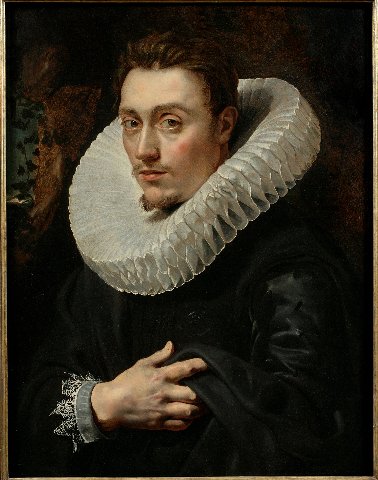
Peter Paul Rubens is represented by an engaging portrait of a handsome young man. There is arresting attention paid to the complex pattern of his ruffled collar.
In the last gallery of the exhibition there is a long wall of small, identically scaled portraits by the 19th Century French artist Louis-Léopold Boilly. It’s unique that the collector acquired this suite intact.
Giulio Romano was the primary artist of the studio of Raphael. He was a prolific architect and fresco painter. His patron was the Duke of Mantua where he died (46-47) in 1546. When Charles V visited Mantua, Romano hastily constructed the Palazzo Te a non residential pavilion for the entertainment of the emperor. Romano and his peers explored the buried Domus Aurea of Nero. Their studies of Roman art in the “grotto” evolved as the “grotesque” designs of Mannerism. He is represented here with an imaginary portrait of Alexander the Great in gilded armor.
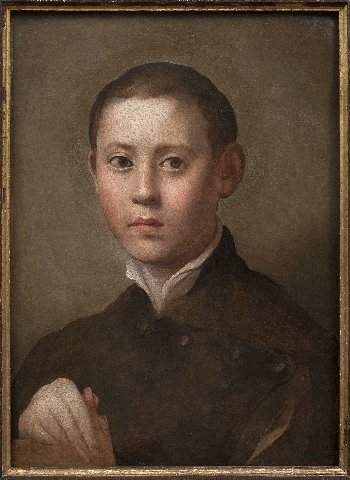
There are many gems to be discovered. One such is a miniature modeled portrait of the artist Nicolas Poussin by Francois du Quesnoy. There is a portrait of a man on a ceramic panel by the Mannerist, Pontormo. The unusual support creates an unique surface. De Cock carved a small, naturalistic portrait of an African boy. Around his neck is a medallion of the British sovereign. The Dutch artist Wallerant Valliant has a swarthy, colorful Self Portrait in a Turban, 1650-75.
All images Clark Art Institute, gift of Aso O. Tavitian Foundation, courtesy of Clark Art Institute.