

Cuban Born Dancer Harold Mendez
Career Ending Early
By: Carrie Seidman - Jul 13, 2026
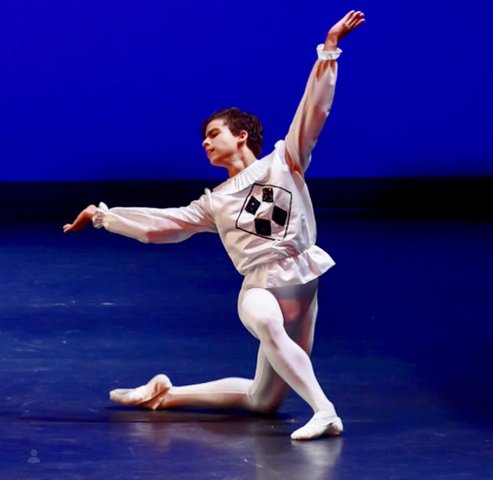
It was never a given that Harold Mendez would succeed as a dancer. When he was chosen by the Cuban government to enter its state-run ballet training program at the age of 10, there was no guarantee he would ultimately develop the combination of physique, ability, discipline and ambition it takes to make it in a notoriously difficult and competitive art form.
But Mendez turned out to have that rare combination of raw talent, inner drive and emotional intellect that propelled him into a professional career when he was still a teen. Yet just months shy of his 25th birthday – an age that represents the prime of a dancer’s career – Mendez recently gave his final performance with the Sarasota Cuban Ballet, where he finished his training and gave his first professional performance 10 years ago.
Because while he has been able to overcome the limitations of his feet, his finances and his lack of flexibility, there is one obstacle no amount of grit and tenacity has been able to overcome. His size.
In the beginning
When Ariel Serrano’s former teacher and mentor from the
Since founding the
“You wanna give me another kid so I have to get up at 6 to take him to school?” Serrano complained to the late Ramona de Saa, with whom he’d created an exchange program for students of their respective schools.
“I promise you,” de Saa assured him. “It will be worth it.”
She proved to be right. Almost as soon as Harold Mendez arrived in
“He was one of a kind. Very precocious, very fast to take everything in like a sponge,” Serrano recalls. “He was humble and worked incredibly hard. I immediately fell in love with the idea of continuing to coach him and our family fell in love with him. As good as the dancer is, the person is even better.”
Although Mendez lacked “perfect” ballet feet or extreme flexibility, he overcame his deficits with a work ethic that took Serrano’s breath away.
“He made no excuses,” he says. “To him it was like a challenge, a game. Stretching is one of the most painful things there is and this boy took some stretches that… well, if you did it to me, I would tell you my deepest secrets. This guy would do it and go for more. The response from him to difficult work was enjoyment.”
Soon, not only was Serrano driving Mendez to school, he was accompanying him to ballet competitions around the country, some of which he had to raise funding to undertake. In 2019, Mendez finished third among the men at the Youth America Grand Prix in the
But at 5’5”, Serrano believes that regardless of his outsized talent, Mendez’s lack of stature relegated him to less acclaim and opportunity than he merited.
“He put on a show that, if I close my eyes, I can still see it,” remembering his Prix de Lausanne appearance. “At every turn, at every challenge, the recognition was there. But the reward always came short.”
After making his debut at the Sarasota Opera House in the SCBS annual “On Stage” gala in 2016, Mendez accepted the scholarship in San Francisco and moved there, solo, at 17 to finish his training. After less than a year, he auditioned at the State Street Ballet in
A career reignited… and stunted
In 2021,
But, other than the perennial “Nutcracker,” Mendez didn’t have an opportunity to dance any of the classical ballets or major male roles he grew to know and love as a child in
“The ballet world is… complicated,” Mendez said during a break between rehearsals for his professional swan song. “Sometimes even if you can dance well and do everything right, you may not have the perfect body or the perfect height. Dance is very aesthetic and of course it looks beautiful with someone tall, with long legs. Maybe they can do less turns, but if they’re tall and beautiful, that’s good enough.
“It is what it is. Nobody chooses how tall they’re going to be.”
His discouragement and frustration over limitations to his advancement had led him to consider leaving the art form multiple times before. The first time he mentioned it to Serrano was the only “bad encounter” his mentor can ever recall between the two of them.
“I was angry,” Serrano admits. “To me, this is a crime. I know what it takes to become so good and I respect this boy like unbelievable. He’s one of the best dancers I’ve seen and one of most intellectual dancers. If you’ve overcome all your challenges, there should be a payoff, a reward.”
That time, Serrano convinced him not to leave. But recently, when Mendez arrived to rehearse for the gala, Serrano again asked him what his plans were for the coming dance season. When Mendez looked at his feet and shook his head slightly, he knew a final decision had been made.
“This time I am just sad,” Serrano says. “Because this is another casualty of our industry, which is not yet where it needs to be. It looks down on a dancer that is not that tall. It looks down on a dancer that may not have the same flexibility as another.”
Serrano acknowledges that a company like the Paris Opera Ballet, the oldest national ballet company in the world, is unlikely to give up its historical aesthetic.
“But there should be other places to embrace the differences and still present good work and not let that beautiful, talented dancer go to waste.”
A new outlook
Mendez is hardly the first male dancer to encounter height discrimination. At 5’3”, Drew Travis Robinson, a dancer with
“All I did was put on my shoes and hand them $50,” Robinson says wryly.
Perhaps worse are the times he’s been told he has the technical ability for a role but “we’re going with this other person because they have the right look.”
“That’s their way of saying, ‘They’re taller,’” he says. “A lot of times I wish they just come out and say, ‘This person is six feet tall and had blonde hair and blue eyes and is what the average person would think of as a prince rather than 5’3”, curly-haired me.’ If they say you don’t look the part, that digs into a lot of other issues. Now I’m feeling like I don’t even look like a dancer.”
After dancing for more than a decade since receiving a degree in dance and pedagogy from the
“A lot of times, if I feel I’ve been either disrespected or decisions were made not in the interest of making me a better dancer, I will step away and find somewhere else to be,” Robinson says. “Life is too short – and for dancers, it’s crazy short. So it’s important that I recognize I need to go somewhere I can be happy.”
Coming to Azara – a company formed expressly with a mission to be more inclusive not only of a dancer’s size or shape, but of all kinds of physical, mental. sexual-orientation and gender differences – has been “a breath of fresh air,” he says.
“It’s almost like you’ve been working in a cubicle and now you’re let loose in the yard to go run,” Robinson says. “We’re dancing because we love to do this and not because the job market is scary and this is what we know how to do. There’s so much talent that’s not in stereotypical dance bodies. Azara exists so there’s places for dancers like that.”
An end … and a beginning
Mendez, however, has decided to apply his work ethic elsewhere. Despite his recent engagement to a dancer he met while performing as a guest artist in
“I want to do something that gives me purpose,” he says. “Something that in some way helps somehow. And also something where I’m learning new things. From dance I learned discipline, critical thinking and a drive to work. I’m happy I danced professionally for five years, but I’m ready for a new chapter.”
He says his final performance in
As for Serrano, he has come to terms with his protégé’s decision. Whereas before he thought Mendez wanted to quit because “they were bullying him out,” now it feels more like “he worked his way up and now it’s his time to stop.”
“I truly, truly feel happy for him,” he says. “He’s found himself and he’s going to be great. This is a really good example of what ballet does for you. He’s going to leave something behind that he’s a superstar at to become something else that he’ll be a superstar at.”
Yet the small changes he acknowledges have occurred in the ballet world in recent years in terms of who fits in to this historical art form – including more inclusion of dancers of color – are hardly enough, Serrano believes.
“It’s an opening, but there are still miles to go,” he says. “The industry has to create more spaces. And not because you put me there because I’m Black. You put me there because I’m good. Don’t put me there with a little asterisk. The industry has to become more flexible to the untraditional look if they want the art to become more popular.”
“On Stage 2026,” by the Sarasota Cuban Ballet School Studio Company and students. With guest artists Harold Mendez and Ariel
. To learn more and donate visit ArtsBeat.org.