

Dark Side of the Moon
Sohn Fine Arts in Lenox
By: Sohn - Aug 13, 2026
|
|
?
|
Art intersects with material experimentation in Dark Side of the Moon exhibition at Sohn Fine Art
Exhibition Details: Dark Side of the Moon Marieken Cochius, Chuck Kelton, Regina Durante Jestrow, Jonathan Prince
August 7 – October 5
Bizarre Bazaar: 15 Year Anniversary Celebration & Exhibitions Reception
Sohn Fine Art, 69 Church Street, Lenox, MA
Lenox, MA - Sohn Fine Art is pleased to present Dark Side of the Moon, a compelling group exhibition featuring photography and unconventional materials by Marieken Cochius, Chuck Kelton, Regina Durante Jestrow, and Jonathan Prince. The exhibition explores expansive territory where art intersects with material experimentation, revealing practices that move beyond the expected limits of each medium. The works offer a meditation on perception, transformation, and the enduring allure of the unknown. The exhibition is on view August 7 through October 5, with a 15-Year Anniversary Celebration & Exhibitions Reception Saturday, August 15th, 3:00 – 6:00.
Borrowing its title from the unseen hemisphere of Earth's celestial companion, Dark Side of the Moon invites viewers to consider what exists beyond immediate visibility. Rather than suggesting darkness as absence, the title points toward what remains unseen - hidden processes and the invisible forces that shape experiences. Like the lunar hemisphere that is perpetually turned away from our view, these works invite sustained looking, rewarding curiosity with layers of discovery.
Across the exhibition, material itself becomes a language. Organic matter, altered photographic substrates, industrial materials, and tactile interventions expand the expressive possibilities of the artistic process. Underlying is a shared visual vocabulary of circular forms, looping structures, and woven surfaces that echo the cyclical rhythms of nature, time, and human experience. The circle, suggestive of the lens, the cell, the moon and its orbit, appears as both symbol and structure, evoking continuity, return, and transformation. Likewise, woven forms function as metaphors for interconnectedness, where individual strands accumulate into networks of broader meaning. Together they suggest that everything is intrinsically connected, revealing an unseen order that binds the physical and the psychological, the cosmic and the intimate.
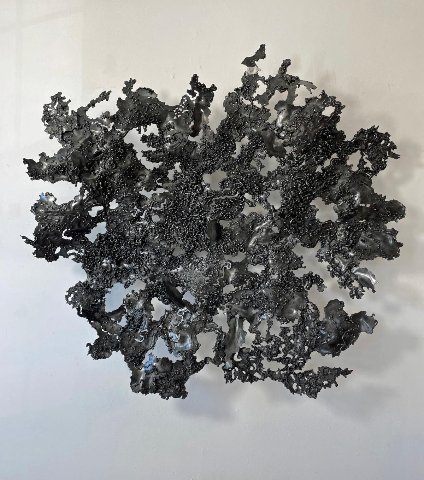
Collectively, these artists share a commitment to experimentation - not as novelty, but as a method of inquiry. Marieken Cochius is a Dutch-born artist who is drawn to remote places where she studies nature and makes elemental art inspired by it. Cochius is fascinated by growth-forms, root systems of plants, seedpods and animal architecture. In those she sees a sensitive chaos that contains and propels the origins and energies of life. The inspiration for the work is gathered through observations of nature such as following boils in a river, or wind gusting through a field. Cochius does not attempt to capture these moments literally but instead channels the markings through abstract forms. She strives to create a mesmerizing effect of movement, something that looks familiar, but that you cannot exactly place.
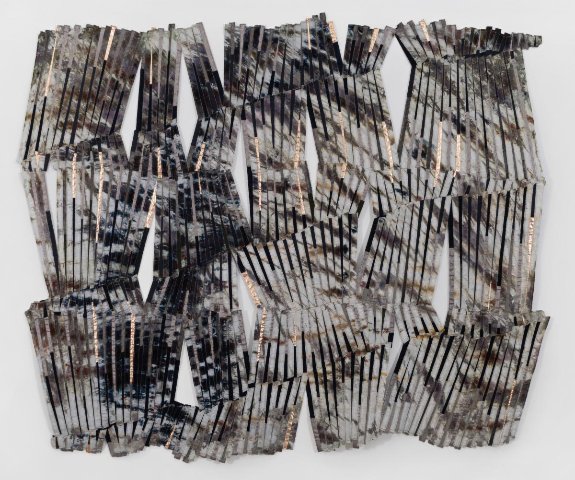
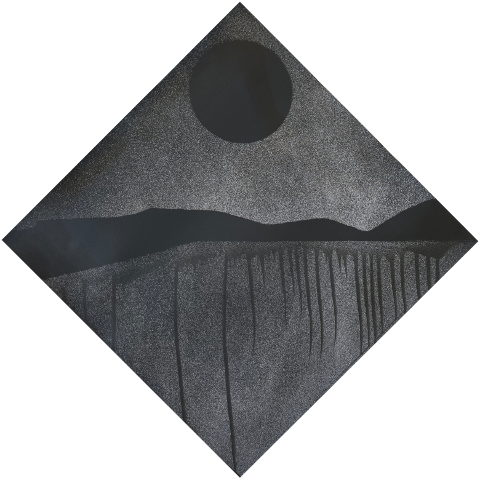
Chuck Kelton makes chemograms and photograms using photosensitive papers and darkroom chemicals (fresh and expired) to transform light into abstract landscapes. Though abstract, Kelton’s works are representative, often simulating seascapes or other-worldly natural environments. However, no such actual landscape exists in the creation of his work, as his practice foregoes cameras, lenses and negatives. A photogram is the result of exposing photographic paper to light—writing with light, whereas the image in a chemogram is the outcome of exposing photographic paper to chemicals, developer and fixer—painting with chemistry. In many of the works on view Kelton combines chemogram and photogram techniques. Each work is entirely unique. In a quote by Leah Ollman from the LA Times, “Landscape imagery always registers internal as much as external phenomena, and Kelton makes sure that we know he is not just transcribing nature by titling most of the images "A View, Not from a Window." These expansive vistas originate in the darkrooms of the studio and the self.” Kelton’s work stems from a 35-year career as a master black and white printer for some of the most important photographers in history – Lillian Bassman, Alfred Eisenstaedt, Steven Meisel and Mary Ellen Mark, to name a few. Kelton has been featured in numerous exhibitions and publications. His work is in the collections of the Whitney Museum of American Art, Museum of Fine Arts Boston; Bibliothéque nationale de France, Norton Museum of Art, International Center of Photography, and New York Public Library.
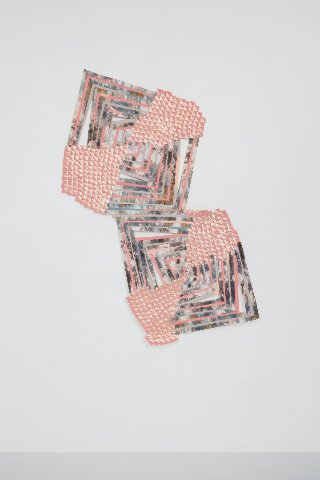
Regina Durante Jestrow is an Italian American textile artist living and working in Miami, Florida, who grew up in Queens, NY. Her artistic journey began in her formative years, as she learned sewing and crocheting from her mother, igniting a passion that would become a lifelong force. This connection to textiles is the bedrock of her artistic practice, stretching and challenging quilt forms and structures while considering the activist values that shaped historic quilt making traditions. Jestrow’s artistic exploration is deeply rooted in women's rights and history, combined with a deep appreciation for the patterns and stories drawn from the enduring traditions of American quilt-making. Her art quilts feature a fusion of new and second-hand fabrics, including hand-dyed and manipulated textiles, through various techniques, including natural and reactive dyes, inks, and acrylics. The resulting pieces reflect the colors and patterns that evoke Miami's dynamic cultural diversity and landscape. Her affinity for quilts pushes the boundaries of the medium, resulting in a diverse body of work that includes painting, drawings, sculptural installations, textile wall hangings, and functional objects.
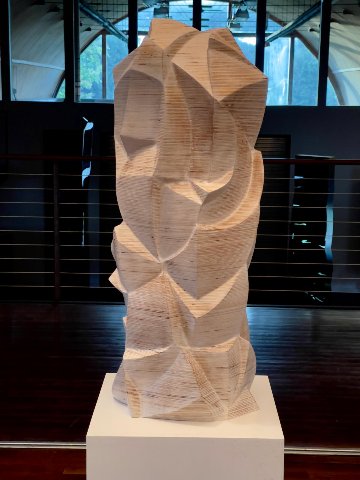
Jonathan Prince’s sculptural forms contain both foundation and fluidity. Prince explores the ways in which an external force can exert enough energy to disrupt what is seemingly perfect and organized. Beginning with a geometric form, through varying degrees of external pressure, movement and human interaction, the forms are compressed and distorted in response. Born in New York City, Prince has been living and working in The Berkshires of Massachusetts for the last two decades. He creates his work in his state-of-the-art studio and home, Berkshire House, which spans 23,000 square feet. After an extensive career in medicine, as well as having spearheaded various companies dedicated to the advancement of internet and media technologies, Prince returned to his passion for sculpture in 2002. His background in science, technology, and medicine is uniquely reflected in his practice as a sculptor, as each work, both in methods of fabrication and precision, bear the hallmarks of these fields of study. |