

The Magic Flute
Santa Fe Opera's Visual and Vocal Kaleidoscope
By: Victor Cordell - Aug 15, 2026
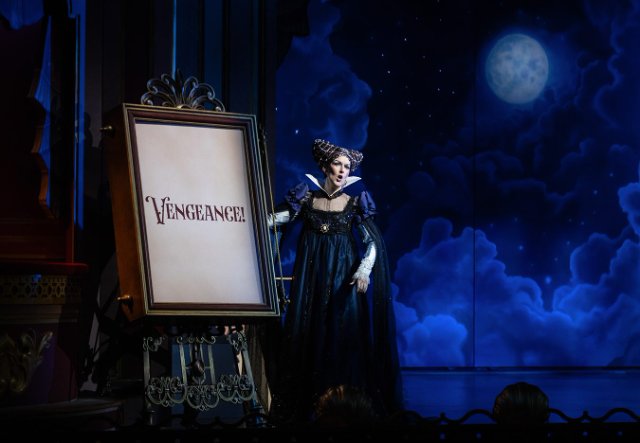
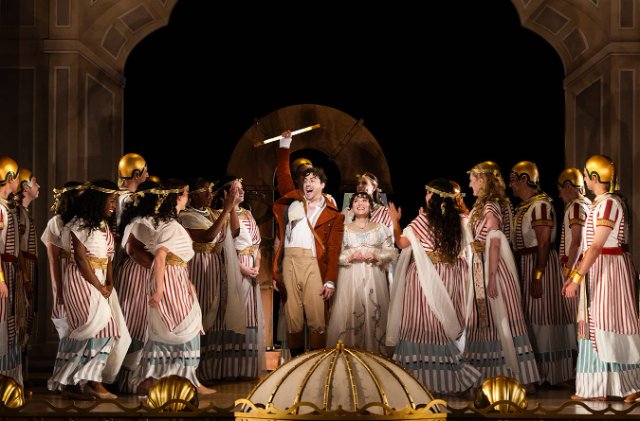
Although The Magic Flute can be performed with the gravity of Teutonic mythology having some comic relief, this magnificent Wolfgang Amadeus Mozart opera (technically a singspiel) with libretto by Emanuel Schikaneder can also be played as a comedy interspersed with dramatic moments. Santa Fe Opera has chosen the latter and extracts every bit of humor from the text and subtext in a production that sparkles with dazzling staging and winsome performances.
In an unusual decision, the company has chosen to offer the work in English, and though it would be unusual to highlight a translation in a review, this one from German by Jeremy Sams deserves mention. The loose translation creates the proper rhythm in concert with the music to allow for proper diction, and there is poetic rhyming as well. Kudos also to the singers, because the result is incredibly understandable sung lyrics.
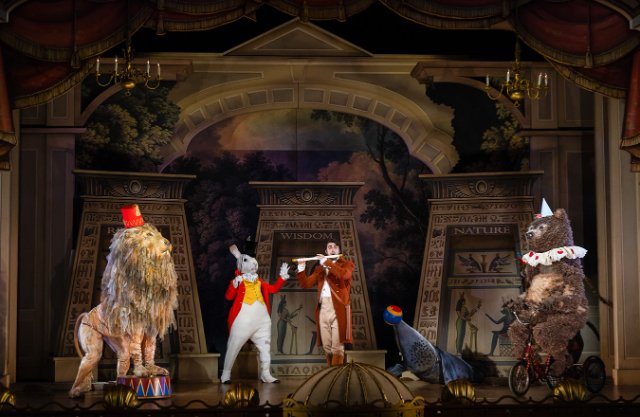
The hero’s mystical journey offers scope for elaborate visual effects. Simon Higlett’s red-dominated fixed set design also deserves early mention as it creates a perfect comic like setting for the action. The stage-within-a-stage, complete with proscenium arch and flat-panel scenery, has the look of a 19th century theater or puppet venue. Ever changing backdrops create a visual phantasmagoria. Decks of loges for kibitzers to the action flank the performing space. All of Director Christopher Luscombes’ creative designers from costuming to lighting combine to complement the look of the set.
Our hero Tamino is Josh Lovell, who looks the part and offers a strong tenor voice with a warm timbre in the upper ranges suited to the Germanic tradition. Tamino wrongly receives credit for slaying a serpent, depicted as a huge scaly, blue dragon. Together with a passel of human-sized, stuffed-animal-looking creatures appearing at other times, they are sources of amazement, charm, and laughs.
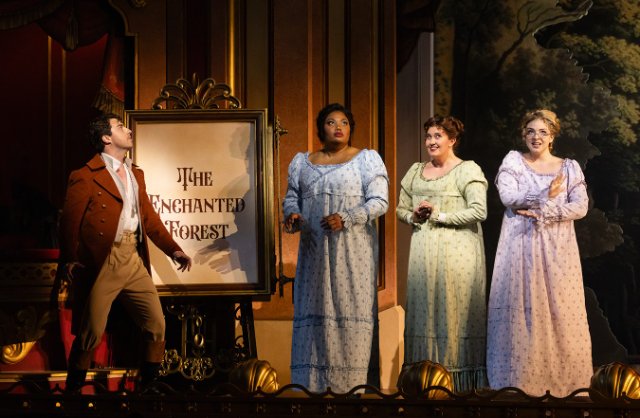
The serpent was actually felled by three ladies from the court of the Queen of the Night who tasks Tamino to retrieve her daughter Pamina in return for her hand. Tamino had already fallen in love with Pamina’s portrait and responded tenderly to it with the lovely aria “This vision is so wonderfully fair.” She has been abducted by her guardian Sarastro. Bright, fluid soprano Joélle Harvey delights as Pamina who will go through challenges along the way with the brave Tamino.
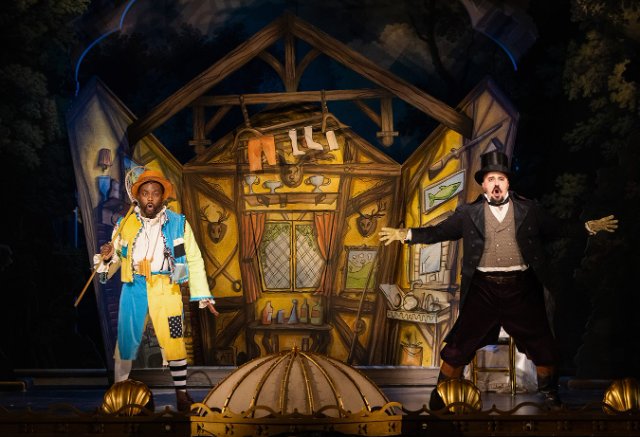
Accompanying the hero is the irrepressible and irresponsible Papageno, the Queen’s bird catcher. Baritone Will Liverman plays the skittish, overmatched Sancho Panza-like part, riding on his steed, an ostrich. A blessed comic, Liverman provides much of the humor in the plot with his mugging and howling. But he also has a fine voice which he shares in a lovely duet with Harvey who beautifully caresses her part.
Another source of humor is Monostatos (Spencer Hamlin) who repeated fails to kidnap Pamina. Monostatos has the look of a Snidley Whiplash to Pamina’s Nell from Dudley Dooright television cartoons. Like Liverman, Hamlin plays to the crowd and even engages in faux-dramatic call-and-response urging with the audience.
On reaching Sarastro’s temple, Tamino realizes that it is the Queen who is evil, not Sarastro. Indeed, and to his joy, the hero is invited to join the brotherhood that Sarastro leads and is given four tests of courage to pass. Although Sarastro’s temple is set in ancient Egypt, the trappings and social/moral themes that give the weightiness to the opera are much like that of Freemasons. Not coincidentally, both composer and librettist were members of that organization.
Tamino’s mission and transition give opportunity for the two signature arias of the opera, neither of which are his (nor is Papageno’s lilting theme on the glockenspiel). Jeni Houser is the Queen, and when she realizes that she may lose her daughter, she sings the vengeful, threatening Queen of the Night aria. This is perhaps the most widely known if not most difficult colortura soprano aria in the canon, with its leaps, arpeggios, and trills. Houser is magnificent and crystal clear in her delivery, as she is with her earlier challenging coloratura aria.
The booming basso profundo Alexander Köpeckzi is Sarastro of the grim countenance. His famous Isis and Osiris aria, in which he asks the Gods to bless and guide Tamino and Pamina, resonates with dips to the bottom of the human vocal range.
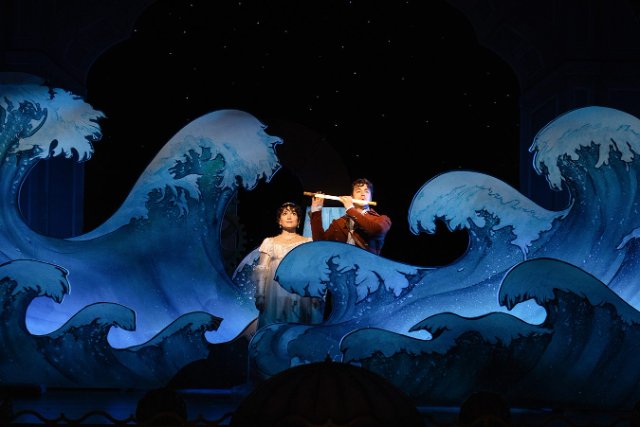
The text of The Magic Flute is not without flaws. While it is overstuffed, the narrative is jumpy in parts as well. For instance, the tests that the couple go through to satisfy the brotherhood fly by without either good explication or execution. And on the production side, while representations like water waves are appropriately in a comic style, the fake flames are hard to recognize in an otherwise stellar staging. And throwing debris from the loges seems a bit excessive.
Some patrons will not care for the silliness of this production or may prefer that it be sung in the original German. But those who accept the production decisions will find a delightfully designed and performed realization that will seize the attention and the imagination.
The Magic Flute, composed by Wolfgang Amadeus Mozart with a libretto by Emanuel Schikaneder is produced by Santa Fe Opera and plays on its stage at 301 Opera Drive, Santa Fe, NM through August 28, 2026.