

Dishwasher Dialogues: Last Call
If You Live Long Enough Life Ends
By: Gregory Light and Rafael Mahdavi - Aug 17, 2025



Ashes in the Columbarium
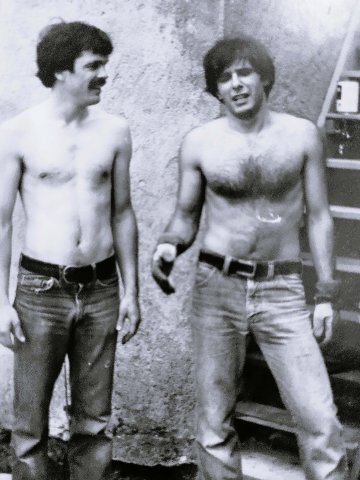
Rafael: The Chez Haynes years were forty-five years ago. That’s nearly half a century. We all had dreams, the waitresses and you and I. And we all had vague plans, and we pursued them in Europe and later in America. Most of us went back to the U.S.
Greg: Neither of us did. For good or bad we both stayed abroad, even added extra nationalities to our resumes. Although, I am now back in Canada after 45 years.
Rafael: We continued our lives as painters, filmmakers, writers, some of us became professors or founded a business. We didn’t keep in touch very much, and the post-Chez Haynes years passed, and they picked up speed as our lives continued. We all know how time speeds up as we grow older, or should I say as we grow old?
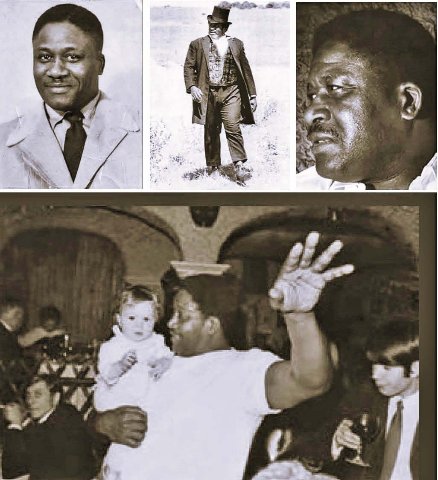
Greg: I am not sure what old is anymore. Somewhere along the line it feels like we picked up an extra decade on our ancestors; those of us who have been lucky enough to keep our health. ‘Ninety is the new eighty’ sort of thing. One thing is for sure, we will all go the way of Leroy irrespective of the luck, lifestyle, location, and laughter which define our lives. Leroy died when he was 72. You are already past that, and I am fast approaching it. Given his lifestyle maybe he was lucky. Certainly, the location and laughter he provided us at the beginning of our working lives was a blessing, although often in disguise.
Rafael: There is still something shocking to see friends’ and lovers’ faces after so many years. Time did pass, our faces changed so much, not only like seasons in landscapes but as upheavals and earthquakes and droughts and famines, all visible or intimated in valleys and crags of our faces and bodies.
Greg: We did get together—London, Paris, Greece, often in a farmhouse in the French countryside. We saw each other a few dozen times in the first twenty years after I left Paris, but as life moved on perhaps only a half dozen times in the next twenty. But the emails continued to flow.
Rafael: We always talked about Chez Haynes at one moment or another. I sensed I had lived and shared a unique time, with unique people; a time still in my memory, that sings to me.
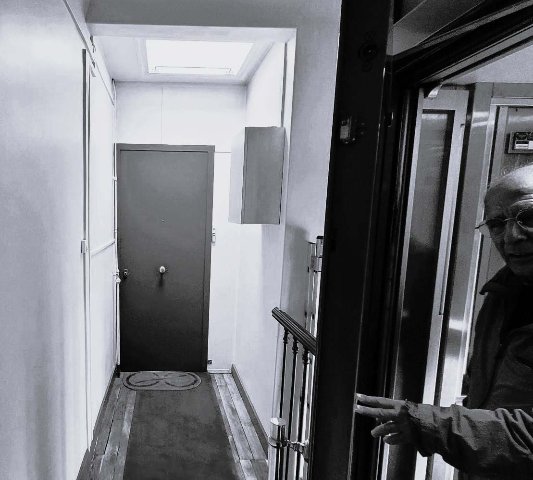
Greg: It is hard to fully catch the spirit of that time. We have tried here, and I think we have captured what can be captured without therapy. I feel good about that as it was amazingly special. The end was always in the cards. Most of the others had left and, for me, London beckoned. A new city. A new place to explore. Up on the top floor of 7 Square de Chatillon, changes were also happening. The two chambres de bonne to my left had stood completely empty for the four years I lived there. No one had ever mounted the stairs to see them. Then, one day there was some commotion on the landing and two work men arrived on the top floor, my top floor, appraising and taking measurements. Soon, they were appropriating a large section of the hallway and combining it with the two empty rooms to redevelop them into a fully integrated, relatively luxurious, one bedroom apartment. The writing was on the wall. Along with the bullet holes. (Although many years later when I returned with my wife and children, even the bullet holes were gone.)
Rafael: My dreams? I fulfilled some of them, but I know by now that I have a somber side. I dreamt of many things; most were impossible to achieve. That’s the way I am.
Greg: That’s the way dreams are. They would not be dreams if they were all fulfilled. And while not exactly a dream, we finally finished this memoir.
Rafael: Yet, these dialogues mean a lot to me. I didn’t expect they would give me such a renewed rage de vivre.
Greg: I thoroughly agree. I have genuinely enjoyed rediscovering this time and these events in our lives. Even if what I learned about myself was not always welcome. That I enjoy mischief and jokes, for example, I think I knew, but in review there is a darker, unkind, side to the pursuit of laughter. That is sad in retrospect, even if the sadness is engulfed in the joy of so many good things that happened along the way.
Rafael: The best two things that have happened to me are my two children. They taught me to love, and I have felt loved, truly loved by them.
Greg: I would agree. The love of children is an excellent remedy for the sombre and the sad.
Rafael: I should speak about Leroy’s death. He never discussed his dreams and ambitions with me. The staff and we were aware that he had lived a full life. I just knew of his soldiering in WWII, his acting career in a few French movies, his unfinished book, his love affairs, his fame as a restaurateur.
Greg: His laughter. His generosity. His stories. When I think of him now, I mainly have this memory of me standing back from the sink to take a break from the dishes, and looking to my right down the hall, past the salad and espresso stations, and there he is sitting on his stool looking down, peeling potatoes or onions. It’s a humble image. He looks deep in thought, deep in many thoughts, full of an amazing life and all that it hurled his way. Much of it was not that nice. But often he was smiling.
Rafael: In fact, I knew little about him. When he was close to death, I had visited him with my wife and Quincy at a hospital near Paris. The room was dark. He didn’t recognize us. I remember he asked for some fruit, and we peeled an orange and fed it to him like you feed a baby.
Greg: I remember speaking with you at the time. You described your visit to the hospital in some detail. When I read what you just wrote I had a memory of being there, but I wasn’t there. It was that moving and poignant.
Rafael: He died soon after, maybe a week later, I forget. He was cremated at Père Lachaise. His ashes were placed in an urn in a little cubby hole in a wall in the columbarium. There were few people there, his ex-wife and the current one, Don the cook, my wife and children, another couple with children, and maybe ten other people. It was shocking. We knew there were hundreds, if not thousands, of people Leroy had helped over the years, and now where were they?
Greg: Some gone with him, I suspect. If you live long enough, life ends. Others dispersed to other climes. Many simply forget.
Rafael: One must pay a yearly fee to keep the ashes in the columbarium. Nobody made the payments after the first ten years. I don’t know where Leroy’s ashes ended up.
Greg: Isn’t that how everything ends? A last gesture, a gasp, a stare and then the unknown?