

Death of an Eagle
What Two Bald Eagles Showed Us About Human Evolution
By: Steven Reed Nelson - Aug 18, 2026
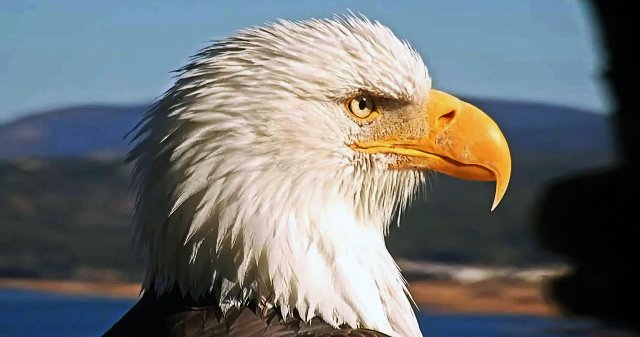
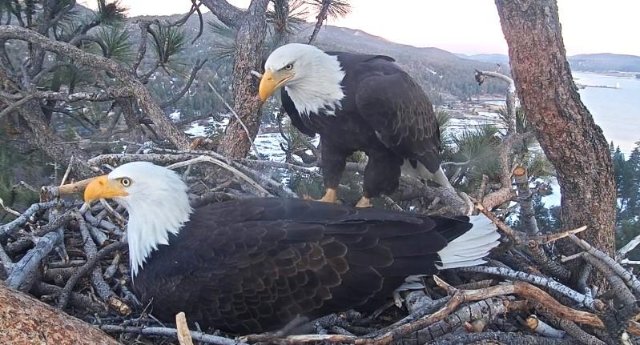
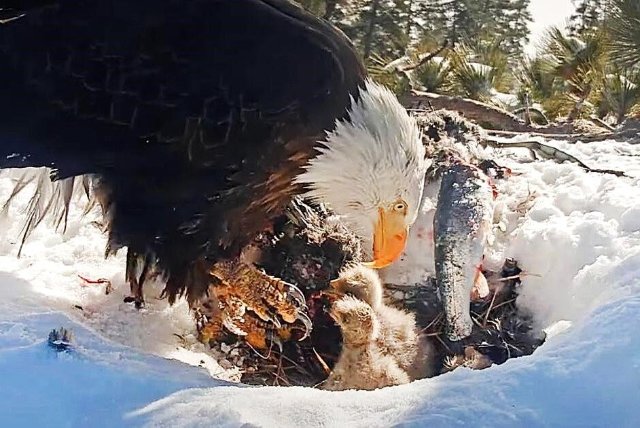


The death of the bald eagle known as Jackie has left millions of people grieving. Very few of them ever caught a glimpse of her in-person soaring over Big Bear Lake in the San Bernardino mountains of California, but they feel they know her personally. She and her mate Shadow were YouTube stars, influencers, you might say, of an audience that followed the lifestyles of the feathered and famous.
In 2015 the group Friends of Big Bear Valley installed a camera feeding a 24-hour live video and audio stream, powered by solar, of an eagles’ nest 145 feet up a pine tree overlooking the lake. The nest remained empty until 2017, when a female eagle named Jackie took up residence in the nest previously occupied by her parents Ricky and Lucy (no, her mother did not have red head feathers). In 2018 a male eagle named Shadow displaced Jackie’s previous mate and the pair settled into what became their permanent home together.
Life as a would-be mother was difficult for Jackie. She lost many chicks that either didn’t hatch or died soon after; the biggest threats were snowstorms and ravens who liked to dine on eagle eggs. 2025 was a good year for the couple, as Jackie hatched three eggs, two of whom survived to grow up and fledge (fly away to begin life independent of their parents). Two more eaglets followed in 2026, one of which was accidentally knocked out of the nest by the other, but being on the verge of fledging, was able to flap its wings and survive the fall.
These are but a few episodes from a life that was both “stormy” and “sunny” (the names of two offspring) and ever changing. Millions watched the video stream on YouTube. When it popped up on my feed in 2025, I became an avid viewer in time to see the two chicks hatch, grow up and fledge.
Like other eagle fans, I tuned in regularly, whether to see Jackie being pelted by snow and wind as she sat protecting the eggs or Shadow flying in with a big fish to feed the family (sometimes they reversed roles). The camera had infrared lights trained on the nest (eagles can’t sense it), so I’d check in on them before I went to sleep, to see if they were tucked in for the night.
In mid-July Jackie disappeared for a few days, only to be found floundering in the shallows of the lake. She had been attacked by a pair of subadult eagles, but when caught and brought to a facility which specialized in treating raptors, she was discovered to have an underlying medical condition causing severe anemia. Despite the best of care, she died on August 10.
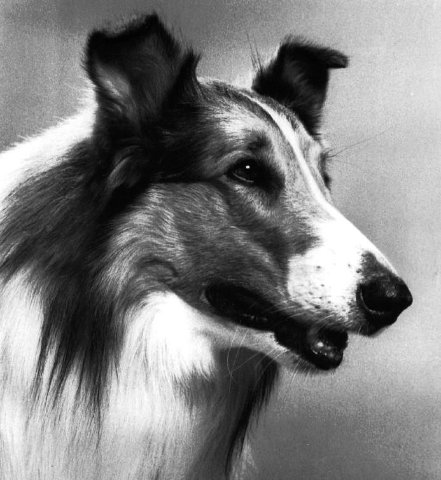
The outpouring of grief for her should not have been unexpected. Since the early days of TV people have developed emotional attachments to characters they watch regularly. We loved Lucy (the red-haired one). The most beloved dog in America was the TV collie Lassie, although she was actually several dogs, all male.
Before we learned to use electricity, for millions of years humans could only interact in real time face-to-face. With the invention of the telegraph and then the telephone in the mid-19th century, remote interaction first became possible. Today we have numerous means for doing so. On many days we spend more time interacting with people outside our homes electronically than in person.
These remote interactions can express emotions. Think of the happiness you felt while talking on the phone with a far-away loved one, or the feelings you expressed in an email or direct message, from joy to anger. I wouldn’t be surprised if one of the most common phrases in texts is “I love you.”
Just after the onset of the COVID pandemic in 2020, my wife Jan succumbed to a long battle with breast cancer. Due to necessary restrictions on public gatherings, it was not possible to hold a memorial service. And because I was immunocompromised, for two years my connections with family and friends were almost always electronic. I could have used more hugs, but the phone calls, emails, texts and Zoom sessions gave me the emotional support and satisfaction I would not have had without them.
Humans in the Electric Age have the capacity to interact with one another and express our emotions electronically. Through the Big Bear eagle cam we were able to intimately share the triumphs and tribulations of a pair of bald eagles. We were moved by their devotion and determination in raising their chicks in the formidable environment in which they struggled to survive. We experienced Nature in a way we never could before the internet, and felt a deeper connection to the living world around us.
Jackie and Shadow were totally unaware of our existence. But they taught us something about ourselves: living in the Electric Age we experience life in ways our ancestors never did. And in doing so, we are evolving as a new kind of human.
(Steven Reed Nelson is the author of Fire in a Wire: Electricity Empowers Human Evolution Beyond Homo Sapiens and blogs at fireinawire.substack.com)