

Dishwasher Dialogues, The Beginning
Le Patron de Chez Haynes
By: Gregory Light and Rafael Mahdavi - Aug 27, 2025

A WRITER AND A PAINTER WALK INTO A BAR
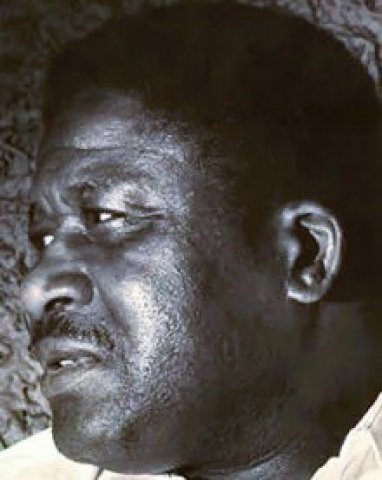
Rafael: I left Manhattan because I missed Europe. I was a US citizen then, Greg, and still am, but have since acquired a few more passports, three more to be exact. I feel safer that way now. No country is going to fuck with me in the name of patriotism. I alone will decide for what or whom I am willing to die. I flew to Paris because I had been there in the late sixties. I had fled the U.S. to avoid the draft and being sent to the war in Vietnam. By this time, in late 1975, I had been amnestied, and I stayed with friends in the Latin Quarter. There was a young woman also staying there who told me there might be a job opening at a place called Chez Haynes, up in Pigalle, off the Rue des Martyrs. The restaurant was a legendary hangout, owned and run by Leroy Haynes, himself a legendary African American, one of the first in U.S. Army Intelligence, who had fought at Guadalcanal in the Pacific. Later, stationed in Berlin, Leroy learned about the upcoming U.S. Army deployment to Korea and resigned his commission. He went to Paris with his friend Don and started cooking and selling southern, honey-fried chicken from a pushcart in the streets of Pigalle.
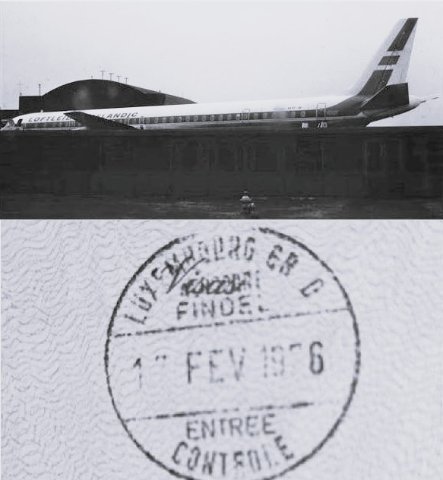
Greg: My road to Chez Haynes restaurant and to Leroy was the same road that led to my first meeting you, Rafael. February 1976. For me, that road started on a Stretched-DC8 from New York to Luxembourg. Air Icelandic. A return ticket to Europe for $190. I never used the return portion. On the plane, I met Harry who was sitting in the seat next to me. He was young, even younger than me (I was only 24), and from somewhere on the west coast. Great guy, funny and open to just about everything. We parted in Luxembourg. He was ‘doing Europe’. I was going on to Paris having ‘done Europe’ four years earlier. But he had a cousin, Wendy, in Paris. He gave me her address and said he’d be there soon. With the best of intentions, we said we’d get in touch when he got to Paris, but I lost his cousin’s address on the train to Paris. As fate (or whatever stood in for the Parisian gods in February 1976) would have it, I bumped into him a week or so later, on Boulevard St. Germain, around the corner from a cheap hotel I had booked into on Rue Saint André des Arts, in the Latin Quarter. He was with Wendy. They were going up north to an American soul food restaurant where she worked as a waitress. So, I tagged along. And voilà! Leroy, you and what would become a four-year adventure.
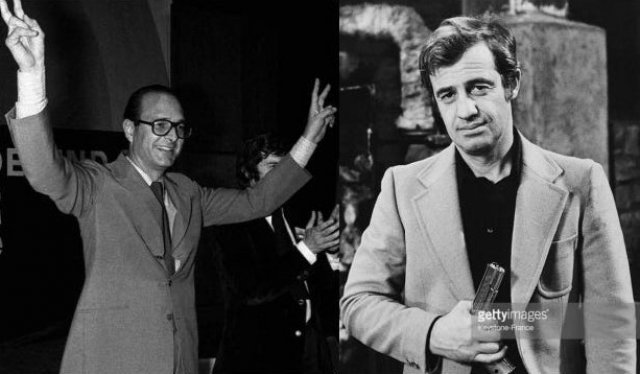
Rafael: I never found out how or why, but Leroy knew a lot of people. He knew the local cops, gave them free meals and free booze once in a while. Sometimes he made out bogus restaurant bills for them so they could make a bit extra on the side by getting reimbursed for meals they never had. Leroy also knew French film stars like Jean-Paul Belmondo. The mayor of Paris, Jacques Chirac, was also a buddy of Leroy’s. Chirac often gave his press conferences at Chez Haynes. And there were the shady characters from the racetracks too, they dropped by and gave Leroy hot tips on the hot horses. Flower sellers came by as well. They never declared their income but informed the police who was where and when in the restaurants in Pigalle at night. So, the cops left the flower sellers alone. One of them was a young Sicilian named Liliana. I asked her out when she came by one evening. The next day, three heavy-set dudes came in and asked me if I was planning to marry their sister Liliana. I said no. ‘Then stay away and keep your hands off her or else we’ll be back’. I said ‘bien sûr, pas de problème’. That’s the way it was. Leroy didn’t give a shit if his staff was legal or had residence papers or work permits. Over the years I’ve come to suspect that from his army intelligence days, Leroy had built a formidable network of acquaintances, from the U.S. embassy down to the Parisian cops on the beat.
Greg: And thank God for that. I don’t know how many of his friends and connections in the Parisian political and cultural hierarchy looked the other way, or if that was just the way it was, but it saved me from the imminent threat of hunger tapping me on the shoulder. I needed that job. Work permits never crossed my mind for the first two years I lived in Paris. To tell you the truth, they were far above my pay grade, which admittedly was non-existent. I repeat, I needed that job. My first and only other job, as a live-out au pair for a two-month-old baby girl, just didn’t cut the starry-eyed image I had in mind as a writer in Paris. But combined with the one day a week Leroy started me with at Chez Haynes, I could pay the rent and begin to breathe, or at least not choke.
When I began that first one day a week as a dishwasher, I was over the moon—actually, I was over a large industrial tin sink with sludgy brown water dotted by bits of half-chewed lettuce floating on top. Finally, a job that put real coin in my hand and food in my belly. It was a job I could almost boast about, a job I could take to Orwell, look him in the eye, and not blink. Who was I to question how the norms of Leroy’s business worked? He had an arrangement with the local police, so it followed we had an agreement with them too. Although, none of us mentioned it. Leroy looked after them, so they looked after him and his staff. And we looked after them. The age-old circle of life on the street. Over the years, the police checked on the restaurant several times. They would usually drop in early, just after 5 p.m. but well before we opened at 7 p.m. They would have to be blind not to see that we were all foreigners whose mastery of the Gallic language was pitiful at best.
I would serve them a pastis or a glass of wine or a bottle of Heineken, depending on taste, while one of the waitresses hurried up the street to Leroy’s place to let him know his friends were visiting. Sometimes the cops told us not to bother Leroy. They knew he might still be sleeping off a late night. We would chat for a few minutes, and they would leave. Never once did they ask for identification or question our right to work there. If Leroy hired us, it was okay by them.
Rafael: Leroy employed young people as dishwashers, waitresses, and bartenders who were also writers, poets, photographers, painters, and dancers. He was generous and warm-hearted, one of those rare people who somehow hadn’t managed to forget what it meant to be young. In Paris those were years without credit cards; copy machines were rare; even telephones were hard to come by. Chez Haynes was a safe haven. And our dreams of Paris would surely come true.
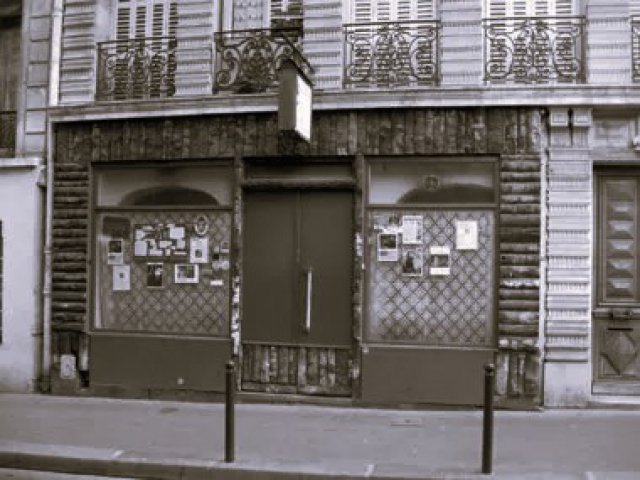
Greg: It is hard to think of the restaurant as gone. Like you, I have been up there, to 3 Rue Clauzel, a couple of times since it closed. Everything gone. Log façade, doors, curtains, Kon-Tiki hut. The world has moved on.
Rafael: I often thought that he had that hut and those fake palms over the bar to remind him of his time soldiering in the Pacific at Guadalcanal.
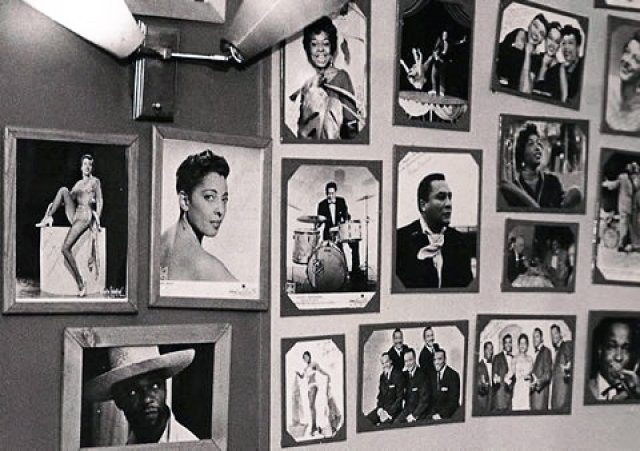
Greg: There are lots of photos somewhere. What I would give to get the pictures that hung on his wall—the famous musicians and celebrities and, a few pictures of us workers that Leroy let us hang on the back wall among some of the greats. I particularly remember a Halloween photo of us all in North American style ‘trick or treat’ costumes. Not very haute couture. But matchless in an eccentric way. It was indicative of Leroy’s sense of generosity and amusement that he let us put up some of our photos on the Chez Haynes walls.
I don’t think anything could ever erase the first day I worked there. Leroy told me to transfer 20 kilos of raw chitlins from a large metal vat in the walk-in fridge to several smaller containers in the smaller fridges by the stoves. What the hell was this stuff? I’d never seen anything like it. Some kind of pig innards cloaked in congealed fat. It didn’t give the impression of food. The smell was tactile. And not in a good way. It clung to the nostrils–– even the full diaper I had emptied earlier that afternoon smelled better. People actually ate this? Fried chicken gizzards I could understand—they were delicious—but this atrocity sliding through my fingers? Who did Leroy hate that much that he would feed it to them? On the other hand, if Louis Armstrong, Memphis Slim and James Baldwin could eat it, so could I. And I did. Not a whole lot of times. Never fully acquired the taste. But I did acquire an appreciation for everything else ‘soul’ he had on the menu. The gizzards were even better than chicken livers, which changed my whole outlook on liver. The gumbo was incredible. The black beans and dirty rice enriched the already perfect fried chicken and barbecue ribs. For a boy raised on Canadian prairie food, and for whom horseradish and black pepper were the height of exotic, this was an in-at-the-deep-end class in flavor. Not to mention that those staff dinners, just before opening, saved my life.
Rafael: The food was always good, we had a choice from the entire menu, and that meal kept me in shape, and thin. Most days I had a snack at lunch. I knew I had a hot meal waiting for me in the evening.
Greg: I remember Leroy coming out of the kitchen one night, taking a moment and looking at us all sitting around the dinner table, eating his food and laughing about something ridiculous. He just shook his head. Then he said, ‘when I opened this restaurant, I fed black musicians, now I’m feeding a bunch of white writers, artists and dancers.’ He turned, shaking his head, muttering ‘uhh-uhhh’ and walked back into the kitchen. At that time, he was almost the same age as we are now. He had seen and done most of what there was to see and do. I could see he was wondering what this change in his staff amounted to. White kids were clearly not what he had anticipated. But he was also okay with it. Even paternal. Often grudgingly so. His eyes said it. We may not have been his first choice but, hell, we were what the deck had dealt him, and he went with it.
Rafael: We’re two old geezers now, Greg, over seventy, we thought we’d never reach this age. We’re going to talk a little, and I don’t care if this ever gets published.
Greg: Published? Are you kidding me? The word hardly has any meaning anymore. Back then selling a hundred copies of a book of my poems (twenty of which Leroy bought) was a major accomplishment, now anyone with an idea and a sentiment can ‘publish’ their ‘work’ to thousands in seconds. And that’s the way it should be. For me, just being alive and breathing—‘publishing my breath’—is accomplishment enough.
Rafael: At least our kids and friends will appreciate it.
Greg: That would be nice.
Rafael: They’ll enjoy a good laugh.