

Cosi fan Tutte
Opera San Jose Charms with a Bright Version of the Mozart / da Ponte Favorite
By: Victor Cordell - Sep 17, 2025
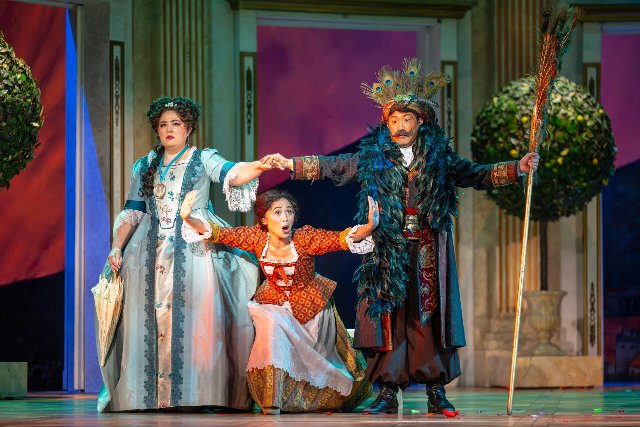
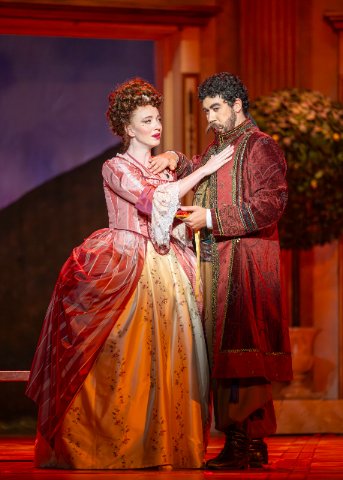
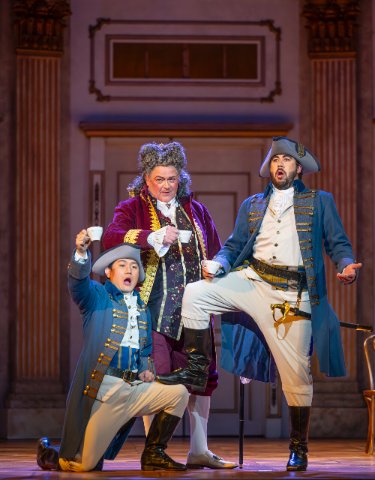
Così Fan Tutte wastes no time in getting to the heart of the matter. The title is ambiguous, but in the context of the libretto it loosely translates as “women all do it” – the “it” being partake in infidelity. From the opening lyrics, the older and cynical Don Alfonso challenges the naïve young men, Ferrando and Guglielmo, wagering them that their fiancées, Dorabella and Fiordiligi respectively, will betray their vows within 24 hours if given the chance. The peacocks that they are, the young men bristle at the thought that their loved ones could possibly consider being unfaithful. The whole opera is dedicated to that single issue.
Opera San José’s audience seems partial to opera war horses, and what could be more fitting than a popular opera uniting perhaps the most successful opera creating team ever. Composed by Wolfgang Amadeus Mozart with libretto by Lorenzo da Ponte, they produced three of opera’s most famous masterpieces – the others being Don Giovanni and The Marriage of Figaro.
OSJ’s production of Così is masterful, blessed with wit and warmth. Credit excellent casting which results in an ensemble of six wonderful performers with mellifluous voices that complement one another beautifully. Add fine direction from Alek Shrader as well as brisk and decisive orchestral support conducted by Joseph Marcheso.
Mozart’s music always lifts a production. However, it’s the cheery performances punctuated by outstanding comic acting by all of the performers that are the difference makers, moving the action along. Particular acting recognition goes to soprano Nicole Koh as Despina, the maid. In a featured role, she wins over the audience as she sashays, struts, flits, flops, and mugs like a fine comic actor and even sings in a comic manner when necessary. Her singing does sometimes fail to project adequately, though she certainly possesses the power as she has sung The Queen of the Night from The Magic Flute for OSJ.
Kudos to the other five cast members for finding the humor in their parts as well. Among other slapstick acts, artists flop onto their backs, especially soprano Emily Michiko Jensen as Fiordiligi. The exception is Joanne Evans as Dorabella who received a dispensation slip as she’s seven months pregnant! Despite that, she sings with a wonderfully warm, exacting mezzo-soprano voice and charms with a bright, enduring smile.
In taking up Don Alfonso’s bet, which is aided by Despina’s involvement, the young men must disguise themselves as Albanians. Using the plot device of fiancée swapping, each will lure the other’s love interest. In most operas, the tenor and soprano are paired as the leads (and the good guys), and the baritone and mezzo are secondary. In Così, the alignments are switched, except when the men are in their foreign guises – presumably so they won’t be recognized.
At first, the young ladies are steadfast, and Fiordiligi sings her anthem to fidelity, “Come scoglio.” Jensen’s powerful top end is in evidence as well as her ability to make great vocal leaps, though she does fade a bit when in lower register and deeper into phrases. When the men falsely feel that they have won the day, Ferrando sings his signature aria, the most noted piece from the opera “Un’aura amorosa” (“A breath of love”). Jonghyun Park is Ferrando, and he commands the beautiful aria and the high tessitura of the role with ease.
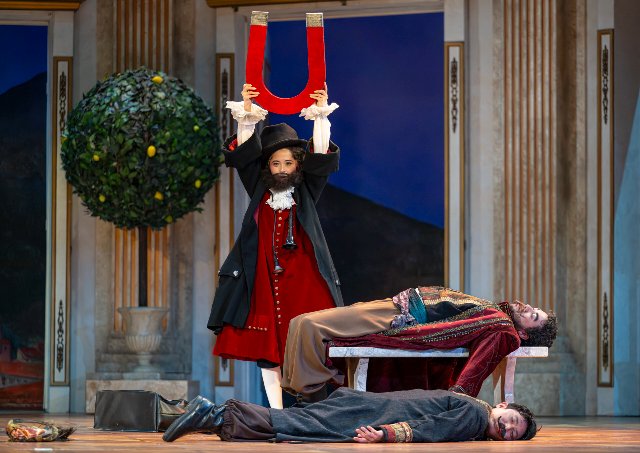
Along the way, farcical events occur, allowing the young men to show their comic chops, as when Despina is dressed as a doctor and uses a giant magnet to withdraw poison from the men’s bodies as they writhe like cockroaches on their backs!
Ricardo José Rivera is delightful as Guglielmo, using wry facial expressions as well as dramatic gesticulations. His baritone voice is easy and mellow, producing a great overall performance. His vocalizations appeal throughout, and he blends especially nicely with Evans in their love duet “(Il core vi dono).” (“I give you my heart”). Perhaps it is no surprise to the reader that the young women do fall under the spell of the “visitors,” and despite the men being crestfallen, they forgive their fiances.
Final recognition goes to the highly accomplished bass-baritone Dale Travis as Don Alfonso, the instigator of the plot (pun intended). He brings comedy, authority, and a mellow voice to his characterization of the insightful but slightly underhanded Don.
At this point, I will observe that what makes this OSJ production particularly notable to me is that I am no fan of Così, and the production had to compensate for deficiencies in the opera to bring me on board. To begin with, at three hours, it is too long for the simplicity of the story line. Also, for a major opera, it has only six principals and no chorus or extras, making the opera seem less than grand. And while there is a great deal of fine music, the execution of the plot is very static. Much of the singing is stand-and-deliver, often with only two people, or even one, on stage, so that it seems more like a concert version rather than a fully-staged production.
Notwithstanding, the Opera San José rendering of Così Fan Tutte contains so many pleasures that it is a joy to behold.
Così Fan Tutte, composed by Wolfgang Amadeus Mozart with libretto by Lorenzo da Ponte, is produced by Opera San José and plays at California Theater, 345 South 1st Street, San Jose, CA through September 28 2025.