

Mary, Queen of Scots
Thea Musgrave's Tragic Opera
By: Victor Cordell - Sep 26, 2026
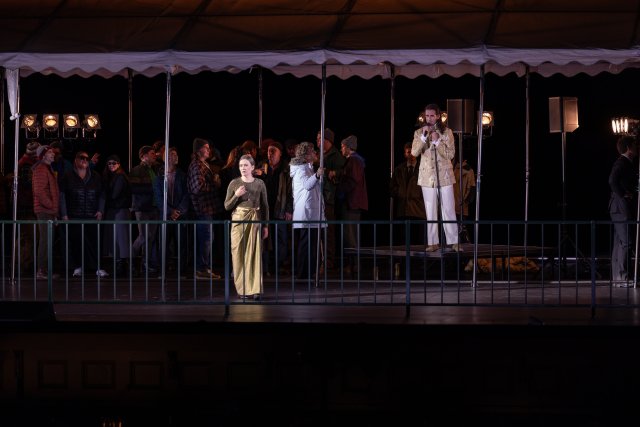
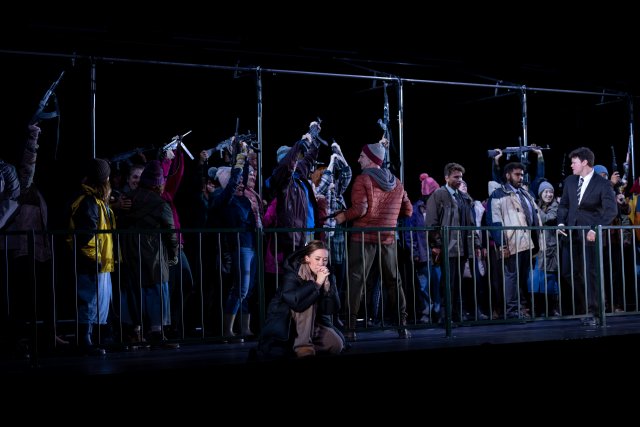
Most people who are aware of Mary Queen of Scots (1542-1587) know her for events related to her challenging Queen Elizabeth I for the throne of England. In that context, Mary was imprisoned for 18 years before being executed under the instructions of Elizabeth for a plot to assassinate the queen.
Fewer people know of how tumultuous her life was before her confrontational period with Elizabeth. At age 5, her marriage to the 3-year-old King Francis II of France was arranged, with the intent of joining Scotland and France. The couple married as teens, but Francis died only one year after succeeding the regent who had ruled on his behalf. Having grown up in France, Mary soon after returned to Scotland as its queen, knowing little of its people or politics and became caught in a maelstrom.
Thea Musgrave’s opera Mary, Queen of Scots deals with Mary’s only adult years spent in the country of her birth and heritage, from age 18 to 25, as Queen of Scotland. The opera is riveting from beginning to end as Mary deals with the nobles who surround her. Perhaps Mary’s reign seems more ominous because the action is condensed into three hours on stage, but at least four men close to Mary were murdered by others who were close to her, indicative of the hazards of the politics of the time when no one was safe. Some of those murdered were those she trusted explicitly including both her husband and secretary.
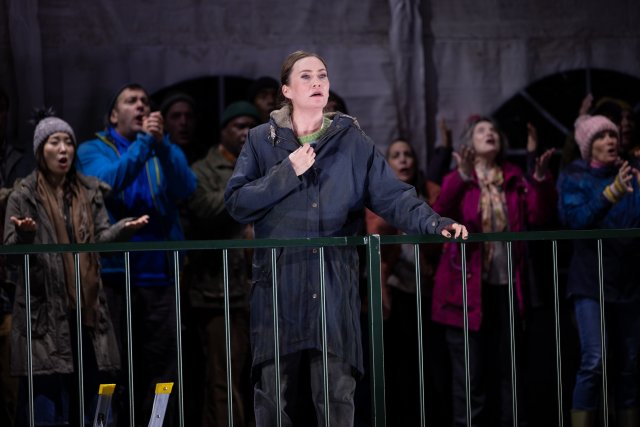
Heidi Stober is Mary. Though her soprano voice can be warm, she has the power to overcome an orchestra or a chorus of men, as she must in this role, which suits her well. Much of her singing takes place high in her range, depicting her dominance. Particularly noteworthy is her signature aria of authority, independence, and loneliness which reveals the caution of relying on anyone “I shall rule. I must stand alone.” In a sense, this is a feminist anthem, as she is disrespected by the powerful men who surround her, some of whom wish to take her place.
As conflict arises from the outset, and conflict is the recurring theme, the music is near relentless – largely pounding and dissonant as it rages from one clash to another. The composer marshals the full resources of the orchestra, and while the harsh music is appropriate to the uncertainty and violence of times, there are other interesting aspects to Musgrave’s score.
She does borrow or imitate from other sources, especially the traditional Scottish air “The Bonnie Earl of Moray” with its dominant crying woodwinds providing a leitmotif to introduce turmoil throughout the opera. The earl of the song is Mary’s half-brother James Stewart, who begins as a loving ally who may have had incestuous relations with Mary. However, his quest for power becomes the basis for an unfixable divide.
Other adaptations that provide diversity and escape from the downbeat include Latin and French chants that open the opera, sung by the chorus which creates some of the more interesting sounds in the piece and acts as a prime mover to much of the action. Something unusual in Musgrave’s scoring is that at times she allows soloists to pursue their own pace and rhythm in a style more consistent with bel canto.
But stranger is that she sometimes allows choristers to set their own individual tempos, resulting in an engagingly undulating and unbalanced sound. Conductor Clelia Cafiero does a fine job managing the music overall, and specifically the improvisation accorded the singers. Despite the large number of choristers who represent the masses, the leader often overcomes them with a louder voice and a stronger message, be it Stober as Mary or distinguished tenor Thomas Mole as James.
Rare in opera with the exception of Richard Wagner is the composer who also writes the libretto, which Musgrave has frequently done, including here – the advantage being that the interface of words and music is highly organic and uncompromised. The complex relationships and gruesome outcomes of the mostly accurate plot are reminiscent of the works of Mary’s younger contemporary, William Shakespeare and his historical and dramatic plays of British and other nobles.
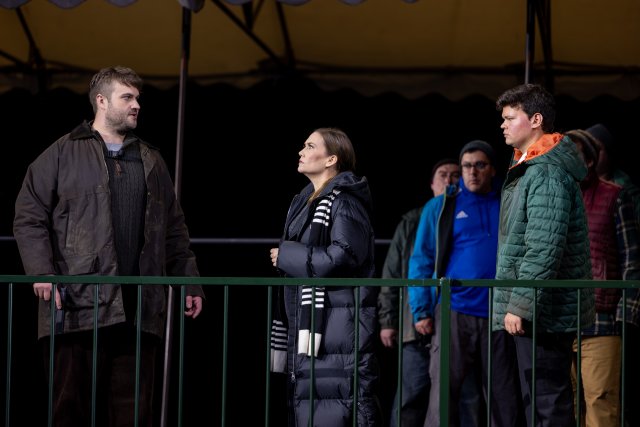
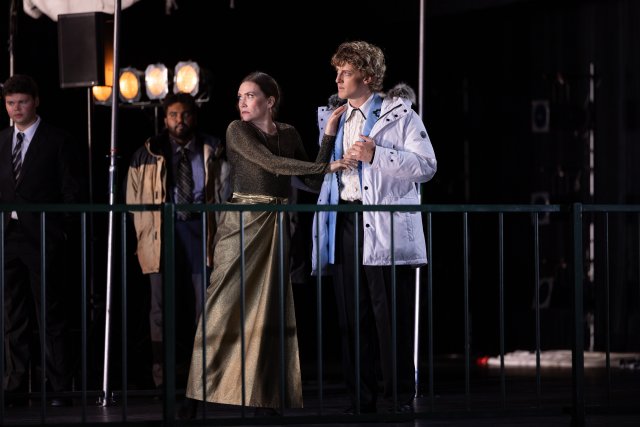
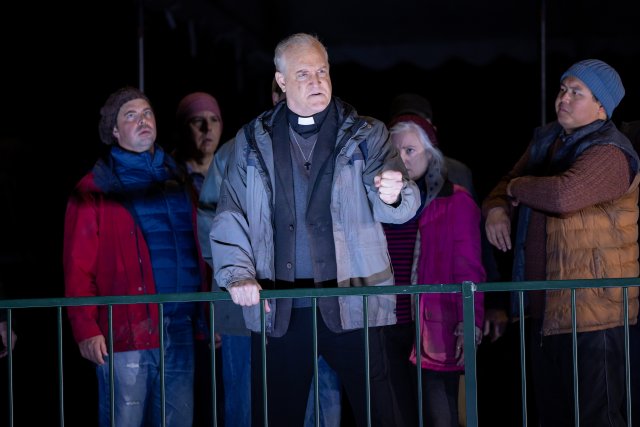
Of modern operas, this one is compelling musically and dramatically. However, one asset of opera is its multidimensionality which stimulates many receptors, including the visual sensation of elaborate costumes and/or staging. In fact, one appealing aspect of a production may compensate for the weakness of another. Although intellectual substance (rather than budget?) drove the decision to put the singers in contemporary dress dominated by drab puffer jackets and ski caps on an equally unappealing stage of a marquee tent and metal fencing, this detracts from the historical significance of the chronicle. While scenic reinterpretation often works, I found myself wanting and trying to visualize how this opera would look with a more desirable appearance.
One question that is often asked about storytelling performances concerns a piece’s relevance today. Certainly, Mary, Queen of Scots raises issues of leadership, aspiration, bonding, trust, options, and more. But lest we overlook it, youth was served as Mary was 18 years old when she returned to Scotland to become its queen, which opens up the whole issue of the responsibility and authority granted young people and their experience and judgment to manage it. In today’s world, youth rule in a different way, largely through their influence and financial largesse in the high-tech community. Indeed, they largely hold the keys to artificial intelligence which already offers great benefits but also represents a potentially existential threat.
Mary, Queen of Scots, with music and libretto by Thea Musgrave, is produced by San Francisco Opera and English National Opera and is performed at War Memorial Opera House, 301 Van Ness Avenue, San Francisco, CA through October 4, 2026.