

La Septima
Tampa City Ballet
By: Carrie Seidman - Oct 01, 2026
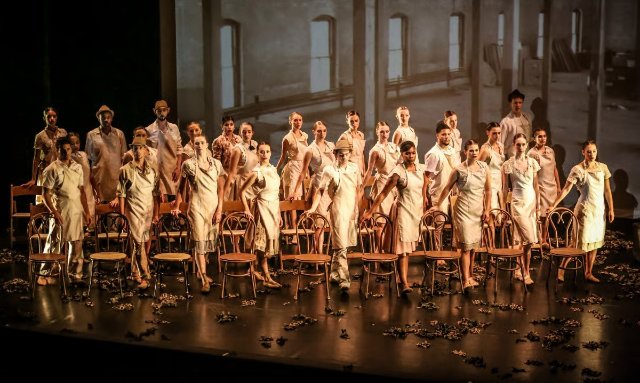
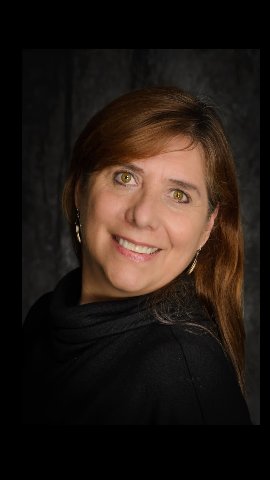

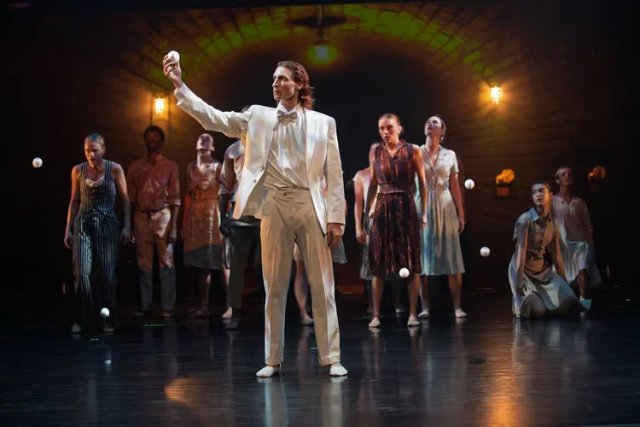
Sixteen years after leaving her native Venezuela to settle in Tampa where she would become an associate instructor of dance at the University of South Florida, Paula Nuñez founded the nonprofit Tampa City Ballet, marshalling 42 dancers from the Tampa Bay area to present the company’s first major performance at the Hillsborough Community College in Ybor City in 2018.
Spending time in that historic community, where so many Latinos had begun working toward their American dreams, was for Nuñez a moving and introspective experience.
“Walking on the streets of Ybor, I was feeling like I was in a film, like I had been there before,” says TCB’s director, a former professional ballerina. “I felt so connected. I got curious about what happened there and how life was 100 years ago.”
That feeling became the catalyst for a labor of love that has evolved over the past six years into a multi-faceted full-scale production that will be presented over the next three weeks in three forms, at three different venues. “La Septima” is a melding of dance, music, film and narrative that documents the immigrant experience in Ybor City, once known as the cigar making capital of the world, during the first century of its 140-year history. The title of the work is drawn from the city’s bustling 7th Avenue, which represents the heart and history of the neighborhood.
“La Séptima” is the result of years of research into the people, cultures, and defining moments that shaped Tampa and Ybor City during the late nineteenth and early twentieth centuries. A primary source for the work is Wenceslao Gálvez y Delmonte’s book “Tampa: Impressions of an Emigrant,” which was translated by USF professor Noel Smith, who gave Nuñez the book as a source of inspiration.
Though the book was the catalyst and provides the narrative thread for the production, it has been amplified with material from historical archives, oral histories, photographs, newspapers and personal diaries, as well as period video projections created through the use of artificial intelligence by Santiago Echeverry, chairman of the Film, Animation and New Media Department at the University of Tampa.
“The story of Ybor is basically the story of ourselves,” says Nuñez, many of whose dancers and collaborators are immigrants or come from immigrant families themselves. “In the end, it’s about the force a community has when it gets together and works with an idea and a focus for a mission with meaning.”
The evolution of Tampa City Ballet
When Nuñez first came to the U.S in the 1980s, it was to dance with the Cleveland Ballet in Ohio. After retiring from performing, she returned to Venezuela, where her husband, a civil engineer, was a member of the opposition political party to Hugo Chávez. After Chávez became president, the family returned to the U.S. in 2002 to seek safety and settled in Tampa, where Nuñez had a relative.
“I had no plans to work, to do ballet, but I couldn’t even get a job,” she says. “And I had so much energy and experience and all these ideas I wanted to give to the community.”
So, less than a year after she arrived in the country, her husband helped her open a tiny studio in New Tampa with just three students, where she served as teacher, secretary and janitor. By 2008 she had a handful of serious students who aspired to become professionals, but many of them could not afford the expense of tuition. A friend encouraged her to start a nonprofit to be able to provide scholarships and, even after her husband’s unexpected death, that’s what she did for the next 10 years, while also teaching at USF.
“My dream was never to have a company,” Nuñez admits. “It was to have a system for underprivileged kids to train and find dance. But I saw how many talented dancers and choreographers graduated every year and they wanted to stay in Tampa but couldn’t. So I say to them, ‘I have a small studio were we can go after school. Let’s use it as a laboratory and create.’ That’s how the company came about.”
The fledgling enterprise suffered a blow during the Covid pandemic, but Nuñez turned it into an opportunity, creating an award-winning short film with masked dancers based on what happened with workers in Ybor City during the Spanish flu epidemic of 1918-20. When it was still too soon to return to traditional theater productions, she instead mounted an early abbreviated version of ‘La Septima’ at the Cuban Club in Tampa, so the audiences could move through the performance space without close contact.
“From there, it has been a roller coaster,” Nuñez says, who continued to develop her ideas and research into the full hour-plus multi-media production it is today. “The story of Ybor is basically the story of the dancers in the company. I feel that’s the same thing that happened with the scholarships, with the company, with ‘La Septima.’ It’s all the time people coming and working together with an intention.”
A tradition of frugality, resilience, creativity
The company, which started with just six dancers, remains in a growth evolution. Although the 16 dancers in “La Septima” are now paid weekly during productions rather than simply getting a split of ticket sales, they are part-time and project based. For the first time, the company recently hired its first staff members – part-time marketing and development directors – which is “making a difference,” Nuñez says.
Grants, donations and ticket sales will boost income this year to close to $1 million and a recent gala fundraiser, with a target goal of raising $50,000, drew in twice that amount.
“That is an indicator that ballet is coming to Tampa,” says Nuñez, who previously found support for the contemporary work she wants to focus on has taken a back seat to the company’s annual “Nutcracker” production (a financial necessity). “This is why we do this. It’s not just a performance, it’s everything that comes with it, before and after.”
Nuñez says the attitude all her collaborators have brought to the project is not unlike the approach adopted by Ybor City’s early immigrants, who made up in determination what they lacked in resources. When she approached TCB board member and University of Tampa professor Echeverry — also an immigrant, from Columbia — about creating video projections for “La Septima” it was without being able to offer a budget or salary. He didn’t hesitate.
“Paula and I clicked immediately, but the biggest concern was that there was practically no money,” says Echeverry, who specializes in video art, experimental video and interactive communications. “Tampa may be welcoming to immigrants, but not so welcoming to support of the cultural world of the arts. So the question was how we could generate something with no budget.”
The answer, Echeverry says, was AI. Starting with a “prompt” of a photo of Latina women in the Cuban Club celebrating a party, he generated black and white images of tobacco fields, cigar-rolling factories, social clubs and Cuban and Ybor City street life, animating them into video. He is the first to admit that not all the details in the films, which are projected on a screen behind the dancers, are entirely historically accurate.
“But this is not a documentary, it is just a suggestion to elicit memories, a feeling,” he says. “It’s a generated dream that doesn’t have to be 100 percent accurate because it’s background. When you have zero budget and you need to survive, we use the tools available. That’s something we Latinos bring. We know how to use what we have to survive.”
That said, the use of AI in this case does require an informed person to produce the results you want it to create, Echeverry says.
“You have to have a brain when you’re working with something more intelligent than you,” he says.“You need to have a context to know what you want to end up with.”
It takes a village
Though Echeverry’s projections are an integral part of the “La Septima” experience, there are numerous other collaborators who have also contributed to building the cumulative experience. Joseph Smith from the New Tampa Performing Arts Center has created moody lighting; Tiger Tao provided professional videography and Daniella Mass, a Columbian singer, combines opera with traditional Caribbean songs to set the musical mood. Actor Cornelio Aguilera will serve as the character of Gálvez y Delmonte, whose presence has been turned into a role as a lector (reader), an employee hired by the cigar making factories to read books, newspapers and political tracts aloud to the employees. His narration creates a storyline that helps viewers connect both to the dancing and the history behind the production.
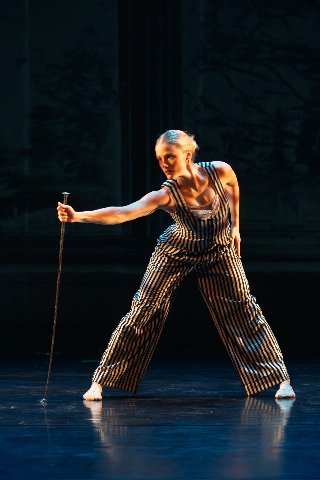
And then, of course, there are the dancers. Shelby Russ-Nacca first worked with Nuñez as a student at USF and is now in her fourth season with TCB. In “La Septima,” she plays the character based on the real life Carolina Rodriguez Suárez, better known as “Carolina La Patriota,” an ardent revolutionary activist. The role, which she elucidates in both a powerful solo and a softer, more nuanced duet, is both physically arduous and emotionally demanding.
“Carolina was a strong, powerful woman devoted to the revolutionary cause,” Russ-Nacca explains. “She put all her time and energy and finances into supporting Cubans in Ybor. We try to keep the story as relevant and accurate to the real characters as we can and she couldn’t ever fully give her heart to anyone because her heart belonged to the revolution.”
As the settings change from factory life to social club parties, many of the dancers are on stage continually, running a gamut of physical exertions and emotional mood shifts, she says. In that way, the dancers, all of whom have multiple jobs and demands on their lives outside of their work with TCB, can relate to the exhaustion that feeds into the nuanced finale.
“Not only are we exhausted as dancers, it also tells the story of how you exhaust your life to some thing you love,” she says. “So many people will relate to that feeling of going going, going and working so hard while waiting for their outcome. It’s almost a euphoric feeling at the end of the show, when you’re in a puddle of sweat but it’s all so beautiful at the same time.”
Russ-Nacca, who this year took on responsibilities as TCB’s rehearsal director as well, is committed to remaining in Tampa, where she was born and has deep family roots, and is grateful the company provides an opportunity for her to continue her dancing there. She’s optimistic that this production will lend to an upward path of growth for TCB, leading to the company being able to offer full-time work and salaries to its dancers.
“I think every year we get stronger and stronger and closer and closer be being a fully professional company,” she says. “This is a beautiful story that people here can really attach and relate to. I’m grateful to be a part of it.”
Choose your own adventure
The end result of all the research, rehearsals and collaborations is a trilogy of performances over the next three weeks, each unique in its setting and approach. This weekend, at the New Tampa Performing Arts Center, audiences can view the full theatrical production in a traditional stage setting. October 9-11, viewers can step into an aura of the 1920s at the historic Cuban Club in Ybor City, where the dancers and audience members will move through the club’s multiple levels as the story unfolds.
The run will conclude with at the University of South Florida School of Theatre and Dance with a “salon,” where attendees can see excerpts from “La Septima,” as well as hear from historians, artists, and community leaders exploring the research, inspiration, and creative process behind the work.
For Nuñez, these performances feel like both a culmination and a new beginning for her company, which she has “faith will become a fully-funded company next year…that’s the dream.” As for “La Septima,” she hopes it can become an annual performance and perhaps travel to other venues around the state.
“I hope that it brings the idea of how this immigrant community helped transform this place into an internally recognized city with a vibrant cultural life,” she says. “What made this area successful was not just the cigar industry, but the different cultures coming together to promote the community. We want to keep bringing that story to life.”
“La Septima” presented by the Tampa City Ballet. Theatrical production October 2-3 at the New Tampa Performing Arts Center, 8550 Hunters Village Road, Tampa; “Club” production October 9-11 at the Cuban Club, 2010 Avenida Republica de Cuba, Tampa; “Salon” October 17 at the University of South Florida, 3837 USF Holly Drive, Tampa. $40-200. For tickets and more information, go to tampacityballet.org/la-septima-event
. To learn more and donate visit ArtsBeat.org.