

From Call It In the Air
Pape Station
By: Gregory Light - Oct 15, 2026
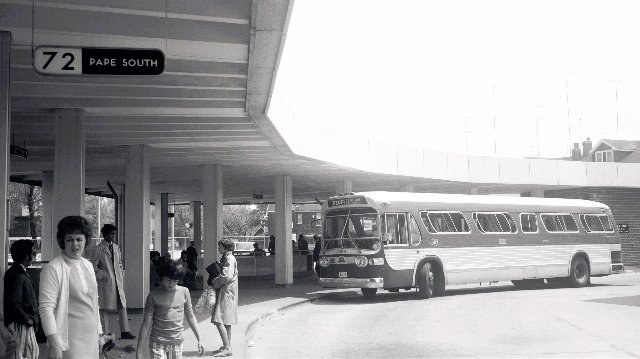
(Toronto 1972)
All of us walk around naked.
It was four-thirty. Rush hour was beginning to slide onto the platform. The heat, devoured by the roads and sidewalks all afternoon, was being thrown back into the air. Joey squirmed on the bench, aching. The sweat didn't dry on his skin now as it had in the late morning. It stayed, slipping over his arms and back like puddles of grease on the road. In the thick heat, it behaved like a soft glue, gathering the dirt and fumes excreted from the buses and sticking it to his body. It pooled on his forehead and fingers, muddying the pages he was reading with damp thumbprints.
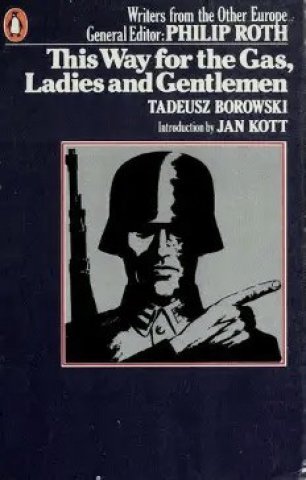
The book he was reading was This Way for The Gas, Ladies and Gentlemen: Tadeusz Borowski's numbing collection of short stories set in Auschwitz. Unlike The Triple Alliance, it was neither amusing nor speculative. It was fact. Disturbing and actual fact. However small the chances had been, or however small we may have wished they had been; Auschwitz had happened. Its number had come up! And with it, one of the most brutal and inhuman moments in history. Auschwitz and Belsen. Belsen and Dachau. Dachau and Treblinka. However, one arranged them, their horror was the same.
Joey had started the book six times, concentration eluding him while he maintained his vigil. He had given up the idea of intercepting Joanna on her route to the city, putting his faith in the diminishing likelihood, as afternoon deepened into rush hour and more and more people clustered on the hard cement floor, that he might catch her on the way home. Now, however, he was caught up in Borowski's title story; his nervous anticipation of Joanna's arrival tangled with the awful incidents described in the book. Refusing to yield, the two sides of the situation vied for his attention; bouncing him back and forth from page to passenger, from words to faces, from one eerie anonymity to another.
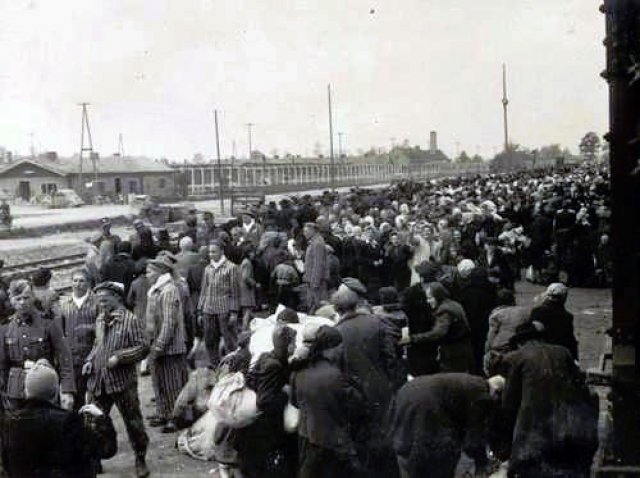
All of us walk around naked. Borowski's narrator (not him in the same way that Dan Spear is not Joey) describes the vanished people of Auschwitz, swarming and shuffling naked in the blazing summer heat, divested of their identities except in so much as they each, separately, seek to survive. "Survivor", tentative and fickle, the name holds only so long as there is breath; and only in so far as the individual, on arrival at the camp railway station, is ordered to step to the right. It emerges capriciously, the gasping, appalling cargo of thousands of rail transports personally christened as it spills from the steaming cattle cars onto the platform, swaying and squinting dizzily in the bright light. Right or left? Survivor or corpse? Camp or gas chamber? Heads or tails?
The story described the grim events surrounding this awful naming ritual; focusing on those "survivors" who had risen above even this name, who had become a bizarre aristocracy of the wretched. By an incredible stroke of luck or opportunity, this elite was given the privilege of unloading the trains, allowed to be the last people to mingle with the almost dead, the soon-to-be-gassed. It was they who waited in camp, tensely praying for the next transport, anxious that it might not come. It was they who were called and marched out to the ramps, excitement mounting in anticipation of the disgorged contents of the crammed trains. It was they who were placed on the platform or by the steps leading up to the growling pack of waiting trucks; they who slid open the doors; they who unleashed the bursting shipment of goods; who reached, clawed, and stripped the inhabitants of their property, moving them along to the left; packing the living vertically into the trucks, the dead horizontally. It was they who were the hands of the S.S., cleaning out the filth left in the trains: the excrement, the stinking corpses of the old, of children, of suffocated infants, partially rotted and forced on horrified women to carry with them onto the trucks. It was they who saw the trucks off to the gas chambers and the crematorium: back and forth all day. And when the last of "it" had been duly carted off, it was they who cleaned the station in the gruesome foreknowledge that another transport would soon arrive and the same all over again.
The same all over again. The same fortune. As they went about the routine business of unloading the trains and stuffing the trucks, peeling the passengers from the real cargo, sifting them off like bits of black chaff from rice, these men skimmed off a percentage of the profits for themselves. Like carrion crows, they raked off whatever food they could scavenge. They tucked it into their trousers, stuffed it in their sleeves, wrapped it around their necks and scurried back to their lives like squirrels stocking up for the winter.
Whatever they take (stolen or inherited) became the hard currency of the camp; every bit as valuable as gold and silver except it tasted and smelled like hunks of cheese and dry bread; like sausages, sardines, and bacon; like onions, tomatoes, peppers, and carrots; like jams, marmalade, and sugar; like evaporated milk and vodka; like mustard and haricots; even like half-empty bottles of wine and fine champagne. There were shoes, jackets, and trousers; soap, perfume, and the occasional silk shirt: all scrounged and smuggled back into camp where they were turned into untold wealth and power. Needs became luxuries in the same way the latest twentieth-century medical technology meets the survival needs of those who can afford it. These items, dredged from the transports were a life support system. They excited and amazed like the most sophisticated and expensive transplant surgery: life odiously lifted from those whose life functions operated perfectly but who were technically pronounced dead, to those who seized their privilege.
It was an unholy communion; flesh, hair, blood, and teeth yielding its wealth. It gave a special identity to its possessors. With it, they could afford fewer beatings, better conditions, more sleep, more food, and even women. They could also afford to close their eyes. But they could never afford to witness. Few could pay the price such an extravagance exacted.
Except for their wealth, there was nothing exceptional about this aristocracy. They came from all walks of life, all professions, all classes, castes, and religions. They were a mosaic of every occupied nation in Europe. Once Polish, Dutch, French, Ukrainian, Greek, Russian, even Jewish, now, smothered in the bitter logic of the camp, they were all another nation. The same one. Canada.
Canada. The word appeared early in the story. Canada? Joey was surprised and puzzled to see it looking back at him from the page. Such a familiar figure in such an incomprehensibly alien setting. What is Canada doing in Auschwitz? What possible connection is there? The word flashed at him again, its chaste presence a non-sequitur in the surrounding hideousness. "I'm afraid you've made an awful mistake," it seemed to say indignantly as if picked up accidentally in a police raid and made to stand in line with the usual haul of pimps, muggers and thugs. "I am not like these others. I am not with them at all!" The attitude was familiar. Auschwitz was filled with thousands who had arrived with just such an excuse. He read the sentence again.
Part of Canada has been liquidated and detailed to a labour Kommando?
'What is this saying?' Joey's words spilled into the rush of people crowding into the bus concourse. Every few minutes, now, subway trains below were arriving, releasing a new wave of crushed and sweating passengers onto the platform. They poured out of the doors, gulping down the slightly cooler air, their eyes blank and unavailable. Pushed and elbowed forward by their collective momentum, they moved swiftly along in tightly controlled streams, hustling up the stairs where they were sorted and packed into the waiting buses.
As Joey read and re-read the story, emotionally tossed, and buffeted by its ugliness, he learned, in words not notably different from those he'd read in his grade school history reader, The Land of Promise, that "Canada" referred to "wealth and well-being". Where it differed, where it fell out of step with the meaning it had for his fellow citizens, was its specific denotation. In Auschwitz, "Canada" was the name given to that group of men, that privileged labour gang, which unloaded the transports, stripped the occupants of their possessions, and saw them off to the gas chambers. Here, "Canadian Identity" was precise.
And Canada, our Canada, which smells not of maple forests but of French perfume, has amassed great fortunes ... from all over Europe.
'Shit,' he said, his nerves aggravated by the grim, relentless words he was reading, by the awful sense of claustrophobia tightening about his chest. The crowd buzzed around him pitilessly, blocking the only hint of a breeze he'd felt all day, bringing with them, instead, a hot suffocating stench. He turned the page and two more references to "Canada" lashed him.
'Canada! Antreten! But fast! There's a transport coming!'
Canada is leaving for the ramps.
Salty drops of sweat from his forehead were stinging the edges of Joey's eyes. It reminded him of the painful crack one of Gary's slingshot pebbles had left on his ear as it winged by. Sarah had filled him with pride when she told him that the tiny red welt was like the scar his grandfather had brought home from the war.
Steps are being drawn up and the Canada men stand ready at their posts by the train doors.
It was this short stab of memory that sent a sudden shock wave through Joey. His grandfather!! The inmates had hated him! Canada Day, 1967; Sarah had told Joey that the scar on his grandfather’s ear had been the result of this hatred, a hatred she'd never understood, which still haunted her. Even in her latest, rambling, confused letter, she wrote about it. He didn't know why they hated him just knew they did. Was this it? What he had encountered? A venomous hatred for Canada, for the men of Canada? Did that make sense? What camps could he have seen? Death camps? Refugee camps? Auschwitz was in Poland. He couldn't have been there. It was too far east. Perhaps he'd been confused? Or Sarah had? Joey's mind staggered blindly through these questions and feelings. It was crazy! And yet here it was. In a "junk book". Was this why Sarah continued to write, continued to rummage through the few remaining memories, now so randomly shuffled in her mind that most of the connections had long disappeared? Was it this, these pages of horrors and atrocities? These Canada men who had rubbed against the atrocities, had breathed, and slept with them?
The Canada men at the trucks cannot stop for a single moment, even to catch their breath.
'Oh, God!!' Joey whispered, feeling a flush of unwanted adrenalin burst into his body. It made his face burn. He could breathe only in short gasps, with every inhalation, a wet furnace blast that clogged his throat and bronchial passages, threatening to topple him. He tried to calm himself, taking deep breaths, sitting upright and still on the bench, but every second seemed to bring more and more of Toronto's seething population, sweltering and oppressively pungent, up against his senses. He turned to avoid the moist and fevered bodies, but they scrambled around him. Pushing, crowding, sweating. His eyes flipped on, scanning the pages, darting in and out of sentences, looking for references to Canada. He wanted to see them. No, he needed to see them.
I stagger forward and run, lose myself in the Canada group.
He stood up, pushing towards the surface of the crowd which had packed more tightly around him with the arrival of another train. He dug in his pocket for a pen but all he had was his penny. A bus arrived behind and to his right. There was a sudden surge, and an elbow was driven against his hand. The penny was jarred loose, falling through the tangled undergrowth of bags and cases and legs. Shuffling feet kicked it under the bench. Joey immediately followed, dropping straight down on all fours, the air above closing over like a tight lid. He stretched for the penny, sliding it towards him. His other hand was stepped on, and he heard voices cursing his presence, a knee pounded into his back. Tails. He put the penny in his pocket and thrust up into the air like a deep-sea diver, his head colliding with a heavy briefcase. 'Ow!!'
'Excuse me,' the owner said, sounding victimized.
'I'm sorry,' Joey said, 'I dropped something.' He straightened up, feeling through his scalp for blood. 'You don't have a pen I could borrow for a moment, do you?' But the man had already veered away, on course for a second bus which had arrived on Joey's left.
I see four Canada men lugging a corpse: a huge, swollen, female corpse.
'Excuse me,' Joey waded further into the crowd, accosting whoever would hold still for a second. 'Do you have a pen?'
'Sorry.' The eyes saw Joey momentarily then charged off.
Joey tried others, persistently, almost desperately.
'Pardon me?' one woman asked in response. 'Oh, look I'm sorry but that's my bus.' And she squeezed away.
'Are you kidding?' another replied. 'How are you going to write anything packed in like this?'
Finally, he got lucky.
'Keep it. I got lots.' An elderly man handed him a small pen that looked like it was used for filling in betting forms.
'Thanks.' Joey nodded.
'Canada is nice, eh?' Henri grins indulgently and disappears into the darkness.
The old man smiled, bobbing up and down like a lifeboat buffeted in a heavy storm, and then receded. Joey turned and fought his way slowly to the outer orbit of the crowd. Eventually, he popped out at a far edge. Much of his view was obscured and it would be difficult to see Joanna when she arrived unless she came up the stairs and boarded one of the buses to his right, but he could breathe and there was a breeze to dry the sweat on his neck faster than he was producing it. He wiped his hands on his jeans, leaving dark, damp patches on his thighs. Taking the short, plastic pen, his thoughts brimming with Sarah and Joe, he re-read the story again, carefully underlining each sentence with the word "Canada" in it.
The Canada men, weighed down under a load of bread, marmalade, and sugar, and smelling of perfume and fresh linen, line up to go.
When Joanna arrived, Joey didn't notice her. Rush hour was in its final stages, and he had retrieved his original position on the bench. He was still reading This Way for The Gas, Ladies and Gentlemen; beginning the introduction which he had earlier skipped. The first sentence had struck him with a giddy vortex of ironies, coincidences, and meanings. Six years after he had been liberated from Auschwitz, Tadeusz Borowski closed the doors and windows in his room and committed suicide. He turned on the gas and created his own personalized gas chamber, dying in the same way the millions he had seen unloaded from the cattle cars and packed onto trucks, had died. He did so on July 1st, 1951. Dominion Day. The year Joey was born.
Brain and body exhausted, these facts spun in Joey’s mind like characters in nonsense verse. Aside from the blind contingency of his date of birth, could the other elements be written off so easily? Was it mere coincidence that Borowski chose gas? To a person who had suffered and witnessed so profoundly, who had published his first-hand accounts of the gas chamber, had gas merely come as the most expedient method available? And, despite the odds, was it a mere coincidence that he chose Canada's national holiday? How does one lose an identity anyway?
Joanna's first impulse was to walk away. To avoid Joey. Leave the station and walk up the street to the next stop on the bus route. She made her way toward the exit, glancing around nervously, half expecting to find Joey dashing after her, angry and shouting and embarrassing. Instead, he stayed on the bench, his head bowed solemnly. She stopped. He looked sweaty, dirty, and tired. At one point he looked up briefly, but his eyes didn't focus on anything. They swept by her vacantly and fell back to the pages on his lap. She was struck by the vulnerability. It didn't occur to her that he had been waiting there all day. She assumed it was chance. Suddenly her annoyance with him evaporated. She had not intended to avoid him forever. She just needed a break. A breather. And it wasn’t as if she wasn’t attracted to him. She liked him. Pushed, she might admit to liking him a lot.
Joey didn't notice her cross towards him. His head was bent and turned away. He had raised his right hand to shield his face because he was weeping. No tears: his eyes remained dry. But his lungs and chest rose and fell in an uncontrollable exodus of sobs. Dry and barren.
Joanna stepped quietly up to Joey and stood before him. He saw her feet first and slowly raised his head. She was smiling, a broad generous grin. 'Hi Dan,' she said.
Joey took a deep breath, shook himself, tried to stand, but remained seated.