

Betrayal
Marin Theatre's Incisive Take on Pinter
By: Victor Cordell - Oct 29, 2026
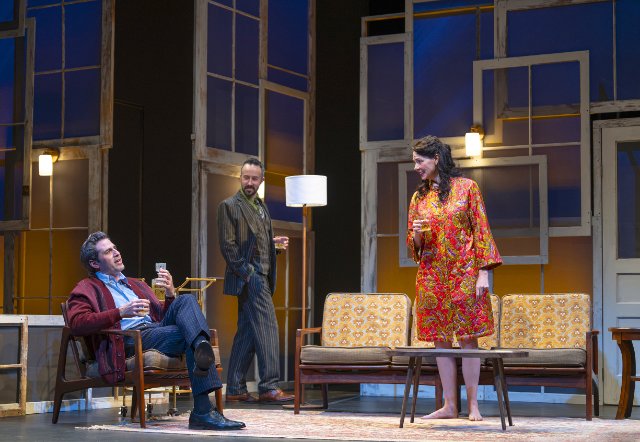
By large consensus, monogamy has become the accepted form of conjugal relationship worldwide, both legally and morally. Yet, defiance of the standard is rife, suggesting that the convention’s hold is tenuous. Nevertheless, breaches involving sexual activities often inflict psychological pain and are usually punished. But measurement is not as simple as an on-off switch. Duration may count. And sometimes reciprocity enters the equation. For instance, did one party do something that triggered an affair by the other, and are the respective offenses equivalencies?
With Betrayal from Harold Pinter, we have one of the greats from one of the greats, a hugely award-winning play full of dark humor, pathos, conflict, and questions of loyalty. An added dimension is that the play is semi-autobiographical, at least to the extent that Pinter had an affair for several years, which probably prompted the theme for this play. And as the central theme, it is easy to identify the cuckolded husband as the one betrayed, but betrayal can run in any direction, including to self.
Not that everybody will find Betrayal their cup of tea (tea being appropriate as the play does take place in London). Its edges are sharp and its characters deeply flawed, so if your idea of good theater is characters that you can root for, this probably doesn’t work for you. Then again, Death of a Salesman, Glengarry Glen Ross, Sweeney Todd, most of Shakespeare’s histories and tragedies, and a wide collection of the greatest theatrical offerings ever written probably don’t either.
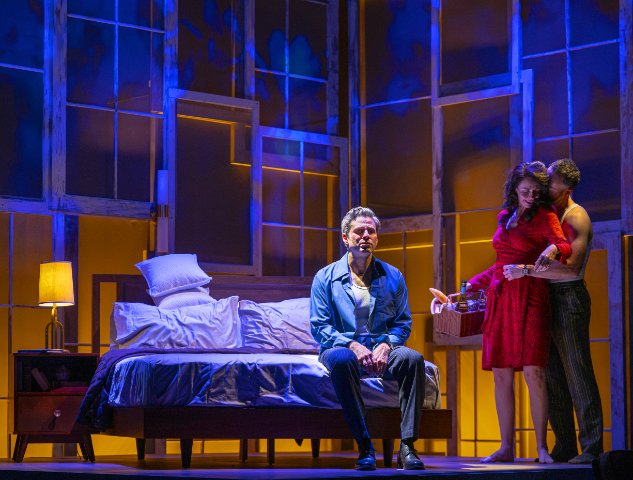
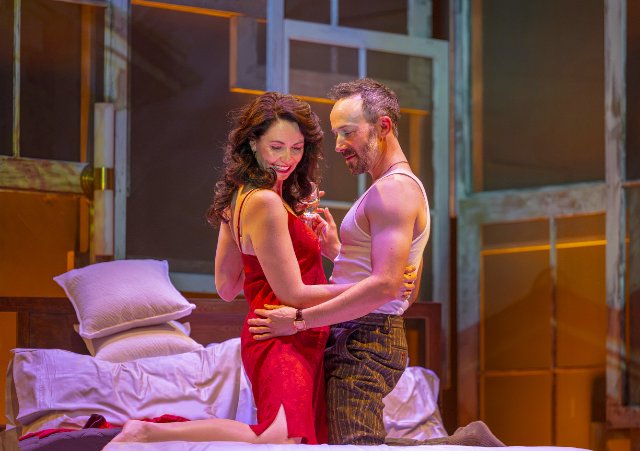
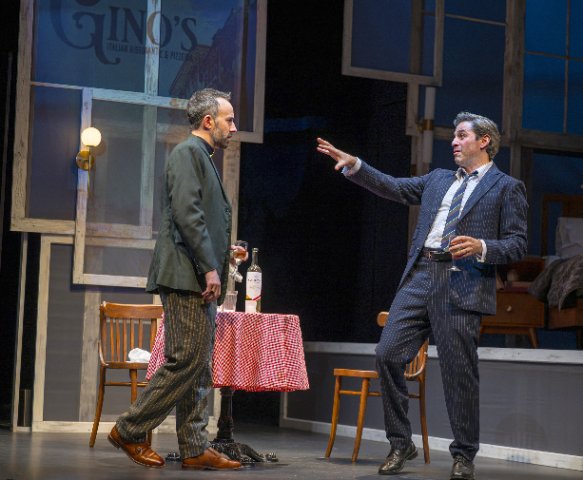
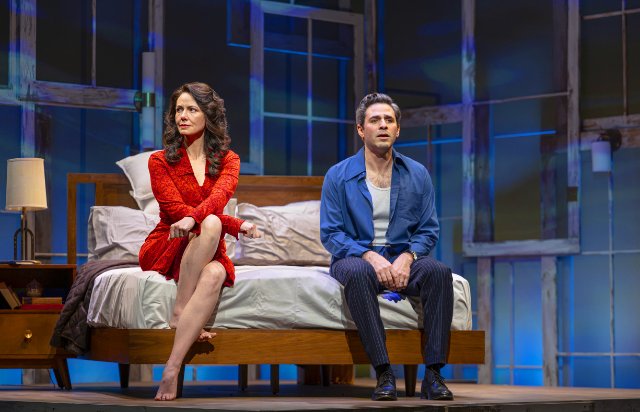
Carey Perloff is a noted interpreter of Pinter’s works, having a personal history with the playwright, and we are in excellent hands with her direction. Viewers who are engaged in the narrative will find the time flies by quickly, and even if we don’t love the characters, we are interested in their stories. Essentially a three-hander, the love triangle comprises Emma, an art gallery executive; Robert, her husband and publisher of modern works of fiction; and Jerry, an agent, whose star client’s books are published by Robert, who doesn’t think much of the author’s works, but they do help “pay the rent.”
Like Emma and Robert, Jerry is also comfortably married, and both couples have two children. Robert and Jerry are good friends going back to high school, so that professional success and family relationships suggest exemplary lives rather than a surreptitious affair between Emma and Jerry that has gone on for seven years.
The interesting device in Betrayal is that while the time of the action spans the years 1968 to 1977, for the greater part, it is told backward in a very clever and largely understandable manner. Thus, we know the outcome at the outset, but we are still interested to know why and how the characters got to that point. Although there are nine scenes, most all occur with only two characters in the intimacy, indeed claustrophobia, of a room in a house or flat.
Given the required secrecy and logistics involved to carry on an affair, the longer it goes, the more complicated and risky it becomes. Though it must be said, it would have been easier back then before cell phones, tracking technology, and the like that limit unexplained absences. But apart from the ability to have unexplained time, other issues remain.
The playwright introduces a number of auxiliary issues. Characters repeat the same question at different times and elicit different answers. Are respondents compulsively untruthful, or do the same past events trigger memory in a dissimilar way depending on the context?
With Emma and Jerry, does Robert know about the affair, and if so, when did he learn, and why has he said nothing, and does he care? As discreet as the lovers think they’ve been, do other people know, and do they talk about it behind their backs? Have either of them divulged information about the lover to the spouse that they wouldn’t be expected to know? And what about unexpected events? Pinter surfaces these potential stumbling blocks and more. At the same time, he doesn’t present the perpetrators as villains, but just as people with complex lives that inevitably lead to conflict.
The cast is first rate with naturalistic acting including the pauses and uhs that reflect real life conversations. Marin favorite Sklar is the charming, emotional, and usually effervescent Emma with her conflicted loyalties as she tries to balance her relationship with two men and maintain her professional life. Charlie Semine portrays Robert as a phlegmatic and reflective man who finds himself out of his element professionally, preferring to read Yeats’s poetry and generally disdaining prose. Perhaps he feels out of his element in other ways as well. And Tasso Feldman is Jerry. Always matter of fact, he talks a good relationship game, but is he really loyal, or is he merely the opportunist that we expect agents to be? Pinter leaves much open to our speculation.
Betrayal, written by Harold Pinter is produced by Marin Theatre and plays on its stage at 397 Miller Avenue, Mill Valley, CA through November 15, 2026.