

Sonya Youncheva Returns to the Met
McVikar's Production is Grand Opera
By: Susan Hall - Nov 01, 2026
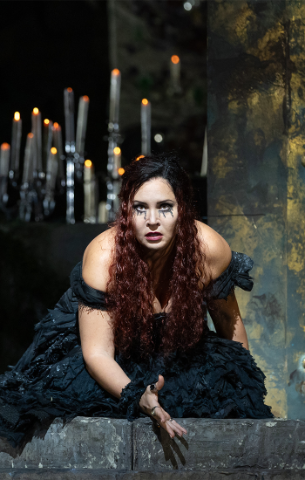
The Metropolitan Opera mounted the season premiere of Luigi Cherubini’s Medea. In the title role, Sonya Yoncheva returned in fine form. Her dark, rich tones suggested both the sorceress’s pain at betrayal and her dastardly plans for vengeance. Her notes are threaded with a silvery filament like the knives and swords she wields. One voice becomes two. Her music takes us into dark corners. Tenderness is deeply felt as the sorceress sings of her children leaving us unprepared for their murder.
Michael Spyres is a tenor for the ages. He too displays the different colors of his character through his wide-ranging “baritenor.” His dark, weighty, resonant lower register combined with the soaring, ringing top notes are perfectly executed. He is a master of his talents, and because he doesn't take on what he cannot manage, his performance satisfies.
Two Met debuts were clarion calls for repeat engagements. The Greek bass Alexandros Stavrakakis, who sang King Creon, the father of the bride, had beautiful tones and an almost casual approach that emerged from his comfort onstage. His wide range of notes and colors served a different purpose here, conveying the commanding presence of a leader, something his prospective son-in-law does not possess. Moscow-born mezzo-soprano Victoria Karkachev, marking a continued return of Russian artists to the e Met stage, was also a marvel, bringing both servitude and compassion to her role. She sang in plummy tones with dramatic conviction
David McVicar’s production displayed the dualities at the heart of the opera. The magnificent palace in Corinth reached high on the Met’s stage, which Sir David always uses to its full capacity. This is grand opera. Detailed projections added color and texture to the Greek solemnity. An unusual mirror, tilted at about an 18-degree angle from the back of the stage toward the front, reflected the goings-on below. You are always trying to figure out where you are, just as the sorceress intends. It forces us to look down on the characters’ moral descents. The red of blood and fire move over the stage, eventually drowning the white of the marital ceremony.
Tilman Michael, formerly of the Frankfurt Opera, has made the Met chorus into a moving musical commentary on the story as it progresses. Carlo Rizzi conducts with perfect pacing, moving briskly forward while also lavishing attention on the beauty and horror of what is happening onstage.
One of the Met’s co-producing partners, the Greek National Opera, may prove an excellent partner for the financially beleaguered Met. Its support from the Stavros Niarchos Foundation offers a major possibility. The Met’s stunning revival of the grand opera makes a strong case for its survival.