

Boston Symphony Orchestra
Pre Concert Events
By: BSO - Nov 11, 2026
|
The Boston Symphony Orchestra (BSO) announces a slate of pre-concert humanities events in January and February 2027 that complement the orchestra’s performances of Tchaikovsky’s symphonies and Stravinsky’s ballets. All of these events take place at Symphony Hall and are available at no additional charge to concert ticketholders with advance reservation (space is limited).
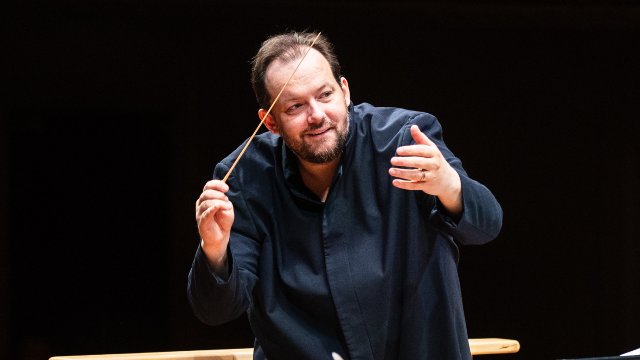
Statement from Chad Smith, BSO President and CEO “Through the humanities, we know ourselves, each other and the world more deeply. They are fundamental to our understanding of the great music the Boston Symphony Orchestra performs, whether it is a deepening of our appreciation for canonical works or suggestions of ways into new works. This winter Music Director Andris Nelsons leads the BSO in six weeks of programs dedicated to the music of Tchaikovsky and Stravinsky, two seminal composers who have been so much a part of our historic legacy. For patrons attending these concerts, we are offering a slate of free pre-concert events designed to illuminate different aspects of the composers' lives and work and to spark conversation about why their music remains so beloved, relevant and compelling today.”
Tchaikovsky Focus (January 2027) This January, Music Director Andris Nelsons leads the BSO in all of Tchaikovsky’s six numbered symphonies — a cycle the BSO has never performed in a single season — along with a concert-opera staging of The Queen of Spades (Pique Dame). Mezzo-soprano Elena Zaremba stars in the title role of the Countess alongside tenor David Butt Philip as the obsessive Hermann and soprano Kristine Opolais as the doomed heroine Lisa. Presented in collaboration with Boston Lyric Opera, the production’s 15 vocal soloists are joined by the Tanglewood Festival Chorus, the BLO Chorus, and the BSO x NEC Honors Children’s Choir, making this one of the BSO’s largest concert-opera stagings.
The Boston Symphony Chamber Players program on Sunday, January 24 features Tchaikovsky’s Souvenir of Florence along with works by Russian composers Liadov and Gubaidulina.
In addition to the five newly added pre-concert humanities events described below, BSO ticketholders can gain further insight into the individual programs at our regular, free pre-concert talks on Friday, January 8; Friday, January 15; and Friday, January 22 (all from 12:15-12:45 p.m.). Former BSO Director of Publications Marc Mandel gives the talk on January 8.
Humanities Events: Tchaikovsky January’s humanities focus on Tchaikovsky traces the arc of a composer whose work is inseparable from questions of identity, vulnerability, and emotional truth. The BSO concert performances are complemented by a series of talks that illuminate the composer’s life and legacy through contemporary lenses — examining themes of self-doubt, desire, secrecy, and the politics of feeling that shaped both his creative process and public persona. Together, music and dialogue invite audiences to listen more deeply, encountering Tchaikovsky not as a distant Romantic icon, but as an artist whose struggles with visibility, belonging, and emotional honesty continue to resonate powerfully today.
Sat., Jan. 9, 6:30pm The Unknown Tchaikovsky Pre-concert talk
Portrayed as a hopeless romantic, a suffering melancholic, or a morbid obsessive, the Tchaikovsky we think we know is a shadow of a fascinating reality. In this lecture, Princeton Professor of Music and Slavic Languages and Literature Simon Morrison describes the unknown Tchaikovsky, focusing on his first and last symphonies, “Winter Dreams” and the “Pathétique,” and filling in the details of his fabulously well-to-do international life.
Thurs., Jan. 14 at 6 p.m. Tchaikovsky’s Hot Takes: Composer as Critic Pre-concert panel discussion
Thurs., Jan. 21, 6 p.m. Imposter Syndrome: Tchaikovsky’s “Failure,” the Fifth Symphony Pre-concert panel discussion
Even at the apex of his creative powers, Tchaikovsky often experienced bouts of self-doubt, as evidenced in his extensive letters. Nadia Sirota, violist creator of the Peabody Award-winning podcast Meet the Composer, speaks with Pulitzer Prize-winning composer Ellen Reid and Boston Pops Conductor Keith Lockhart about Tchaikovsky’s battle with imposter syndrome, the creative process, and “making it” in creative industries. Featuring excerpts from Tchaikovsky’s letters. The event will open with a brief performance by a member of the BSO.
Sat., Jan. 23, 6:30 p.m. Tchaikovsky: Embodied Listening Pre-concert lecture-demonstration
Fri., Jan. 29, 6 p.m. Tchaikovsky on Fate, the Future of Russia, and Gambling Addiction Pre-opera talk
Stravinsky Focus (February 2027) Over two consecutive weeks in February, the BSO and Andris Nelsons perform Stravinsky’s three groundbreaking ballet scores, written within a span of only three years for Diaghilev’s Ballets Russes in Paris. Stravinsky soared to the forefront of modern music with the magically colorful Firebird (1910), which was quickly followed by the energetic delight of Petrushka (1911). The infamous riot that ensued at The Rite of Spring’s premiere in 1913 may be a testament to this radical masterpiece, which cemented the composer’s place as a leading voice of his time.
The Boston Symphony Chamber Players concert on Sunday, February 14 also features five works by Stravinsky as well as Joan Tower’s Petrushkates (inspired by the Petrushka ballet) and Caroline Shaw’s Plan and Elevation.
In addition to the newly added pre-concert humanities events described below, BSO ticketholders can gain further insight into the individual BSO programs at our regular, free pre-concert talks on Friday, February 19 and Friday, February 26 (both from 12:15-12:45 p.m.).
Humanities Events: Stravinsky The humanities programs complementing the BSO’s performances of Stravinsky’s three great ballet scores explore facets of the cultural, political, and social milieu that fueled and shaped the composer’s creative collaborations with Diaghlieff and the circle of avant-garde artists, thinkers, and composers who found refuge and inspiration in Paris in the first half of the twentieth century.
Sat., Feb. 20, 6:30 p.m. From Boston to Leningrad: The BSO, Stravinsky, and Cultural Diplomacy Pre-concert panel discussion
In September 1956, at the height of the Cold War, the Boston Symphony Orchestra arrived in Leningrad at the invitation of the Soviet Ministry of Culture, becoming the first American orchestra to tour the Soviet Union. Six years later, Stravinsky— born in Russia, made famous in Paris, and an American citizen since 1945—returned to his homeland for the first time in 48 years.
Music has always had a unique power to reach across political divides, and this continues to hold true in our contemporary landscape. Join mezzo-soprano and cultural diplomat Carla Dirlikov Canales (Fellow at Harvard's Belfer Center, a U.S. State Department Arts Envoy since 2005, and the Biden Administration's first Senior Advisor and Envoy for Cultural Exchange) as she leads a conversation with fellow musicians and policy thought leaders from Harvard Kennedy School. This multi-disciplinary panel will explore the artist in exile, how identity travels across borders, and how culture continues to endure through geopolitical tension, shedding new light on one of Stravinsky's most performed ballets.
Thurs., Feb. 25 Sat., Feb. 27 Stravinsky and the Body Directed and designed by Kate Nordstrum & Dimitri Chamblas, with Steven Mackey, Simon Morrison, Adam Tendler, New England Conservatory students, and curated food and beverage. Various rooms at Symphony Hall
Stravinsky never approached music as a solitary, cerebral act. He built it in company, through conversation and friendship; he changed how dance moved by reshaping how music could be felt in the body; and his scores still live to be studied, argued over, and understood anew. So rather than a single pre-concert talk, we're offering five.
Gather with food, drink, and music at Higginson Hall (seated dinner) or O'Block/Kay Bar (drinks and curated small bites), honoring the cafés and dinner tables where Stravinsky's own circle, Picasso, Diaghilev, Cocteau among them, fed each other's thinking. Move with choreographer Dimitri Chamblas and pianist Adam Tendler in an all-ages and abilities workshop, feeling firsthand the irregular rhythms and physical jolts that changed dance forever. Learn with Princeton Music Professor and Stravinsky scholar Simon Morrisson for a close look at the collaborations with Fokine, Nijinsky, and Balanchine, that built these ballets from the ground up (Feb. 25 only). Explore with Grammy-winning composer and guitarist Steven Mackey as he delves into the direct link between Stravinsky's "emancipated dissonance" and Blues/Rock performance styles, with guitar in hand (Feb. 27 only).
One RSVP grants admission to Drink, Move, Fact Find or Feel, but concert ticketholders must RSVP separately to Eat (Prelude dinner service) in Higginson Hall.
Eat (Higginson Hall) Feb. 25 at 5 p.m. and Feb. 27 at 5:30 p.m. Stravinsky's table was where ideas took shape. In 1922, he sat down at Paris's Hôtel Majestic with Proust, Joyce, Picasso, and Diaghilev for a dinner later called the greatest of the century. Join us for the Prelude Dinner in Higginson Hall, a seated meal inspired by the Russian and French tables of Stravinsky's life, with music to accompany it. Settle in for good food and good company, in honor of his conviction that great work is made in company, not isolation.
Drink (O’Block/Kay Bar) 5:30 p.m. on Feb. 25 and 6 p.m. on Feb. 27 Stravinsky's genius rarely worked alone. His closest circle in Paris included Debussy, Ravel, Satie, Picasso, Cocteau, and Diaghilev, a constellation of artists who gathered, argued, and fed each other's thinking at places like Le Bœuf sur le Toit, the legendary cabaret where this whole milieu convened through the 1920s. In 1922, Stravinsky sat at one dinner table at Paris's Hôtel Majestic alongside Proust, Joyce, Picasso, and Diaghilev, a gathering later called the greatest dinner party of the century. Through curated food, beverage, and music at the O'Block/Kay bar, we honor Stravinsky's relational approach to artistic growth, the conviction that great work is made in company, not isolation.
Move (Cabot-Cahners Room) Feb. 25 at 6 p.m. and Feb. 27 at 6:30 p.m. Feb. 25 only at 6 p.m. Simon Morrison is a leading scholar of Russian music and ballet, known for sharp, unconventional readings of the repertoire. Few people know as well how a score and piece of dance were made together, and how much of that story survives only in the archives. Morrison takes you inside Stravinsky's early ballet scores, tracing a composer who was, first and foremost, a man of the theater. Long before The Rite of Spring shocked Paris, Stravinsky was embedded in dance, and he never left it, composing for dance into the 1960s. Morrison examines Stravinsky’s close, often fraught collaborations with Michel Fokine and Vaslav Nijinsky, and with Sergei Diaghilev, whose Ballets Russes pushed modernism forward year after year, dropping the artists who couldn't keep pace while Stravinsky alone kept stride for two decades. He makes the case that Petrushka, with its street noise and its mockery of classical ballet convention, is the most radical of the three. He reads The Rite of Spring as a primal ritual of sacrifice, a payment to the earth, whose meanings have been argued over ever since. Drawing on the music, the archives, and the choreographic versions that followed, including Stravinsky's later partnership with George Balanchine, Morrison offers a musicologist's view of how Petrushka, The Rite of Spring and Apollo were built, contested, and reimagined: music inseparable, from the very start, from the bodies that moved to it.
Feel: Stravinsky and the Blues (Symphony Hall) Feb. 27 only at 6:30 p.m. Steven Mackey grew up in northern California playing blues-rock guitar in bands, and he has never separated that world from the concert hall. A Grammy-winning composer and electric guitarist, and a Princeton professor since 1985, he regularly performs his own music, including three electric guitar concertos. With guitar in hand and some tasty Stravinsky examples, Mackey offers some explanation for why Stravinsky’s “emancipated dissonance” connected so often with listeners for whom blues/rock was their mother tongue. |
|
|
* * * |
|
|
How To Obtain Tickets
Attendance at these humanities events is free of charge with a ticket to the BSO concert that day, but for space planning purposes a reservation is required to attend; ticketholders will receive an email inviting them to RSVP for these events. The Prelude dinner associated with the Eat event on Feb. 25 and Feb. 27 requires a separate reservation, and the price of the meal is not included with a concert ticket. Please visit bso.org.
Single tickets and subscriptions (both fixed and flexible “choose your own” packages) to the 2026–27 BSO season are available to purchase by calling 888-266-1200 or visiting bso.org. Group tickets are available at groupsales@bso.org or 617-638-9345. |
|
|