

Renowned Ukranian Choreographer Alexi Ratamansky
Sarasota Ballet to Perform His Work for the First Time
By: Carrie Seidman - Nov 16, 2026
|
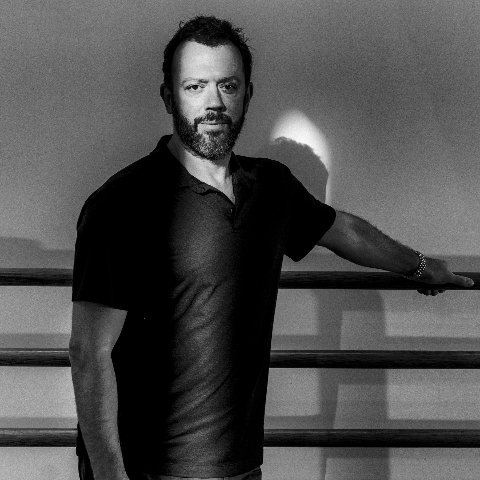
By all rights, Alexei Ratmansky shouldn’t have a care in the world. The New York City Ballet’s artist in residence is one of the most prolific and sought-after choreographers in dance. His work has been performed by nearly every major ballet company across North America, Europe, Asia, and Australia. Sarasota Ballet Director Iain Webb called his coming to town last week to put the finishing touches on “Pictures at an Exhibition” – the first Ratmansky ballet to enter the local company’s repertoire – “one of the most exciting moments in the 20 years I’ve been here.” |
|
But there is a heaviness within the choreographer’s heart that has been present ever since Russia invaded Ukraine without provocation in February of 2022. And it will remain until Ukrainians gain back their country and the devastation Russian forces have reeked upon their land has healed. |
|
“Throughout my life I’ve been called a Russian choreographer and I didn’t have any problems with it until the war started,” said Ratmansky, who was raised in Kyiv before receiving his dance training at the Bolshoi Ballet in Moscow. “Stuck between Russian and Ukraine, I couldn’t stay silent and hide; I had to say what I am. As an artist, as a choreographer, whenever I have a chance now I want to say I am from Ukraine and I detest what is happening there.” |
|
During a wide-ranging conversation last week conducted for The Sarasota Ballet by Marina Harss, a New York City dance critic and part-time Sarasota resident, Ratmansky talked about his training, the creation of “Pictures” and how he works with a new company and dancers. He also spoke briefly, but poignantly about returning to Ukraine this past summer to work with the national ballet company, which continues to perform under the most challenging conditions. |
|
Ratmansky was born in St. Petersburg (then Leningrad) to a blended Russian/Ukrainian Jewish family, but spent his formative years in Kyiv, then a part of the Soviet Union and later the capital of an independent Ukraine. At the age of 10, he moved away from his family to Moscow, to study at the acclaimed Bolshoi Ballet for eight years. |
|
At a young age, Ratmansky discovered that when he heard music, he could “see” dance phrases in his head -- “a little tease I could switch on and off at my will.” It didn’t take long before he was asking his classmates to try out the steps he envisioned. |
|
“I remember preparing for these little improv rehearsals and it gave me so much energy, I almost felt I had wings growing from my back,” he said. “I knew this was something I would love to continue to do.” |
|
Yet he also chafed against the lack of freedom in a governmental system that, he said, “Putin dreams to bring back” today. Still his own dream remained to dance with the Bolshoi after his graduation at 18, something he came to realize would never would never happen because “I was from Kyiv and I knew I wouldn’t be given a contract.” |
|
Instead, with acknowledged disappointment, he returned to Kyiv after the Chernobyl nuclear accident in 1986 to join the national company there. But even away from Moscow, “the freedom was not there.” |
|
“You learned you had to keep your mouth shut and not tell what you think,” Ratmansky said. “When we went on tour, we were only allowed out of the hotel in groups of five, always supervised. You had to have these political meetings where you listened to propaganda for two hours. So you lived a double life.” |
|
By his second or third year with the company, the Soviet Union fell, bringing an unprecedented sense of freedom that was “absolutely extraordinary.” At the same time, the country experienced a complete economic collapse; stores were totally depleted of goods. Nevertheless, the company maintained a grueling schedule, performing in a different city each night, with long bus rides overnight to reach the next venue. |
|
Having seen the few overseas ballet companies who toured to Ukraine, Ratmansky recognized that, to improve his dancing, he needed to expand his knowledge of ballet in the West. So when a tour to Winnipeg, Manitoba resulted in a contract offer, he and Tatiana precipitously moved to Canada. There they were rapidly initiated into “the school of life -- We didn’t even know how to use a bank card!” – and he discovered a new world of choreography as well. |
|
“We were brought up that the Russian school is everything and that, after the Bolshoi, no one can teach us anything,” he said. “So here I am trying to learn [George] Balanchine’s ‘Square Dance’ and it was so quick! It was quite a shock. |
|
“I remember my resistance, but at the same time, I realized I can only succeed if I change my attitude that the Russian school was best. And suddenly I saw the shape of my muscles – something I was obsessed with – started to change and I thought, ‘Oh, that’s what I need!’” |
|
After three years of observing and absorbing, the couple returned to Ukraine, now an independent country, but with the ballet company still hampered by administrators reluctant to change. Nevertheless, it was a fruitful time for Ratmansky creatively, as he experimented and explored with his choreography, which the company regularly performed, at home and on tours. |
|
After two years, in 1997 the couple moved to Denmark to join the Royal Danish Ballet, where they would remain for the next seven years and welcome the birth of their son, Vasily. This became the next chapter in broadening Ratmansky’s ballet vision, with an introduction to the distinct style of Auguste Bournonville, the dancer and choreographer who directed the national company there for nearly 50 years. |
|
Ratmansky recalled the Royal Danish as “a fairytale company” and his time there as beneficial, both personally and professionally, as he continue to create choreography for companies throughout Europe. He fell in love with the Danes’ balletic storytelling, and especially with the power of mime and gesture, which the Soviet system had downplayed as “dated” and old-fashioned. The Bournonville style where “you have to be super relaxed and look like it’s nothing but your legs have to work very hard” challenged his own dancing once again. |
|
In 2003 he made his first ballet for the Bolshoi, “The Bright Stream,” the soaring success of which led to his being hired to direct the revered company at the age of 35, the youngest director in its history. But after five difficult years he chose to leave Russia again, this time for New York City, where he first became the artist in residence at American Ballet Theater -- a position he held from 2009 to 2023 – and later assumed the same role at the New York City Ballet, where he remains today. |
|
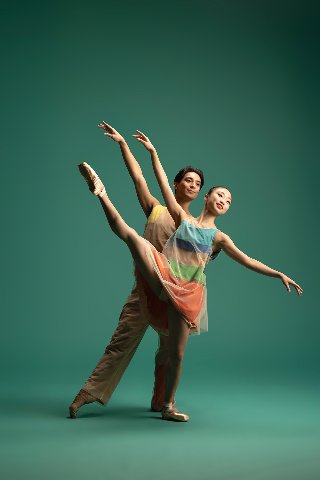
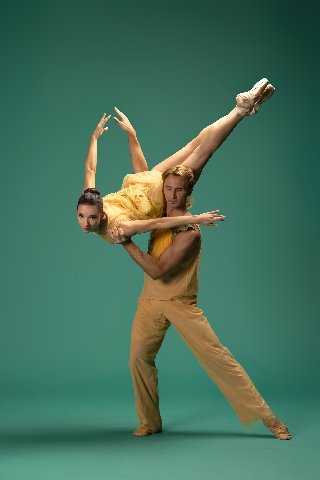
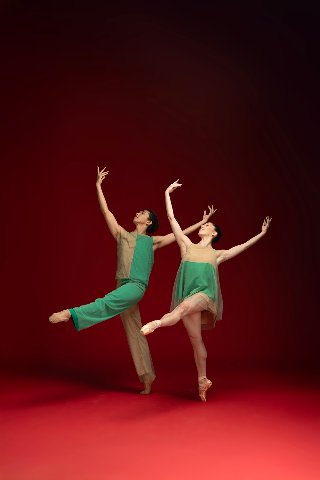
It was in 2014, while still at ABT, that Ratmansky choreographed “Pictures at an Exhibition” – which becomes the first Ratmansky ballet in The Sarasota Ballet’s repertoire this weekend -- for NYCB. The original cast included Amar Ramasar, the former NYCB principal dancer who has been staging “Pictures” for The Sarasota Ballet, and Wendy Whelen, who had just gone through surgical reconstruction of her right hip. |
|
“Actually, Wendy had announced her retirement,” Ratmansky said. “But then I was listening to this middle piece of the music and I couldn’t imagine any other dancer but her. So I wrote her and said, maybe you could consider dancing in this ballet? And she sent me back a note with all these little emojis of excitement. She was in the studio the next day.” |
|
As is frequently the case with his choreographic process, Ratmansky began ‘Pictures” with the music, a suite of 10 pieces composed by Modest Mussorgsky in 1874 in memory of his friend, Viktor Hartmann, an artist who created a series of paintings based on his travels. |
|
Mussgorsky’s score is an imagined musical journey through an exhibition of the artist’s work, connected by “Promenade” passages that suggest someone walking picture to picture through a gallery. Ratmansky chose to use the original solo piano score (which will be played live in Sarasota) rather than a later full orchestration. |
|
By the time Ratmansky meets with dancers for a first rehearsal, he’s already created most of the choreography that will become the ballet. |
|
“I was always jealous of the choreographers who can improvise in the studio,” he said. “When I’m forced to, the product is always less quality, so I prefer to come to the studio prepared and give the phrases to the dancers. But then, the way they take it leads to the next step. I’ve learned through years to trust the process more, so I can be a bit more relaxed and go in the dancers’ direction rather than forcing them to follow what I prepared.” |
|
The visual/design inspiration for the piece, came not from the realist images in Hartmann’s paintings, but rather from Ratmansky’s memory of an abstract work by Wassily Kandinsky – “Color Study: Squares with Concentric Circles” – that hung on the wall in the hospital in Denmark as he awaited the birth of his son. Projections of its vivid colors and geometric forms – he calls the painting “a study in color and shape” -- are projected on the backdrop throughout the ballet. |
|
Ratmansky’s choreography more closely reflects Kandinsky’s art than Hartmann’s; there is no literal interpretation of any scene or setting in the movement. In fact, in some cases, Ratmansky said he intentionally chose to be oppositional in his manifestation of the music. |
|
Though Ratmansky admitted that it isn’t often the case, when a dancer presents “a phrase better than what I had in mind,” he is more than willing to “grab it.” But each new cast of artists brings something fresh to the work, he said, and he encourages them to explore the nuance within his choreography as he did recently with The Sarasota Ballet dancers. |
|
“I think dancers, like all of us, are so different,” he said. “There are dancers who catch the essence of the movement right away and understand without you saying anything. For others, it’s important to understand the mechanics and structure first and when you add the audience and the theater they will flourish. My job is almost like a psychologist, to figure out their approach and what I can do to help them feel more free and use what they have. You don’t press an idea on them, you spark a dialogue.” |
|
The grand finale of Mussorgsky’s suite represents Hartmann’s painting of “the Great Gates of Kiev,” a monumental stone gate the artist designed in 1866 to enter a national competition that was never built. It is often confused with the “Golden Gates of Kyiv,” a real 11th century medieval fortress gateway, the ruins of which Ratmansky remembers from his childhood. (It has since been reconstructed as a museum.) |
|
Though it wasn’t part of his original version of the ballet, after the Russian/Ukrainian war began in 2022, Ratmansky chose to add a projection of the Ukrainian flag to this final scene in order to “connect things.” (Though Ratmansky’s ballets continue to be performed in Russia, the choreographer is never credited.) |
|
“This ballet is not political,” he begins, then falters and pauses. “Well, maybe in a way it is. Most dancers don’t look at politics, but the war in Ukraine is not politics, it’s more than that. If Ukraine doesn’t win this, something essential is lost. I don’t know how the world can continue without those crimes being punished. And that’s a real possibility.” |
|
Last summer, the choreographer returned to Kyiv to work with the national ballet and was both amazed and proud to see how the country continues to function despite the ravages of the war. The company is now half its former size, reduced in order to be able to fit everyone into a shelter when the drone and air raid sirens sound, a daily occurrence. |
|
Yet the dancers continue to perform and audiences continue to come watch. After Ratmansky staged “Donizetti Variations” – the first time Balanchine’s work was officially danced in the country -- the theater was filled to capacity. |
|
“That’s when I felt that art is not just entertainment, it’s much more than that,” he concluded. “It’s really a necessity, especially for people who are living through war.” Sarasota Ballet Program Two, featuring Alexei Ratmansky’s “Pictures at an Exhibition,” Kenneth MacMillan’s “Solitaire” and Jessica Lang’s “Lyric Pieces.” 7:30 p.m. Nov. 20-21; 2 p.m. Nov. 21 at the Sarasota Opera House, 61 North Pineapple Ave., Sarasota. Tickets 145. 941-359-0099; sarasotaballet.org |