
Sony Classical Releases
Serge Koussevitzky: The Complete Boston Symphony Orchestra Recordings (1928-1950)
By: BSO - Nov 20, 2026
|
Sony Classical and the Boston Symphony Orchestra proudly announce the long-awaited digital release of the entire discography amassed by Serge Koussevitzky for Victor/RCA Victor during his quarter century as the BSO’s conductor and music director. Today, Sony Classical releases Serge Koussevitzky: The Complete Boston Symphony Orchestra Recordings (1928-1950) globally. The collection is now available to download and stream, newly remastered and presented in the highest quality audio across digital music platforms, made possible by the generosity of BSO donors. Many of the performances collected here have not appeared on CD, while some have never been issued before in any format.
More than two years of historical research, source investigation, transfer, restoration, assembly, reissue mastering and quality control under the direction of Andreas Meyer at Swan Studios in New York went into the making of this collection. The result offers more than merely improved sound from the remastering of previously issued recordings. It marks a comprehensive re-examination of the recorded evidence itself, establishing a new reference point for the Koussevitzky discography.
For the digital release, these 55 discs are presented as 52 digital albums, as the two Missa Solemnis discs are combined onto one album, as are the three St. Matthew Passion discs. The contents of each album are detailed here. |
|
 |
|
|
The Boston Symphony Orchestra and Music Director Serge Koussevitzky at Symphony Hall, 1940. (Paul Davis) |
|
|
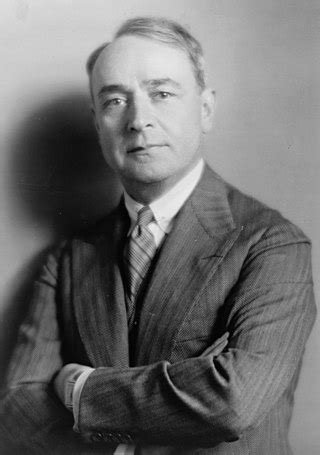
A Legacy of Championing Living Composers and New Music Born to two Russian klezmer musicians in 1874, Serge Koussevitzky trained as a double bass player in Moscow and began his musical career at the age of 20, playing in the Bolshoi Theatre Orchestra. He went on to become Europe’s leading soloist on the instrument but was largely self-taught as a conductor when he engaged the Berlin Philharmonic for his podium debut in 1908. The following year he formed his own orchestra as well as a publishing house to propagate new Russian works. After the 1917 Revolution he settled in Paris, where he founded another orchestra and championed Russian and French repertoire. He premiered music by Stravinsky, Prokofiev, Rachmaninoff and Scriabin and commissioned Ravel to orchestrate Mussorgsky’s Pictures at an Exhibition.
In 1924 Koussevitzky came to the US to succeed Pierre Monteux as conductor of the Boston Symphony Orchestra, and over the next quarter century, in the words of the influential New York Times critic Olin Downes, refined his orchestra into “the most highly perfected and sensitized symphony ensemble in the world.” His great German colleague and friend Wilhelm Furtwängler once observed that Koussevitzky’s mastery of the double bass helped him achieved the deep, rich string-based sonorities that characterized his conducting – a special treat in this edition is the album of Koussevitzky himself playing the double bass, including the beautiful slow movement from his own Double Bass Concerto. A more recent music American commentator called the Boston strings “one of the hedonistic delights of Western civilization.”
Koussevitzky was also renowned for his advocacy of the new music of his adopted homeland, unequalled by any other prominent conductor of the day. Works by Aaron Copland, Henry Cowell, Howard Hanson, Roy Harris, Walter Piston, Randall Thompson, and other American composers are featured in this edition alongside the canonic European repertoire extending from Bach, Handel and Mozart to Beethoven, Berlioz and Brahms to Sibelius, Debussy and the Strausses – Johann and Richard. The earliest items in the set – ballet suites from Stravinsky’s Petroushka and Ravel’s Daphnis et Chloé – date from November 1928. This was the Boston Symphony’s first electrical recording and the first made at Symphony Hall. (In 1917 the BSO was among the first major orchestras to make acoustical recordings, but those were made in Victor’s studio in New Jersey.) Koussevitzky’s final recordings, of Sibelius’s Second Symphony and Grieg’s Last Spring, were made in late November 1950, just six months before his death in Boston.
Also of historic importance is the first recording of Roy Harris's Symphony No. 3, made in November 1939, a few months after the conductor and his Boston players premiered this American orchestral milestone. In 1934, they had recorded another work by Harris, his Symphony 1933, which became the only Koussevitzky album released by Columbia. Included here, too, are the first studio recordings of Copland's Appalachian Spring suite (from 1945) and his Lincoln Portrait (1946); Rachmaninoff’s Isle of the Dead from 1945, two years after the death of the composer, who had himself introduced the work to Boston as early as 1909; the first recording (1930) of Ravel's Koussevitzky-commissioned orchestration of Mussorgsky's Pictures at an Exhibition (the BSO gave its American premiere under Koussevitzky in 1924); and early recordings (also from 1930) of Ravel’s Boléro and Ma mère l’oye suite.
Koussevitzky is still regarded as one of the great Tchaikovsky interpreters. He personally knew the composer, who died when the young man was 19. Like all Russians, he revered the master’s music, and he conducted it regularly, in Moscow, then in Paris, finally in Boston. Along with his recordings of Romeo and Juliet and Francesca da Rimini, the Sony collection contains Koussevitzky’s legendary interpretations of the last three symphonies. “This Tchaikovsky Fourth,” wrote The New York Times recently, “is irresistible evidence of just how much he and the Boston Symphony achieved in their quarter of a century together. Conviction resounds. The playing is virtuosic, yet not for the sake of display. Every phrase sings. There is formidable power and intensity, but also elegance.”
Other highlights of this edition are the recording premiere of Prokofiev's Peter and the Wolf from 1939 and a 1950 remake featuring Eleanor Roosevelt as narrator, as well as the composer’s Violin Concerto No. 2 (with soloist Jascha Heifetz, set down in 1937) and Symphony No. 5 (in 1946). The BSO had already given the American premieres of all three recently composed works under Koussevitzky. Between 1945 and 1947, they also recorded what were then new symphonies by Shostakovich, his Eighth and Ninth.
The core Austro-German repertoire, needless to add, is also generously represented in in Koussevitzky’s BSO discography: Bach by the first complete recording of the St. Matthew Passion (1937, sung in English) plus all the Brandenburg Concertos and Orchestral Suites; Mozart by six symphonies as well as overtures from his operas; Beethoven by his symphonies Nos. 2, 3, 6, 8 and 9 and the Missa Solemnis. And there are further symphonies in the collection by Haydn, Schubert, Mendelssohn, Schumann and Brahms.
This Sony Classical edition now stands as the definitive digital reference for the complete official recordings of Serge Koussevitzky and the Boston Symphony Orchestra, preserving – in the words of Swan Studio’s Andreas Meyer – “not only the sound of these historic performances, but the recorded legacy through which Koussevitzky and the BSO reached the world.” Meyer’s description of the remastering process is available here. The BSO website offers digital exhibits on Koussevitzky’s recordings and his life and legacy.
Additional Resources for Scholars Digital copies of a selection of Koussevitzky's personal collection of scores housed at the Boston Public Library are available to the public on the Digital Commonwealth platform. (click here). The original scores are available to scholars at the library. The Digital Commonwealth also contains over 1400 digitized scores from the Boston Symphony Orchestra Library that were used by conductors of the BSO from 1881 through the 1980s (more info). Many of the scores are preceded by handwritten records of the piece's performance history and contain extensive markings and annotations throughout. Ultimately, this digital collection will contain more than 2,000 BSO scores. The digitization project was made possible in part by the Institute of Museum and Library Services, Save America's Treasures award ST-255001-OMS-23. |
|
|
|