
From Call It in the Air
Normality Not Withstanding
By: Gregory Light - Nov 25, 2026
(London 1982)
Joey buttoned Amy's jeans and helped her put on her coat. Then he slipped into his jacket. Checking to see that he had his keys, he found an old note in the pocket. A month ago, he had scribbled it down on a scrap of paper while sitting on the upper deck of the number 19 bus: a reminder to mention the date of Tadeusz Borowski's death. It had seemed a natural adjunct to his decision, earlier that day, to title his article, And Canada, Our Canada.
And Canada, Our Canada, which smells not of maple forests ... This was the image that Gary had called obscene. Blending a haunted Auschwitz labour Kommando with present-day, 1980s Canada. Where did he get the right to do that? It was insane.
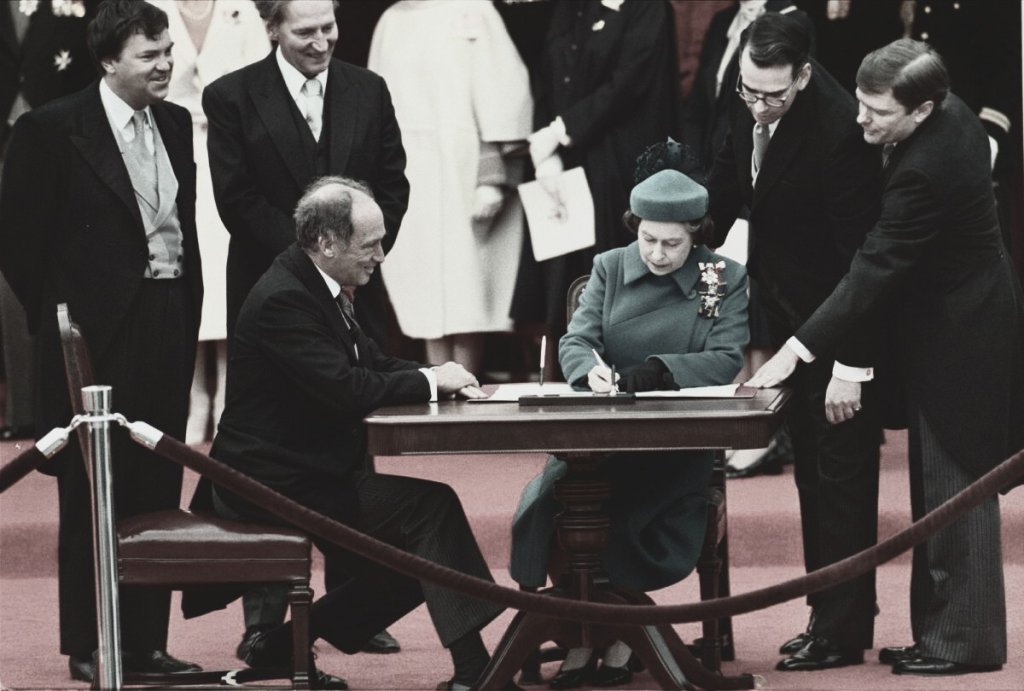
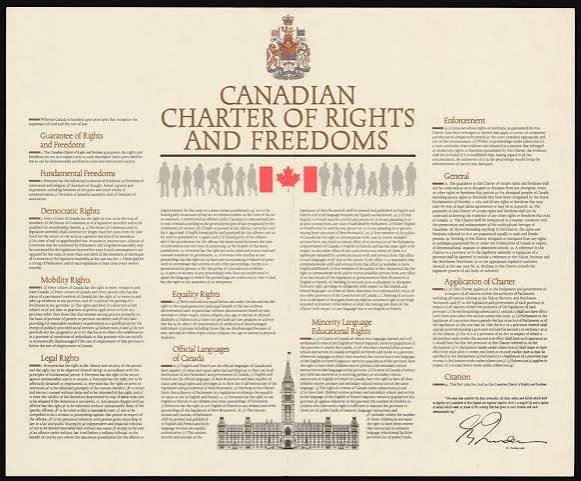
Joey's intention was straightforward. Create a "word performance", a polemical piece that expressed its argument in a salvo of short penny-selected aphorisms, stories, images and claims revealing the dark underbelly of the smiling face of "wealth and well-being". Here were the sick, the unemployed, the marginalized, the socially, culturally, sexually, and ethnically different. The Other. It was to be a tribute to his nation's repatriation of its constitution from the other side of the coin. So to speak.
The significance of the title, however, gradually changed its complexion. Only when it was completed did Joey realize what "And Canada, Our Canada" was. His fate-minted portrayal of his country had become an immense obsession; a monstrous tale full of sound and fury desperately wanting to preserve Gary, clinging to the dreadful meanings and memories of that experience with the same tenacity that Sarah clung to her husband's wartime witness. It was a scathing remembrance of ugly things lost, things suppressed and buried. Joey acknowledged that it looked very much like a tale told by an idiot.
Nevertheless, it signified something. As he was finishing the essay, he read somewhere the saying, ‘Once is an accident, twice is a coincidence? A third time is a conspiracy!’ This situation, national history, present culture, personal memory, he knew to be more than a conspiracy. This was entirely embedded, built into the very heart of the system. Fully habituated. A million events deep. This was the way things were. Had become. The ‘other’ was soaked up, deep inside the body called Canada and, through a silent bond and hushed covenant, ‘disappeared’. This was normalization. Ordinary and banal. And nothing in the constitution was about to change that. Certainly not the new Charter of Rights and Freedoms. It had an out clause.
Joey had gone back to the essay and added it at the end. And Canada our Canada. One injustice is an accident. Twice is a coincidence. Three times is a conspiracy. A million times is normality. An inexcusable ‘notwithstanding’ clause. Normality notwithstanding.
The references did not escape Gary. He was right. The essay was insane. But the truth often is.
He had wavered but finally decided to go with the title and its bitter metaphor. His decision was then cemented early in the evening a few days later. While digging through an old trunk in search of his favourite blue sweater, which Joanna had packed away as memory, he found the bundle of letters he had inherited from his grandmother. His father had given them to him before her funeral. Joe's "war letters"; twenty-three of them, neatly bound with two thick elastic bands and put into a large manila envelope. Sarah had also included a short note, still alive with her fragrance, dated "July 1967": five years before her death.
Dearest Joey,
I want you to have these letters. Your granddad would have wanted it too. After our talk the other day, I know I can entrust them to you.
I shall love you always.
Sarah
The "little talk" was their 1967 Dominion Day talk. But, standing in the Winnipeg cemetery, Sarah's presence tightly with him, Joey's memory had been unable to retrieve what they had talked about. It was only afterwards, after her funeral, when he found time to sit down alone with the letters, that his memory began to tiptoe back. Reading the seventh letter, he remembered the two photographs, the before-and-after pictures, which Sarah had kept on her night table. And reading the eleventh letter, he was reminded that his father and Uncle Frederick once had a sister, Elizabeth, who had died in childhood. But it was the eighteenth letter, sometime in the late summer or early autumn of 1945. The postmark was faded and unclear. It had been sent from the British sector of Germany. It roused his memory of the "little talk", washing it over him as sharply as the fireworks that had been exploding outside the window.
It was in the eighteenth letter that Joe wrote of the encounter he'd had with a woman and a young boy. (Joey found the detail here frustratingly vague. Had he met them in a street, in a refugee camp, a displacement centre, where?) The boy approached him first, asking for chocolate, the woman scolding him for it. But we talked. In broken English. I didn't have much words of German. She was a camp lady with numbers and at first I thought she was the boy's grandmother, she looked so bad. Very thin and pale with scabs and marks over her skin and not many teeth. But she was his mother and very happy because she had found her son a few months ago, or maybe weeks or days. I couldn't understand it all. I gave them some chocolate and I still had some of that jam you had preserved and sent me, and a few other things which I told them came from Canada. And the woman looked at me and said, Canada? And I said to her, yes, I'm Canadian. And then before I knew it, she throws down the things I gave her and spits like a crazy animal, like Mitchell's dog when you came near it, baring its teeth. The boy is as confused as me and when the mother takes the chocolate away from him, he pulls away, but she shouts at him fast in German and slaps his head until he finally let go. The boy cries and is so mad he picks up a stone and throws it at me and hits me on the ear, and she just keeps shouting ‘Kanada Pig’ in that accent, like with a K.
This was the event. The Event. The two photographs were "before" and "after" this event. Not simply the brutality of the war. But of a deeper, continued brutality. In the later letters his grandfather was sullen, openly brooding about the inhumanity he saw. I don't blame the woman. I blame myself. Me.
Joey regretted not having talked to Sarah about these letters. The last time he saw her, she was not able to respond. He might have told her what he'd read in a book, a "junk book", by an obscure Polish writer. He might have explained to her that, perhaps, just perhaps, this whole Canada episode was an accident, the result of a cruel naming process in a place that was beyond reason. But he didn't. By the time he saw her withdrawn and draining away in a hospital bed, he realized it was not true.
Joey arrived in Winnipeg two days before Sarah died. Along with the rest of the family, he maintained a vigil by her bed. She never regained consciousness after her stroke; never opened her eyes. But he was grateful for the chance to hold her hand and touch the bit of life that still pulsed in her. When his parents left for dinner in the hospital cafeteria, he spoke to her.
To begin with, his voice was silent, hesitant. Then he spoke about his fears, the craziness of his feelings. 'Sometimes I can't control what I feel, what I want to say, and it all spills out.’ Then he told her about Joanna. 'Like you, she knows me; she's seen me as me. She seems to understand. Much more than I do. How do you understand like that?’ Now his voice was out loud. ‘I love her. So much. So much.’ And then he talked about Gary. He didn't say Gary's name. He simply talked about who and what and why. And why again. His voice finally stopped. But he didn't move, he didn't get up.
For a long time, Joey remained silent. He closed his eyes and found himself praying. Or something like praying. As Gary listened. To a God he didn’t believe in. It was strangely easy. Sitting on the edge of Sarah's bed, his fingers laced tightly in hers. Or possibly, he thought, Sarah was praying, and he was listening.
When his parents returned from dinner, Joey left the room for a few minutes. For a short walk and coffee. Downstairs in the lounge, he came across his uncle, his face flushed and eyes glistening. The usually impeccable Frederick looked wretched, his suit creased, his tie loose and limp about his neck, his hair askew from the constant passage of his hands. He had been at Sarah's side all morning and most of the afternoon, only leaving when Joey and his parents arrived. Seeing the forlorn figure of his uncle, Joey recognized his deep loneliness. Sarah was all he had. When Frederick saw Joey, his mouth quivered for a few seconds, then came a wave of trembling and sobbing, oblivious to the medical staff, patients and visitors walking past. Joey walked over and touched his uncle's arm. He opened his mouth to speak, then closed it.
'Oh, Joey,' his uncle said, clutching Joey’s arm and trying to control the heaving of his chest. 'I don't know how to stop. I can't stop. I can't stop!' His eyes blistered with a renewed round of tears. 'It hurts too much. She's such a beautiful woman; so good; so‒.' Frederick leaned against Joey's chest. 'Joey,' he whispered, 'Joey,' his voice drowning. For Joey, his uncle's loss of control made up for everything, every strange and annoying event that had passed between them. Until that point, he had been spared tears; now hearing his uncle call him "Joey" and feeling the fingers clinging to his jacket, Joey weakened and tears began to stream from his eyes as well.
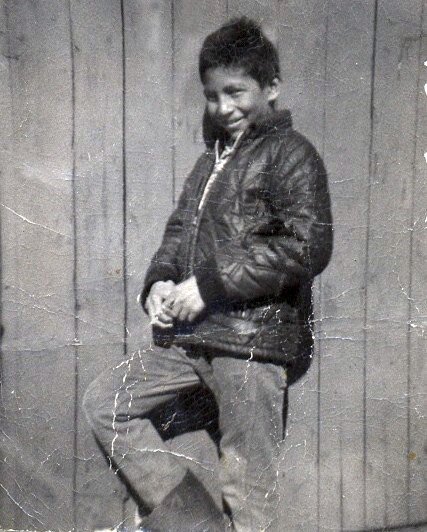
Sarah died quietly that night, Joey holding her hand. A week later, he received the two wartime photographs of his grandfather enclosed with a note from his uncle: Dear Joey, he began, Sarah wanted you to have these. Keep them safe. And he ended with, Thank you for your strength. My strength? Joey recoiled. No. I am weak. I am to blame. Joey framed both pictures but mounted the "after" photograph by itself.
All the way to the newsagent, Amy dawdled, stopping every few feet to crouch down in that impossible-looking stance young children are fond of and pick up a leaf, turn over an odd-looking stone, or collect another scrap of paper for the mucky collection stashed in the pocket of her coat. Joey had attempted to stop her but eventually gave up. These were her Sunday papers. Who was he to say they were more odious than his?
'The News of the World is all we have,' the young East Indian newsagent told him as he steered Amy into the shop. 'We had very many of everything but the war, you know, the earnest papers, they sold very quickly.'
Joey hesitated. Sometimes he flipped through this tabloid; half hoping to run across a story on McDougal: " ILLICIT SECRETS OF RANDY YANK". He once bought a few issues of the paper in search of a headline he could send, along with an angry letter, to McDougal's boss; "Dear Sir, the conduct of your employee is detrimental to the image of your company." The one cutting he did send failed to detonate.
'Can I have those sweets, daddy?' Amy tugged the end of his jacket.
'Yes, but you have to share them with me.'
'Why don't you buy your own?'
He almost said, "But darling, you miss the point," then checked himself. He had said that exact thing to Joanna when she had taken him to task for his "practical jokes" on George. "Oh no, Joey, you do," she had replied. And she was right.
'A package of these, please,' he said to the shopkeeper, picking up a bag of something with many colours. 'And I'll take the newspaper too.' If his daughter was going to gobble down umpteen different colours and additives, what right did he have to protect his health?
He folded the Falklands-splattered newspaper under his arm and herded Amy back out of the shop. As they headed home, he glanced at some of the stories and mused about coming across his name in its pages. It was bad enough seeing it in the soggy, photocopied pages of The True North. The latter had been like a knife in his gut.
The True North, title lifted from the National Anthem, was massive. A seven-hundred-page study, or as various critiques in the serious press described it, a "disgrace", unique in its complete lack of, or interest in, analysis. Its stated intention was "simply to present". And present it did. Thousands of anonymous Canadian lives from every walk of life, from almost every possible type of community, from every peculiarity. As far as Joey could tell, these lives varied from a paragraph to many pages and were arranged under fifty-plus arbitrary headings. The last hundred pages were countless appendices of eccentric statistics. Joey smiled, recalling the host of odd survey questions he had answered with flips of his penny. Here were the responses in a compendium of tables, many looking like they had been taken from consumer surveys. Examples: 59.7 percent of the participants used white toilet paper and 27.2 percent said they let the toilet paper hang down on the wall side of the roll. On nail cutting, the average person cuts his fingernails 3.3 times more often than his toenails. And on favourite letters of the alphabet, "Z" came sixth. It was a compendium of trivia; data compiled on the minutiae of walking, thinking, eating, sleeping, breathing. You name it. It was there. (An astounding 77.1 percent said they preferred to breathe through their nose whenever possible, and 88.4 percent preferred others to breathe through their nose.)
Joey had not yet read the full book, but several hundred pages were more than enough to make him feel uneasy. Despite the numbers and a neurotically complete index, the material did not appear to lead to any conclusion. The broader conceptual stance of The True North had already been made in the subtitle, Canada: The Seeds of Respectability, and expanded in a short preface, "In Pursuit of the Mediocre". The material was merely a "factual description" of this “state of affairs”.
Whatever its peculiarities, however, it did mean sales. Almost five hundred thousand in hardback alone. The thousands of personal, all-too-human glimpses gave the book a voyeuristic quality (not unlike The News of The World, Joey thought) which made it stunningly popular.
The introduction astonished Joey the most. Not so much because it had been written by Professor Higgins (the same) as by what it said. It was one of Higgins' more sprawling pieces, thrashing and jerking uneasily through the possible historical, philosophical, and social roots of "the mediocre": Loyalism, Lack of Revolution, Desire for the Status Quo, Lack of Ideology, the RCMP and so on. His discussion of the levelling effect of Canadian geography—the " challenging Canadian Shield", the "endless Prairies", the "impassable Rockies"—sounded much too much like inorganic psychology for Joey's tastes. Higgins' closing paragraph was the most damning.
However much one may wish to propagate this inane business of our colourful and diverse mosaic, the fact is that most of the immigrants who came to this country, came for purely Canadian reasons, anonymous security. Canada is what it is today, exactingly boring and mediocre, because, from the very beginning, it attracted the most boring and mediocre citizens of other nations. And this, it seems to me, is an inherited trait.
What about those Canadians who were not immigrants? The first people? They were missing from the book. Certainly indiscernible. Joey wondered if that was intentional or an oversight. Damning either way. Or were they redeemed by omission? They did not need Canada. They had their own nations. Extraordinary nations.
Inevitably, there were accusations that the book was a hoax. Brenda and Graham assured everyone it wasn't. But then they would. They were under pressure from the publisher to keep the controversy stoked. Sell books. Despite their claims, the mainstream press wrote that the book was a nasty ruse. The hundreds of pages of strange, sad, exuberant, rich stories of individual Canadian lives, they argued, undermined the stated theme. Three weeks after a scathing review, The Vancouver Sun wrote in an editorial: Whatever the fanciful logic of the authors, they meant the book as a celebration of both Canada and its people.
In London, Joey was inclined to think that way; at least to the idea that the book was a joke. Not only for those left out, but for the introduction. Higgins, who undoubtedly took the whole thing seriously, was a masterful stroke. Any other historian and the deceit would have been detected immediately. But Higgins was above suspicion. Since the publication of The Triple Alliance, he had a reputation for supporting the capricious and the ridiculous. Joey shook his head in admiration.
'You have to hand it to them,' he said to Joanna a few days before she left, 'It was beautifully executed.'
'You're sure it's a joke?'
'Has to be.'
'And the people in it? Dan Spear and his make-believe friend?'
Joey's smile collapsed. Dan Spear appeared as the central character in a two-page exposition. When he first read it, Joey tried to shrug it off. But then later? The ‘facts’ the Maitlands had focused on were all candid extracts from his cemetery conversation with Gary. They had included quotes from his confession to Gary about making it with Susan. They wrote "making it". (Had he said that?) On the page it looked like a make-believe Dan Spear recounting sexual exploits to a dead friend about his older sister.
More troubling, was the reference they included to his late-night ‘mission’ with Gary a few days after Gary had been killed.
'Joey. Wake up. I want to talk to you.’
The Maitlands had referred to it as a “childhood amusement” recalled a decade later “with the same innocent fun and excitement” as the day it occurred. But the emotion was anything but innocent and they knew nothing of the nature of the ‘amusement.’
'Joey, I want you to tell me what happened last night.' His father asked, sitting down on the edge of Joey's bed.
Joey still recalled what happened. Even the minutiae. It was the day before Gary’s funeral. He got on his bike. He wanted to see Gary’s house again. That was all. Just for a second. Hoping, maybe, just maybe, Gary would be on his front step. Smiling, laughing, calling to him as he wheeled towards him. Waving.
'I want you to tell me the truth about last night, Joey. I'll wait until after the funeral this afternoon, but you will have to tell me.'
It was all minutiae. Summer. Black pavement under his wheels as he cycled to Gary’s house; green arcs of maple, elm, and oak above him; yellow bibs of lawn, sounds of lawnmowers, rolling sprinklers over grass, and hedge shears clipping. And voices. Many cheerful voices. Then unexpected quiet.
'Joey?' Joey’s father’s voice was louder.
'I don't know.' Joey paused. 'I don’t know. I was sleeping.'
Then one voice. One chance remark. No, not chance. Purposeful. A neighbour, a man remarking to his wife, a perfectly ordinary-looking man, raking his grass two houses down from Gary’s house.
'There was a lot of damage,' his father said, taking hold of his son’s hand. At the touch, Joey instinctively moved back, snapping his hand away viciously. It surprised them both. ‘Yes, I smashed the window!!
Why?’ his father asked. ‘Why?’
One voice. Two houses down from Gary’s house. A perfectly normal-looking man, a Canadian man, raking his grass. His comment, indifferently thrown into the air as he raked the last few blades of grass into a pile next to his sidewalk; a comment thrust into the sudden quiet.
‘Just another fucking—’ The man saw Joey cycling past too late. His thought continued into voice.
‘Just another fucking Indian kid. What’s the big deal?’ Joey suddenly blurted out.
Joey’s father stepped back. What. What are you talking about?
Joey was shouting. ‘That’s what he said, “just another fucking Indian kid”. Joey sat down on his bed. ‘His death didn’t matter,’ he said, now barely audible.
Joey’s father had opened his mouth, but he didn’t say anything. There was no thought there. Everyone knew Gary’s mother was First Nation. And so was Gary. And Susan. But no one mentioned it. No one talked about it. So, it didn’t exist.
Except, here, in the Maitlands' book. Unspoken facts? A “childhood amusement”? Joey shuddered. And Dan Spear? How could he have chosen that nickname? He had wanted to smash the whole room, the whole house, the whole street, the whole country. But he was part of it. All of it. That was the essence of his life in the true north. If the book wasn't an ugly joke, Joey knew his gruesome contribution certainly was.
'Daddy! Daddy!' Amy had been trying to get his attention. 'Daddy, can I sit on your shoulders?' she asked as she sucked on her candy.
Joey lifted her over his head and onto his shoulders. She smiled and patted his head gently. Taking hold of her ankles, he jogged home, his haggard thoughts dissolving in her delighted squeals. Oh, Amy my love. I am sorry. I am so sorry.