

Dishwasher Dialogues Limits of Rational Behaviour
Encounters with Authority
By: Greg Ligbht and Rafael Mahdavi - Dec 19, 2025

Rafael: Few, if any of the staff at Chez Haynes, were legally in France, or had anything resembling long term visas. Our illegality hovered in the background of our lives, like an impending storm, but nothing ever happened. The tempest never burst.
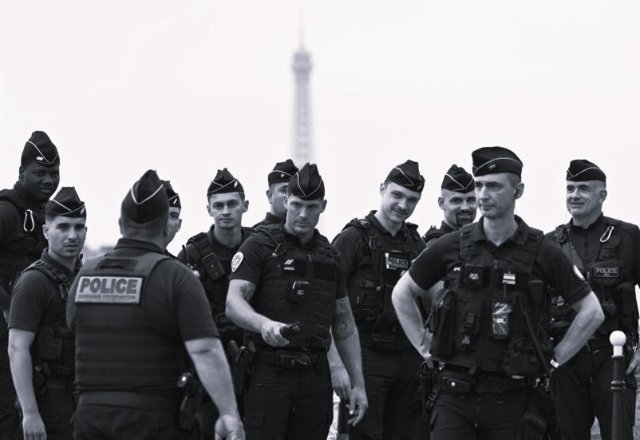
Greg: I never carried my passport with me or any other formal I.D. When I was stopped—and the cops (les flics) commonly in a group of about ten or more did stop me—my carte orange would suffice. At first their sheer numbers were a little intimidating, but they were polite and reasonable. For the most part they ignored me. No matter where or when I was riding or sauntering through the city. Late night was the same as early morning. I never felt fearful of them; or of any of the other kinds of authorities in Paris. Metro gendarmes, tax collectors, bank officials, municipal bureaucrats, even the street sweepers. I essentially sidestepped whatever sensors of disorder might have provoked them.
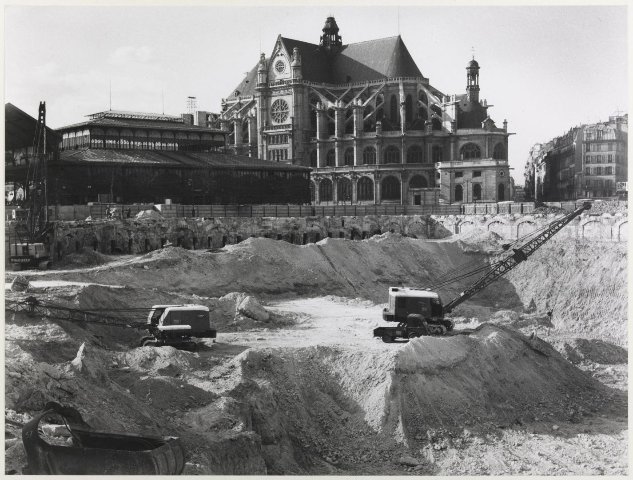
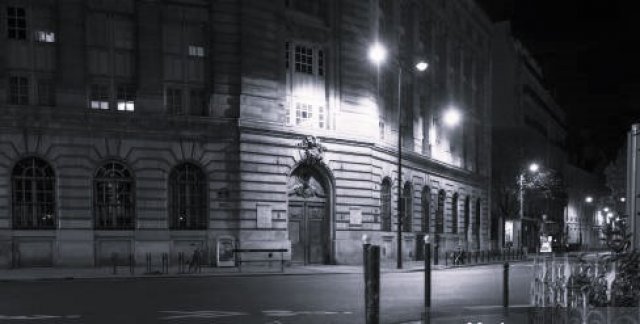
Very quickly the city became home. Inside the peripherique. The suburbs, or banlieue, felt a bit different. But then I am sure that was the case for most Parisians as well. Paris was quite manageable as cities go. And not just because of la carte orange. It was also a fantastic walking city. After work, if I missed the last metro, I would walk back home at 2 or 3 in the morning—from the 9th arrondissement near the top of Paris to the 14th arrondissement near the bottom. Only about 5 miles depending on the route. It was always quiet as I started down Rue des Martyrs. Then I had a choice. At first, I took the most direct route which was Boulevard du Faubourg Montmartre. It sliced down southeast towards the river, lost its ‘Faubourg’ designation on the way down, and ended at Les Halles or what was left of it. In those days. it was not much more than a large hole in the ground and then a construction site. It went on forever.
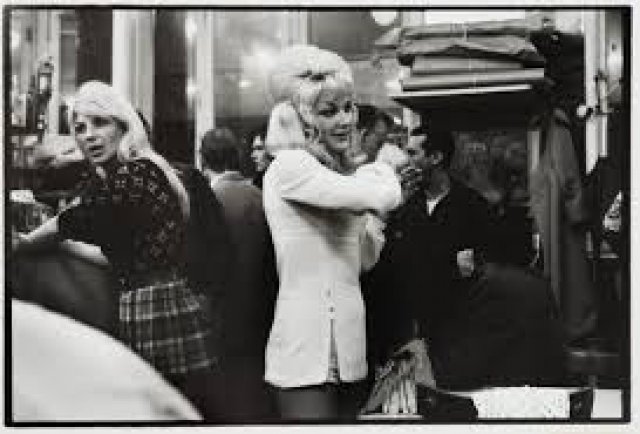
In space and time. I don’t remember the walk being very interesting in the middle of the night. Nothing much happening other than some amazing Parisian Boulevard architecture quietly sleeping as I slipped by. It was picturesque but after a few years I began to simply take it for granted. As eventually I did Paris. Except for random moments when I suddenly became conscious of where I was and was immediately blown away. Paris, France! Too easy to overlook when day to day life intervenes. As it always does. On other nights I would turn east along the Grands Boulevards then turn south on Rue Saint Denis. Which is where my walk got more interesting. Saint Denis was very active at that time of night, awake with ranks of prostitutes and hawkers and bars and cafes.
Rafael: Near the Gare de L’Est, off Saint Denis was the Rue Sainte Apolline, also a hangout for prostitutes. And there was a wonderful paintbrush store in that street, an amazing place. I’ve forgotten the name of the shop, but it was like Ali Baba’s cave for paintbrushes. There was a whole section for sign painting brushes, and another for brushes for movie billboards. There were some cinemas then near Barbès where they still painted billboards for films that were showing, especially films from Egypt and Algeria. Every time I left the store one of the prostitutes would wink at me and say, ‘hey lover boy, you wanna see my brush?’
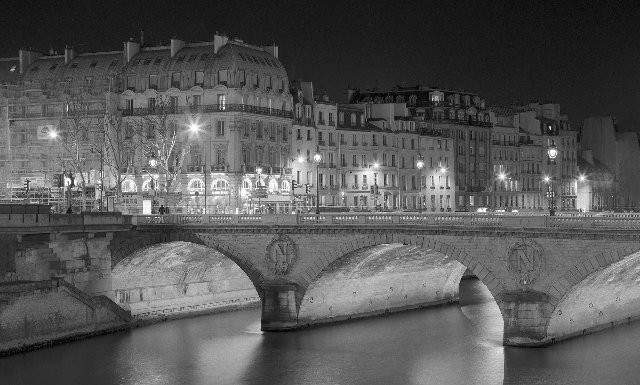
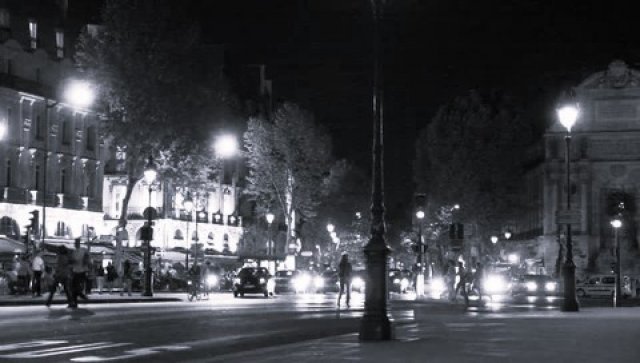
Greg: I remember lots of colored lights happening. Lots of activity. There might even have been a typewriter store. At 3 a.m. in the morning, I never stopped for an in-depth investigation of the area. Although I usually slowed down for a better look around as I made my way down to the Place du Chatelet, the Seine and Pont au Change. It was normally silent crossing the l’Île de Cité unless the bells of Notre Dame, a block over, pealed two or three late-night bells. Then it was onto the trinity of St. Michels—over Pont St. Michel, across Quai St. Michel and up Boulevard St. Michel, past Le Jardin de Luxembourg which Tex and I sometimes jogged in. He was an excellent soccer player, even practiced at the first division Paris St. Germain F.C. during his time in Paris.
My route then continued along to Port Royale, past the Obervatoire, onto Avenue Denfert Rochereau, down to Place Denfert Rochereau and the Catacombs. Everywhere, more museums and gorgeous buildings of note. Finally, I crossed Boulevard Montparnasse and entered my local district, the 14th arrondissement. Then it was down Avenue General Leclerc to Place d’Alésia (my metro stop) where a quick 5-minute jaunt down Avenue Jean Moulin—hero of the Resistance—took me home. To Square de Chatillon, a hidden little residential cobblestone courtyard with a small hotel. I was in number seven.
Rafael: Paris intra muros is a small city compared to New York or London. You can walk across it in a few hours. You used to say that in New York they built taller buildings and it expanded upward, in London they built houses side by side, and it expanded outwards, but in Paris they divided the existing living space in two or three and it remained the same. New York taller, London fatter, Paris suck in your belly.
Greg: Paris always looked beautifully preserved, even as renovations regenerated the city from within. Certainly, that was the way it appeared in the middle of the night as I journeyed home. Except for the Tour Montparnasse which was a recent eye sore. I usually walked back on my own, but I remember doing the full walk back from Chez Haynes with Vince––a tall good-natured guy from Lynchburg, Virginia. I remember his hometown because the name sounded ominous to me. He and I had survived a very lean period during the heat wave of 1976 on the calories from many liter bottles of Ober Pils Bière which cost less than 2 francs each at the time. He could be even crazier than we were on our worst nights. On this night, he and I drank at more than a few bars all the way back. By the time we got to Boulevard St Michel we were well past the limit of rational behavior.
I vaguely remember we got into some reckless mischief with car mirrors along the street. Mischief is a nice way to describe kicking off a half dozen side view mirrors from a Mercedes or Porsche just for the amazing feel and sound of the crack as it came away from the car. Revenge theatre? Theatre Noir? Or just plain theatre of the vandal? No excuse. When we reached my building, Vince pulled out a broken side mirror he had picked up from the street, He was claiming it as a souvenir. I saw it as damning evidence of criminal behavior. I grabbed it from him, staggered into the bin room and stuffed it down through as many bags of garbage as I could, up to my shoulder, hoping it would not be found. If it had been found, I knew the foreign kid at the top would be le premier suspect. Fortunately, it was never discovered.
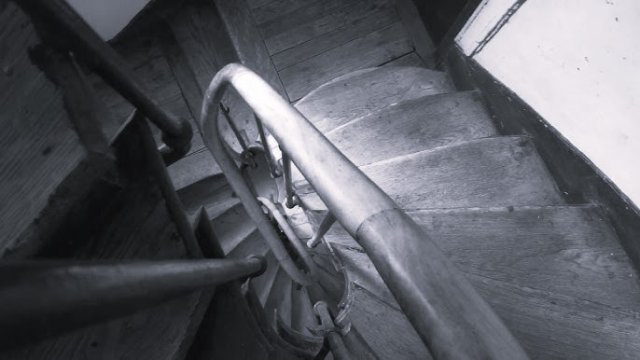
Rafael: You don’t want to be a suspect. Once you’re in the clutches of the French bureaucracy, you’re in for life. But I wanted to be legal––sort of. I had twice stood in line at six in the morning outside the Préfecture de Police on the Île de la Cité. I had gathered the necessary documents. The line was a long one, it started outside and continued down the block toward Notre Dame. We shuffled along slowly. The crowd consisted of poor foreigners. The rich foreigners hired lawyers and avoided the queue. I would finally reach the building entrance at first light. The queue inched up the three-hundred-year-old stone stairs, up to the third floor. I remember babies crying. The steps worn shiny by the millions of shoes that had trodden there before me, and shoes is probably saying a lot. The poor people wore everything but leather shoes, more likely wooden clogs, rubber sandals, galoshes, espadrilles.
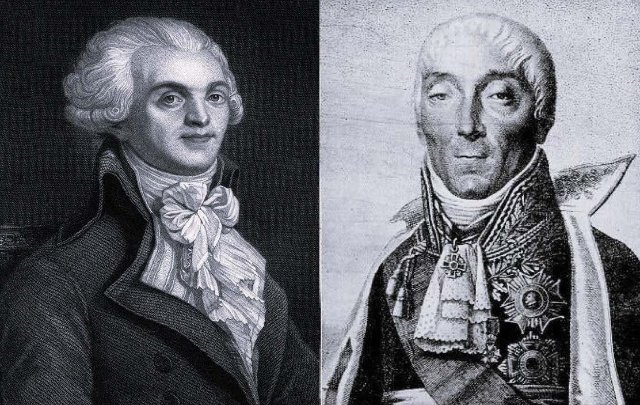
At last, I stood in front of the guichet window where a stern-looking woman, lips painted à la Édith Piaf, was smoking a cigarette. I pushed my sheaf of documents below the guichet window. I didn’t dare smile. I tried to look neutral. The woman shuffled through my papers, looked up at me and said, with the cigarette still hanging from her lips, ‘there are some documents missing’. She rattled off a jumble of numbers and letters: 44A, 72C, and 89B. ‘Come back in a week.’ I started to ask what was missing, but she said, ‘come on, come on, allez, allez, je n’ai pas toute la journée pour vous, moi. I haven’t got time for you people.’ She raised her chin and said in a loud voice: ‘Next! Au suivant!’ I turned away and saw the next supplicant, an Arab woman, her head covered, a baby in her arms. I couldn’t help thinking of Stefan Zweig’s book “Fouché”, about the fellow who toppled Robespierre and became the police chief, who invented the institution of the concierges, during the revolution; a spy in every building, and hence the name for the old prison of La Conciergerie.
Greg: I found the less identification I produced, the better. I was fortunate. Clearly western looking, even French, at a quick glance if I tied my scarf correctly. Not a member of any group or stereotype the people in charge were concerned with—other than, peut-être, being a little too young to completely trust. Even when I fell ill and spent a week in the hospital because my heart suddenly opted for a change in rhythm, I simply gave them my passport and claimed to have no health insurance. I might have had some student coverage in Canada, but I remembered Darian describing his experience when he went to hospital in Montpellier for a malaria episode which he had contracted in Africa. He was a Canadian doing a doctoral degree in Bordeaux. He gave them his Canadian Health Insurance details and from then on it was a nightmare trying to connect the two systems. In the end they extracted something out of the Canadian system, but he ended up having to pay a hefty chunk himself. I simply threw myself on the mercy of the system. They asked me if I lived in Paris. I said yes. They asked me if I had anything more than carte orange to prove I did. I said no. They asked me if I had any insurance. I said no. They asked me if I had any money or assets. I said no. They covered me, and from then on, in their wisdom or through sheer tedium, the authorities left me alone. Almost.
Rafael: One time at your place, five floors up, you gave a small party, and the neighbors complained about the loud music. The young gendarmes showed up around midnight. They had lumbered up the last two floors. The door to your apartment was open, and there they were, two cops out of breath trying to get our attention as people filed in and out, and others smoked in the hallway. The police told us we were making too much noise, and we turned down the music and offered them a glass of wine. They started talking to us; well, to the girls more than to the boys. Some of us were standing near the Turkish toilet in the hall. The cops stayed for about an hour, took a few leaks in the squat job, and thanked us for the wine, which they said was very good. Damn right, it was good. Leroy had given us some top-quality stuff.
Greg: I remember when they first arrived, I apologized and said I had not caused a problem before. They said the complaint was not the first one they had received. It was just the first time they had come to my door. I tried a joke about the climb up the stairs being a bit much for them. It didn’t go well. They started writing me out a ticket. I said ‘doucement, s’il vous plaît. Je suis un poète.’ It turned out to be a warning ticket. A full written out ticket with the amount ‘zero francs’ circled. I was so grateful. I have always thought what a great idea. Start soft. It worked. I was much quieter from then on.
Rafael: You should have framed the amende.
Greg: I should have. I may have it buried in a box somewhere. I did get to know the old lady who had reported me. She lived beneath me and turned out to be very amenable and open-minded. And was very patient. I assumed she would hate me, a young foreigner up above making noise, doing young-guy-outsider type things. Like having parties. But she was wonderful. She invited me in a couple of times, and we talked. She was in her 80s back then, from a different century. She lived alone but said she was used to it. We talked about her history in Square de Chatillon. She told me she had lived there for a long time. When she was young, her husband was captured by the Germans in the First World War and spent a few years in Germany as a prisoner of war; then her son was captured in the Second World War and endured the same fate. Both survived, but they were no longer alive when I spoke to her. She didn’t begrudge the Germans any longer. I am not sure I would have been so obliging.
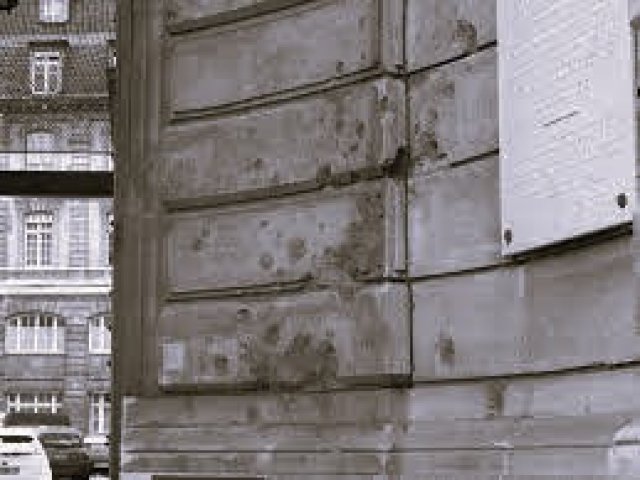
I asked her about the bullet holes in the walls of some of the buildings in our little square. She told me that happened when Paris was being liberated. We lived in the southern part of Paris and the liberation troops came up through Porte d’Orléans. We were on the northern part of the square and the Germans had occupied our rooms firing across at the hotel where the French liberation soldiers were. The evidence was still there thirty years later. At least on our side. Liberation holes. When I stuck my head out my French windows, I could see holes on the walls, around the windows. I assume some bullets came through the window as well, but that damage had been repaired. She had lived through all that mayhem. When the shooting started, she would go down with other neighbors into the basement. And wait for the all-clear.
Rafael: I suppose it is hard to imagine that urban atmosphere today. I’ve seen too many movies about that era. I confuse what I really imagine and what I am unconsciously borrowing or imagining second-hand from films I’ve seen.
Greg: Even back then, those war years were decades distant. Certainly not part of any memory I shared. But it was fascinating to see some of its more poignant remnants on the walls and to hear her voice recalling memories of her story during that time.
Rafael: Life in our Paris may have been uncomfortable with few indoor toilets and fewer phones, but life was more relaxed than today, communication was slower, and the police seemed more tolerant. Maybe that was because the May riots of 1968 were still fresh in the collective memory of Paris.
Greg: No authority wanted to see those events again, any time soon.
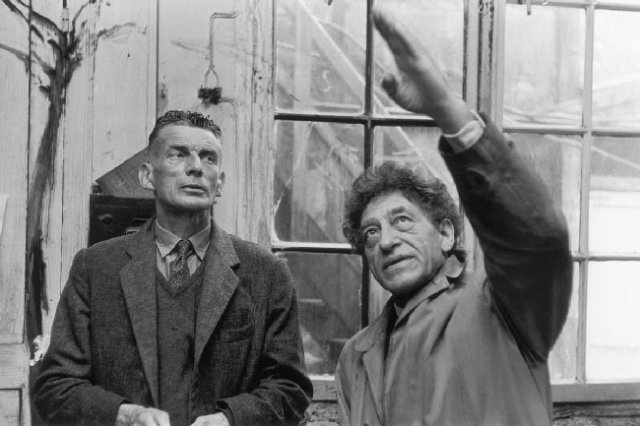
Rafael: And we were so oblivious of our own age too. I remember one Sunday evening, five or six of us went to La Coupole for dinner. In those days you could still go there without a reservation. The restaurant had a mythic quality for me because I knew that the great Alberto Giacometti, painter, and sculptor, used to go there with friends, always after midnight, and while he ate, he drew on the table paper. Sometimes his friends tore off a piece with a drawing or two, but other times the waiters threw out the table papers along with the drawings. And did you know that he and Beckett were friends?
Greg: Not until you told me. Beckett’s work I knew and liked. You put me onto Giacometti and his fabulous walking sculptures. The fact that they were friends was icing on some kind of proverbial cake.
Rafael: When a client was wanted on the phone at La Coupole, a waiter walked through the restaurant holding up a blackboard with the client’s name written on it in chalk, and at the same time the waiter shouted out the name of the client. When we put on your play, Black to Black, at the American Centre we used that as free publicity. A few times a night we’d phone La Coupole asking for Monsieur Light, and the waiter would walk around with LIGHT written on the blackboard and shouting out Monsieur Light, Monsieur Light.
Greg: I am not sure we drummed up much business. The La Coupole clientele of the time was not our natural audience.
Rafael: The evening in question we were celebrating someone’s birthday. Next to our table was an American couple, not more than sixty years old. I turned to them and said, well, how does it feel being old? The woman turned to us and said ‘it feels awful, so enjoy yourselves’. We all laughed. I felt ashamed of myself.
Greg: But we did follow her advice. We enjoyed ourselves.